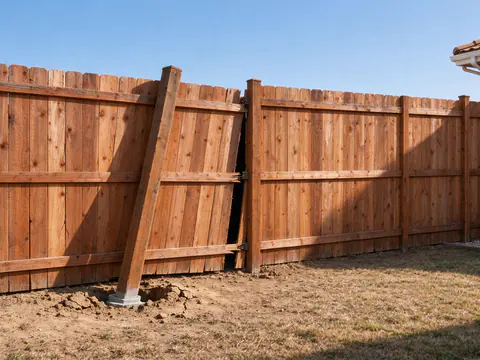
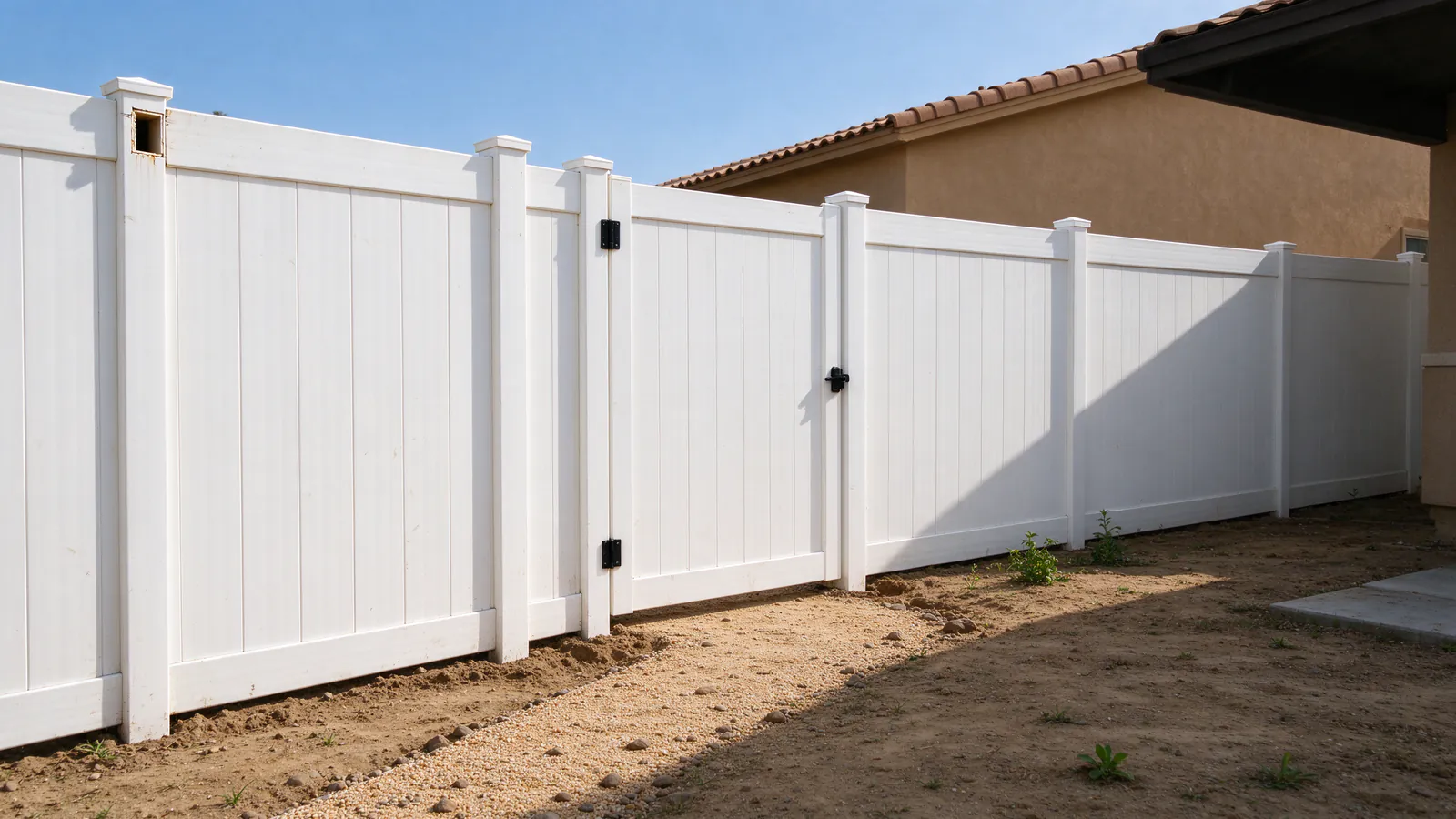
Cask Fence Temecula plans and manages vinyl fence installation for homes in Temecula and the surrounding cities of southwest Riverside County, with each fence carried out by licensed and insured contractors. Vinyl, or PVC, is the main alternative to wood here for side and rear property lines, and it is a common choice in tracts where an HOA wants clean, uniform fences. It doesn’t rot, doesn’t need stain and doesn’t feed termites. What it asks for instead is careful fitting: a vinyl fence is a set of hollow posts, rails and boards that has to be reinforced where loads are high and allowed to move where the sun makes it grow. If you are still choosing a material, the wood vs vinyl guide compares the two, and the wood fence page covers the other side of that choice.
How a vinyl fence goes together
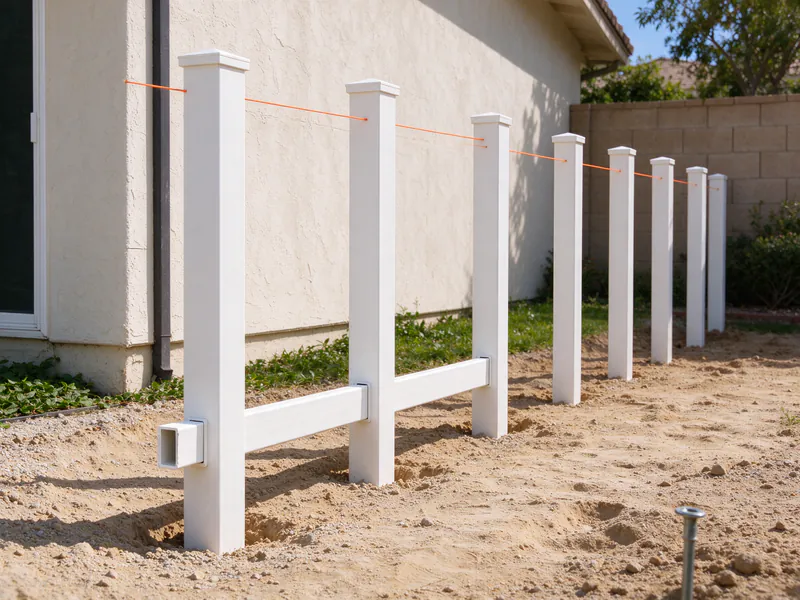
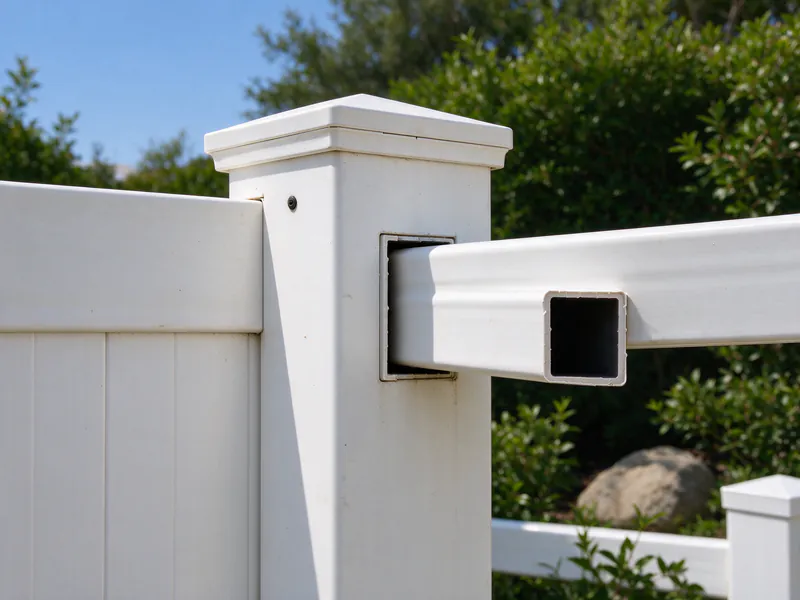
A vinyl fence starts with hollow posts that have holes routed through their sides. Rails slide into those holes, and the boards or pickets lock into channels in the rails. On a privacy fence the boards are usually tongue-and-groove, so they interlock into a solid face. Long bottom rails often carry a metal stiffener inside so they don’t sag between posts, and many systems use metal inserts in posts that carry more than the usual load.
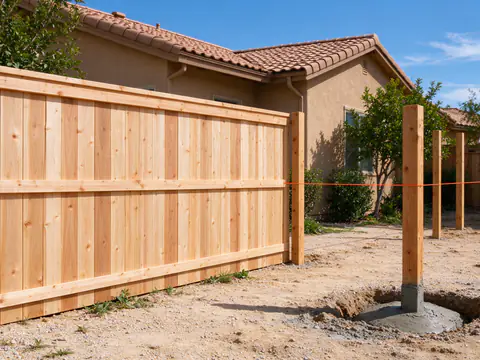
The posts are the part that decides how straight the fence stays. They are set in concrete, plumbed and lined up to a string, and the panel layout has to match the post spacing the product was designed for, because the rails come in fixed lengths. There are different ways to set a post and different opinions on them, including whether concrete is mixed wet or placed dry and wetted after. Homeowners have asked about installers pouring dry mix into vinyl post holes without water. The practical test is whether the method matches what the fence maker and the concrete maker call for. The written scope should say how posts are set, and you can ask why.
Because the parts come as a system, mixing brands rarely works. Profiles, routing sizes and colors vary from one maker to the next. Recording the product, its profile and its color at the start is the cheapest insurance against a repair headache years later.
Privacy, semi-privacy and ranch rail
Most vinyl fences in the area fall into three families.
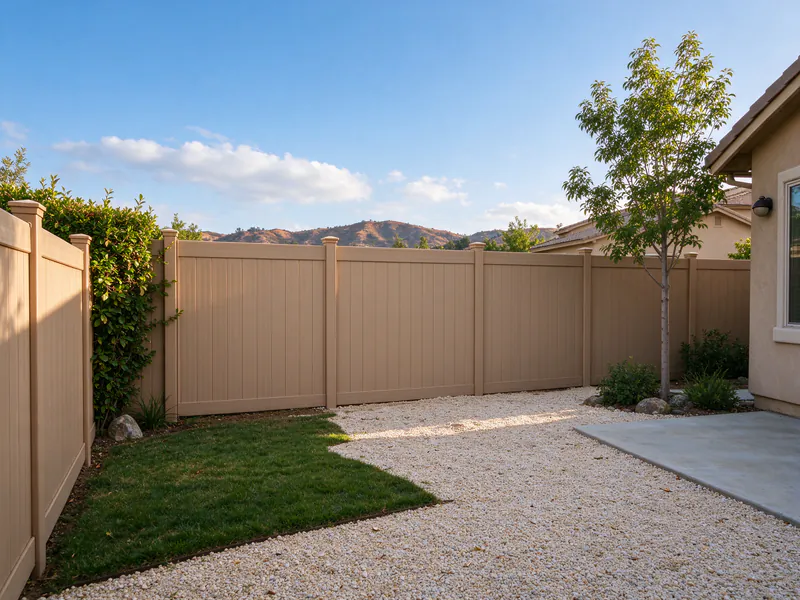
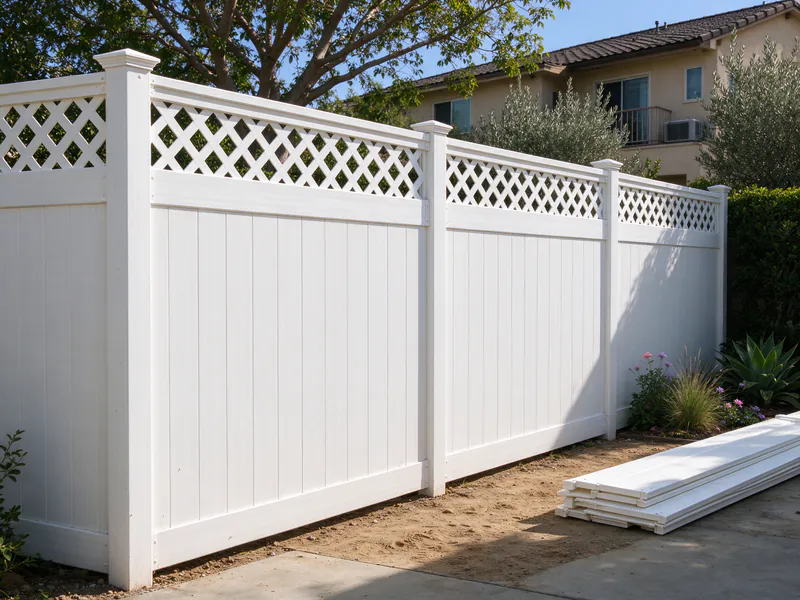
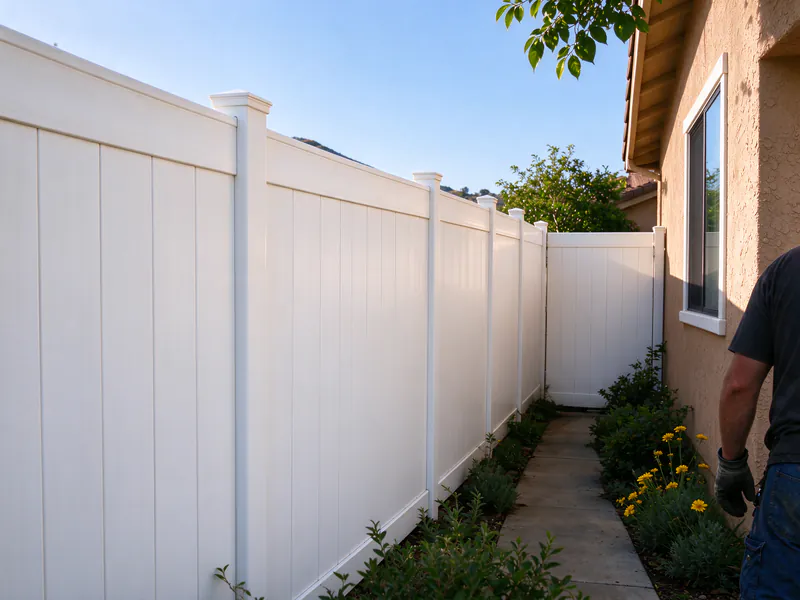
A privacy fence is the familiar 6 ft solid panel along a side or rear line. It screens the yard completely and, since it is solid, takes the full force of the wind. A semi-privacy fence uses spaced pickets or a solid lower panel with a lattice band on top. It still screens most of the view but lets air and light through, which suits shared lines where a neighbor doesn’t want a blank wall, and pool areas where you want to see the water. A ranch rail fence is two to four horizontal rails between posts. It marks a line, frames a driveway or keeps animals in, and it is the vinyl option most often seen on acreage. Horse owners weighing rails against other materials can read the horse fence page, and the privacy fence styles guide walks through more patterns.
Vinyl can also serve as a pool barrier if the product and layout meet the enclosure rules. Temecula’s pool handout calls for a fence at least 5 ft high on the outside, no more than 2 inches of clearance at the ground and no climbable decorative work on the side away from the pool, with gates that swing away from the water and close and latch on their own. A ranch rail does none of that. The pool fence page covers which styles pass.
Heat, UV and expansion in Temecula summers
The nearest NOAA climate station, on the south edge of the valley, averages about 60 days a year at or above 90°F. That matters for vinyl in two ways.
The first is movement. Vinyl expands with heat and contracts as it cools, much more than wood. A long rail on a July afternoon is slightly longer than the same rail at sunrise, every day of the summer. Good systems leave room for that inside the routed holes. When a rail is screwed tight at both ends, cut too long, or forced into a post that is out of line, the movement turns into bowing, rails that pop out of their posts or cracks starting at the routing.
The second is UV. Fence-grade vinyl is made with UV inhibitors, but formulations differ, and sunlight still slowly chalks and fades the surface. Darker colors absorb more heat than white or tan, so they move more and can show heat distortion sooner. If a darker color is on the table, check what the product maker says about it in full sun. The vinyl fence heat and fire guide covers warping and melting questions in more detail, and the vinyl vs composite guide compares the other plastic-based option.
Gate posts and steel reinforcement
A vinyl gate is the part most likely to give trouble, and the cause is almost always the post, not the gate. A hollow vinyl post bends under the constant pull of a hanging gate, and once it leans, the latch stops lining up and the gate starts to drag.
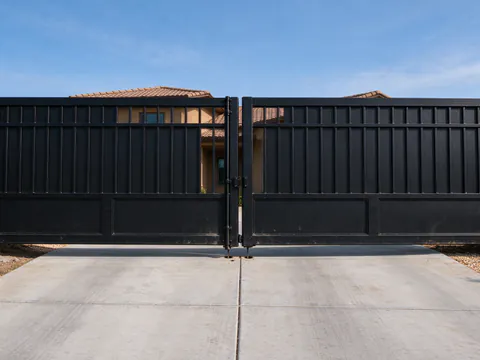
The fix belongs in the plan from day one. Gate posts are usually reinforced with a steel or aluminum insert, often filled with concrete, and set deeper or wider than line posts. The gate itself needs a metal frame inside its rails, with hinges rated for its weight and width. A wide gate, or a double drive gate, may justify a steel post faced with vinyl. Where a gate has to hang from the house, it should anchor into framing or masonry rather than relying on light anchors in stucco, which homeowners in the area report pulling loose. The gate installation page covers gate planning, and the sagging gate guide explains what goes wrong when a post wasn’t reinforced.
Planning a vinyl gate?
Tell us its width and whether it hangs from a post or the house. That decides the reinforcement.
Cracking, impact and panel replacement
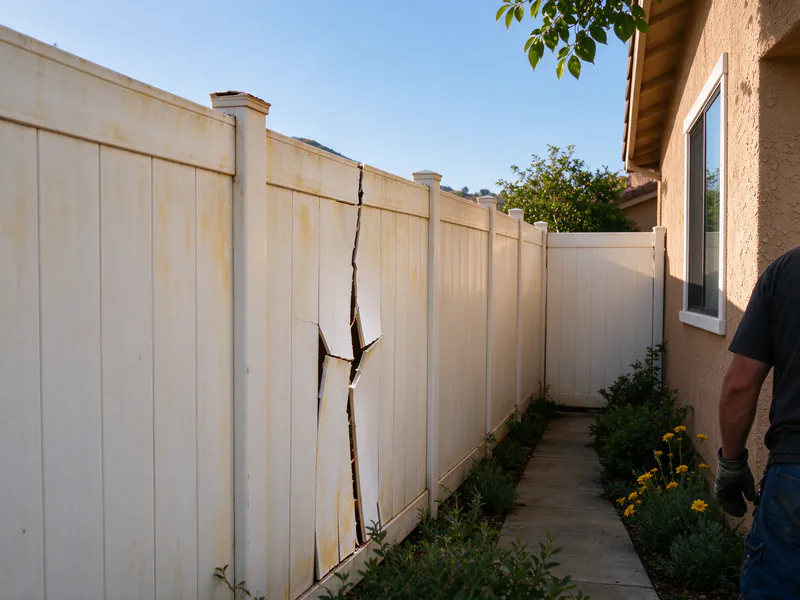
Vinyl can crack. Impact is the usual cause: a mower, a string trimmer working along the bottom rail, a ball, a dog jumping at the same spot every day. Vinyl is less forgiving of a hit on a cold morning than on a warm afternoon, and older vinyl that has spent years in strong sun is less forgiving than new. Poor installation adds stress, such as a rail forced into a post that is out of line.
A cracked board or rail does not usually mean the whole fence is done. Because the parts slide apart, a damaged section can often be replaced on its own, as long as matching parts are still made. Matching is the real constraint. Homeowners report installers going out of business and leaving them searching for vinyl that matches what they have. That’s why the product name, profile and color belong in the scope. If you are deciding between a repair and a new fence, the fence repair page and the repair or replace guide separate the two, and the repair assessment tool helps you sort out what you’re looking at.
Wind, posts and Temecula soil
Temecula’s Building & Safety handout gives a design wind speed of 97 mph with Exposure C. A solid vinyl privacy panel is as solid as a wood one, so in a Santa Ana gust it pushes on its posts just as hard. The hollow vinyl post adds little stiffness of its own, which is why the concrete footing and any insert do most of the work.
Post depth depends on fence height, wind exposure, the product and the soil, so there is no single correct number. Much of Temecula sits on sandy and granitic loams, and federal soil survey data shows a cemented hardpan layer around 2 to 3 feet down in some areas, plus granite on some hillsides. An auger that meets hardpan slows the job and can change the footing plan. The fence posts and soil guide goes into it. On slopes, most vinyl privacy panels are stepped rather than racked because the rails are cut for level runs; some products allow a limited rack. The stepped vs racked guide shows the difference.
Vinyl near the house, and fire
Vinyl is a plastic. It won’t feed termites, but in a fire it softens, sags and can burn, and a burning fence that touches the house carries fire to the wall. That makes the last few feet before the house the place to plan with the most care.
California’s Board of Forestry is moving toward Zone 0 rules for the 5 feet around a home in Very High fire hazard zones. The draft would bar new combustible fences within 5 feet of the house, let existing fences stay and be repaired, and call for a noncombustible section where a fence or gate attaches to the house within five years. These rules are proposed, so the final wording and timing are confirmed when they take effect. Whether a given lot is in a regulated zone depends on the address, and the City of Temecula’s fire hazard map lets you look it up. A short steel or aluminum section, or a metal gate, at the wall lets the vinyl run continue and keeps plastic off the house. The fire-resistant fence page covers the options.
Permits, HOA rules and the neighbors
The 2025 California Residential Code exempts fences not over 7 feet from a building permit, but zoning height limits still apply by yard and are confirmed for your address. The City of Temecula’s fee schedule lists a non-masonry fence from 6 to 10 feet at $384 for the first 100 linear feet. Many Temecula tracts have HOA rules on vinyl color and style, and California Civil Code 4765 requires the association’s decision in writing. On a shared line, Civil Code 841 calls for 30 days’ written notice to the neighbor. The HOA approval guide and the good neighbor fence law guide cover both, and the permit guide covers height.
What a vinyl fence costs
A national budgeting range for a vinyl privacy fence runs about $15 to $85 per linear foot. The range is wide because the sources behind it disagree: shorter and lighter fences sit near the bottom, while 6 ft privacy panels in heavier profiles sit toward the top. Ranch rail usually costs less per foot than privacy panels. Within that range a Temecula job moves with linear footage, height, style, profile thickness and color, gate count and reinforcement, digging through hardpan or rock, slope, and tear-out of an old fence. The Temecula fence cost guide breaks those down, and the fence cost estimator gives a range for your own length and style. For a written scope, send us the details.