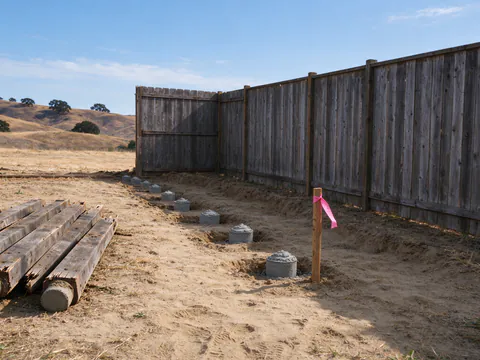
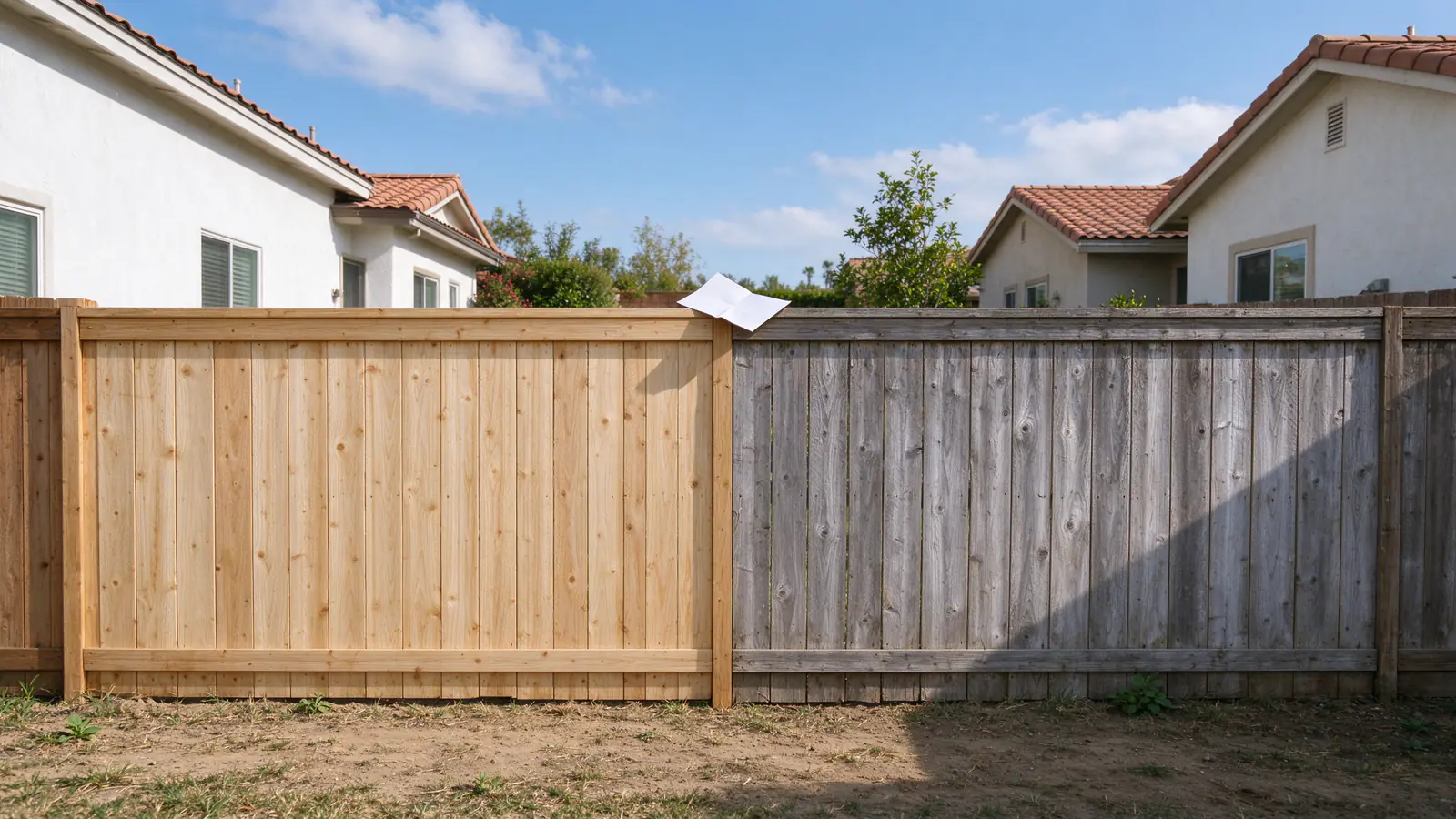
California’s good neighbor fence law, Civil Code 841, presumes that owners on each side of a dividing fence benefit equally and share its reasonable costs equally, unless they’ve agreed otherwise in writing. Before spending money on that fence, an owner must give each adjoining owner 30 days’ written notice. A neighbor who thinks an even split is unfair can rebut it with evidence.
Cask Fence Temecula plans and manages fence and wall projects in Temecula and nearby towns, carried out by licensed and insured contractors. On a tract lot, most side and rear fences divide two yards, so this law touches a large share of fence jobs. It is short, and most of the friction comes from parts of it people haven’t read. This guide goes through the text, then the questions it doesn’t answer. It’s general information, not legal advice; for a dispute, talk to a California real estate attorney.
What Civil Code 841 actually says
The section has three working parts.
Boundaries and monuments. The first sentence says adjoining landowners share equally in the responsibility for maintaining the boundaries and monuments between them. Monuments are the survey markers at lot corners. That sentence is the reason a fence project shouldn’t pull out or bury a pin: it belongs to both of you.
The presumption. Owners are presumed to share an equal benefit from any fence dividing their properties. Unless they’ve agreed otherwise in a written agreement, each is presumed equally responsible for the reasonable costs of constructing, maintaining or necessarily replacing it. Two words carry a lot of weight. “Reasonable” means the cost of a sensible fence for the situation, not whatever one owner chooses. “Necessary” means a replacement the fence actually needs, which is a different thing from a replacement one owner would like.
Definitions. A “landowner” is a private person or entity with a possessory interest in the property, and the definition expressly leaves out cities, counties, districts and other public agencies. “Adjoining” means contiguous to or in contact with. So the law covers a side-yard fence between two homes, and doesn’t reach a fence along a public open-space slope behind a tract.
What the 30-day notice has to contain
Before incurring costs for a dividing fence, the owner who wants the work must give 30 days’ prior written notice to each affected adjoining owner. A rear fence on a tract lot often touches more than one neighbor, so check how many lots the run actually borders. The notice must include:
- Notice of the presumption that both owners are equally responsible for the reasonable costs.
- A description of what’s wrong with the shared fence.
- The proposed solution.
- The estimated construction or maintenance costs.
- How you propose to share them.
- The proposed timeline.
The statute doesn’t prescribe a form or a delivery method. A dated letter with the quote attached, delivered in a way you can later show, does the job; a text message saying “fence is falling, want to split it?” doesn’t cover the six items. Include a photo of the problem and the material you’re proposing. If the neighbor answers with a different idea, that conversation is exactly what the 30 days are for.
The quote you attach matters more than it seems. A line-item quote that separates tear-out, posts, panels, gates and any work that serves only one yard makes the “reasonable cost” easy to see. A single lump sum invites argument. The cost guide explains what a Temecula fence quote should break out.
When can a neighbor pay less than half?
The presumption can be overcome by a preponderance of the evidence that equal responsibility would be unjust. In deciding, a court must consider:
- Disproportionate burden. Whether one owner’s share is substantially out of line with the benefit the fence gives that owner. A neighbor with a block wall of their own a foot behind the fence gets little from it.
- Value. Whether the cost of the fence would exceed the difference in the property’s value before and after it goes in.
- Hardship. Whether paying would impose an undue financial hardship on one owner, shown by reasonable proof of their circumstances.
- Reasonableness of the project. How far the costs look unnecessary or excessive, and how far they come from one owner’s personal aesthetic, architectural or other preferences.
- Anything else equitable in the circumstances.
If the presumption is rebutted, the court may order a contribution of less than half, or no contribution at all. In practice the preference factor settles most arguments before they start. If one owner wants a taller fence, a premium material or a decorative cap and the other would accept a plain replacement, offering to pay the difference yourself keeps the shared part clearly reasonable. The wood vs. vinyl guide is useful when the two of you are weighing materials.
What the law doesn’t settle
Where the line is. Civil Code 841 assumes you both know which fence divides which properties. It doesn’t locate the boundary, and an old fence isn’t evidence of it. If either of you is unsure, find the corner pins or have a licensed land surveyor do it before the notice goes out. The property line survey guide covers when that’s worth it.
Permission. The law requires notice, not consent. It also gives neither owner a right to build on the other’s land. A replacement set on the line, where half the footings sit on the neighbor’s side, works best with their written agreement. One set entirely inside your own line is simpler to build without it, though whether that changes either owner’s cost share is a legal question.
Approvals. A neighbor’s agreement isn’t HOA approval, and it isn’t a permit. In a planned community, the association’s written decision under Civil Code 4765 comes separately (see the HOA fence approval guide), and the height and permit rules in the height rules guide apply whatever the neighbors agree.
Block walls. The statute speaks of fences and doesn’t say whether a masonry boundary wall counts. We couldn’t verify how it applies to a block wall, so it’s confirmed per project, ideally by a written agreement between the owners that makes the question moot. Block walls also fall under a different contractor license class (C-29 masonry) from fences (C-13), which matters for who builds the shared work. See block wall installation.
Sharing a fence with a neighbor?
Send the run and a photo. A line-item quote makes the 30-day notice easy to write and the split easy to see.
Repair or full replacement?
The presumption covers maintenance and necessary replacement, and the difference shows up in the cost-sharing argument. If three panels are down after a wind event and the rest of the run is sound, a neighbor can fairly say a section repair is the reasonable project and a full replacement isn’t necessary. If posts are rotted along the whole line, the opposite. Before sending notice, it helps to know which you’re dealing with: the repair or replace guide and the fence repair assessment walk through it, and fence repair and fence replacement explain what each scope includes.
If the neighbor doesn’t respond, or won’t pay
Silence after a proper notice leaves the presumption where it was. The law sets out what a court considers if the owners can’t agree; it doesn’t make the neighbor pay automatically. Owners in that position usually choose between going ahead and seeking the neighbor’s share later, which may mean court, or carrying the whole cost to get the fence built. A real estate attorney can say which fits your facts. Keep the notice, the quote, the delivery record and any replies either way.
Whatever the money question, a disagreement about where the line runs can stall a project faster than any cost dispute, which is one more reason to settle the pins first.
Making a shared project run smoothly
Most shared fences get built without anyone quoting the statute. A few habits help:
- Put the deal in writing. A short signed agreement can set any split you like, including something other than half, and the presumption gives way to it.
- Agree the details, not just the price: line, height, material, which side faces which yard, gate locations and what happens to the old fence and the plants along it.
- Ask about separate billing. Some owners prefer a contract with each neighbor for their share, so neither has to collect from the other. Ask whether that’s available when you request the quote.
- Plan access to both yards. Posts are set from both sides, and pets, pools and gates on the neighbor’s side need a plan for the build days.
- Locate utilities on both sides. Mark the dig area on both lots for the DigAlert ticket, and ask the neighbor about private lines in their yard, which utilities don’t mark.
If you’re working out a shared fence now, call (951) 944-2778 or send the run and photos. The fence planning guide covers the steps that come before and after the notice.