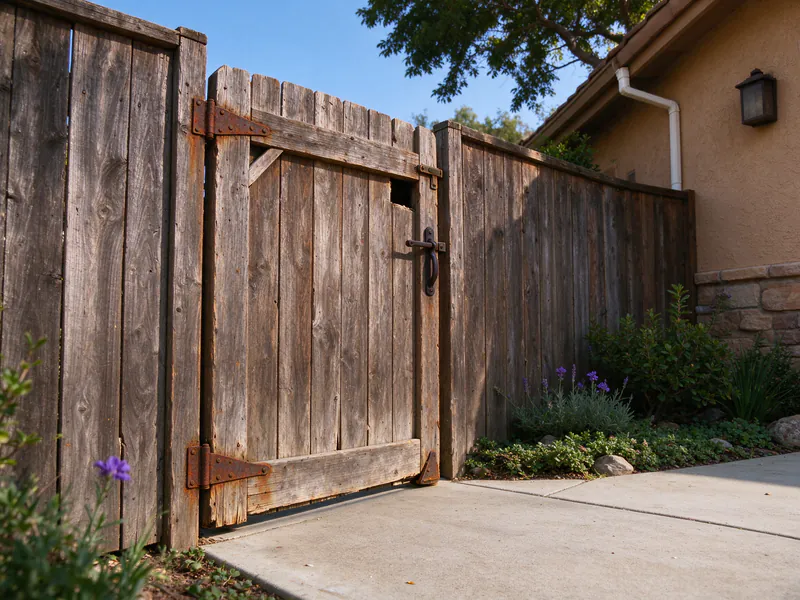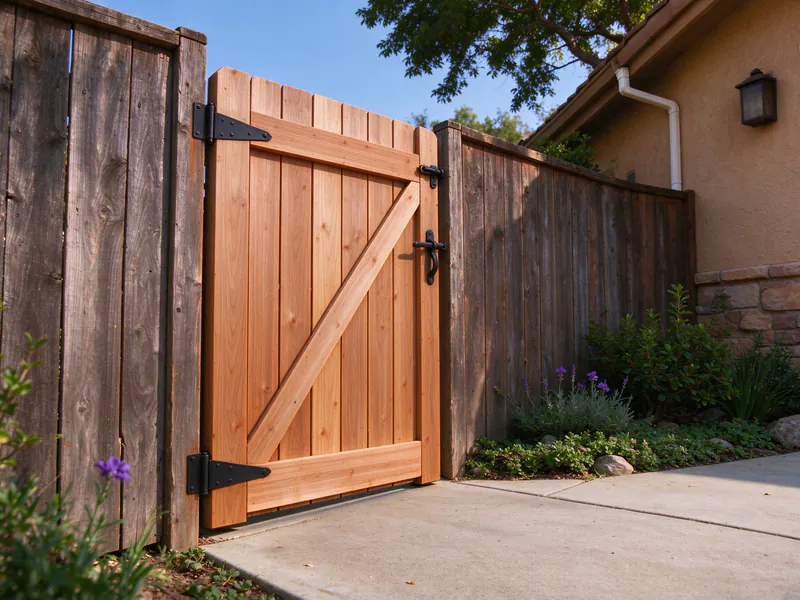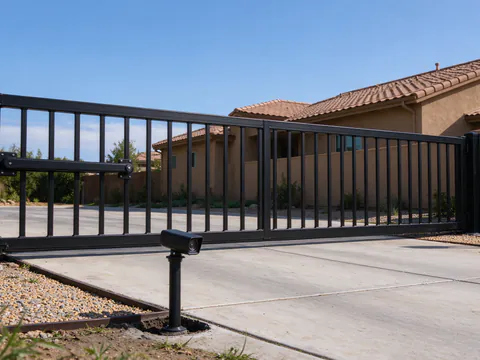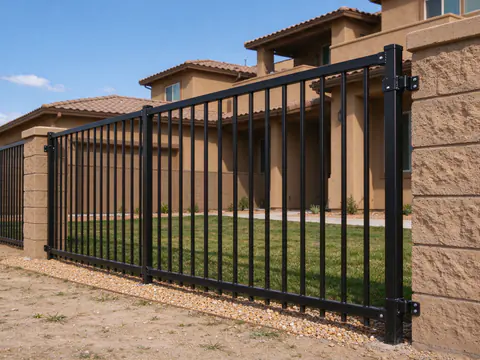
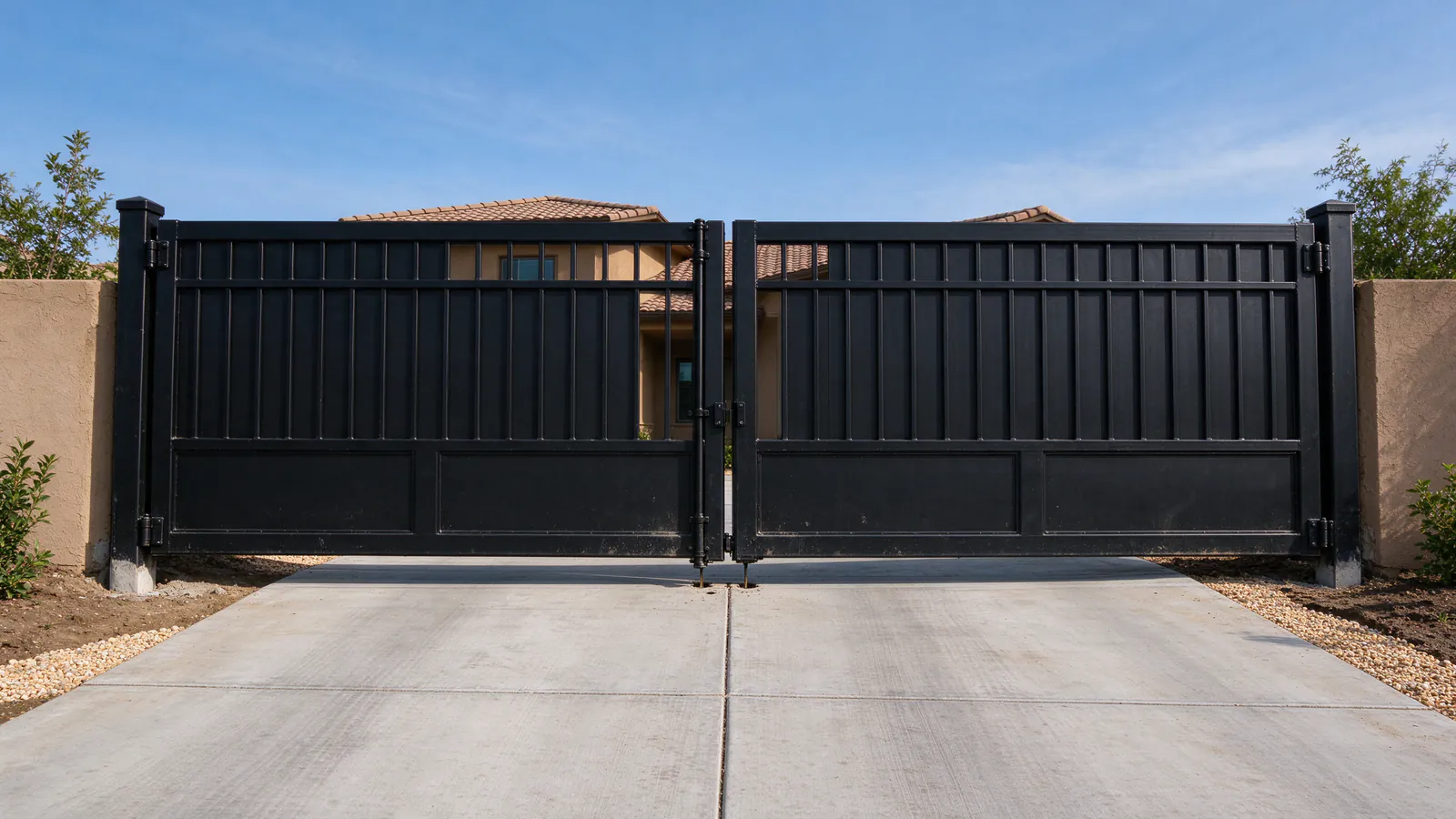
Cask Fence Temecula plans and manages gate installation for homes and properties in Temecula and the surrounding towns of southwest Riverside County, with the work carried out by licensed and insured contractors. That covers side-yard walk gates, garden gates, double drive gates, RV gates and slide gates, in wood, vinyl, aluminum and steel. A gate is the most-used part of any fence and the one most likely to fail first, and the reason is mechanical: the leaf hangs off one side of a post, so every swing, every gust of Santa Ana wind and every child riding the bottom rail levers on that post at the ground line. Most of the planning goes into the post and the opening, not the gate itself.
Walk gates and driveway gates do different jobs
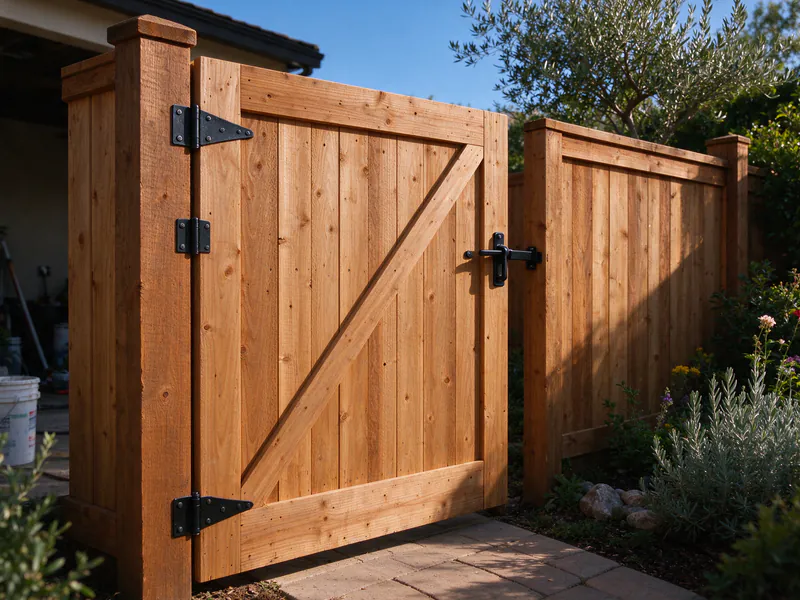
A walk gate moves people, bins, mowers and wheelbarrows. Its width is set by the widest thing that goes through: the trash bins on pickup day, a wheelbarrow of mulch, a riding mower or a pool service cart. A garden gate between two parts of a yard might be narrow and decorative. A side-yard gate on a Temecula tract home usually carries the bins every week, so it needs a latch that’s easy to work with one hand and a frame stiff enough to survive being bumped.
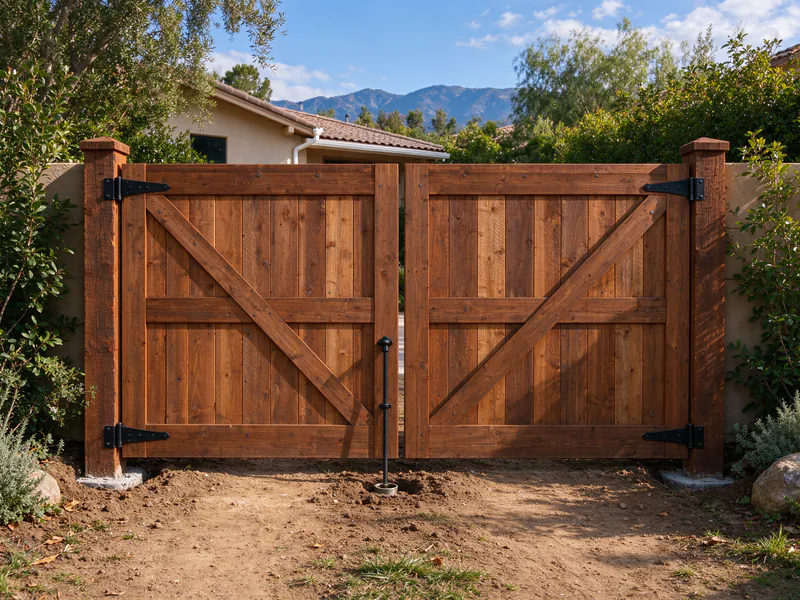
A driveway gate moves vehicles, and that changes almost everything. The opening has to clear the car, truck, trailer or RV at the angle it actually approaches. The leaves get longer and heavier, the posts get much bigger, and the ground in front of the gate starts to matter, because a long leaf sweeps a wide arc across the driveway. A single-leaf driveway gate is simpler and has one latch, but needs a clear arc as wide as the whole opening. A double-leaf gate splits the arc in two, at the cost of a center stop and drop rods.
The two can work together. On a wide drive, a separate walk gate next to the drive gate lets people in without opening the big leaves, and if the drive gate is ever automated, a separate pedestrian gate becomes part of the safety design. The automatic gate page explains why.
Clear opening versus nominal width
A gate sold as “12 feet” may not give you 12 feet. The nominal size usually describes the leaf or the gate kit. The clear opening is the space a vehicle actually drives through once the gate is open, and hinges, latch hardware, the gaps at each side, and the leaves themselves when they open only to 90 degrees all take inches out of it. On a double gate, the open leaves stand in the opening’s edges unless they swing past 90.
So the measurement that matters is the width between the faces of the posts, minus the hardware, compared with the widest vehicle and its turn. An RV or a boat trailer coming off a residential street at an angle needs much more clearance than its body width. Where Riverside County Fire is the fire authority and the driveway is long enough to count as a fire apparatus access road, its residential policy, TP 16-001, requires at least 14 feet of unobstructed width through the gate, which in practice sets the minimum for many acreage properties. The swing vs sliding gate guide works through sizing.
Gate posts and footings carry the load
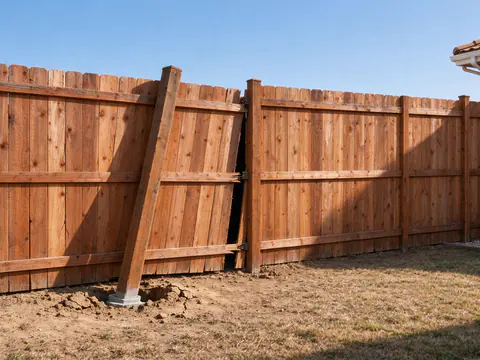
A line post holds the fence up. A gate post holds the fence up and carries a leaf hanging off one side, and the longer and heavier the leaf, the harder it levers. That is the relationship that sets the hardware: gate width and material weight decide the post size, the footing and the hinges. A 4-foot wood walk gate and a 16-foot steel drive gate don’t belong on the same post.
Gate posts are a size up from line posts, set deeper and in wider footings. On steel gates they are often heavy-wall steel tube. On wood fences, a steel gate post hidden behind a wood facing is a common way to keep the look and lose the rot. Temecula’s soil adds a variable: an auger can hit cemented hardpan or granite two or three feet down, and the footing is built to suit what’s there. The fence posts and Temecula soil guide covers that. Wind adds another. Temecula’s design wind is 97 mph, Exposure C, and a solid privacy gate is a sail on a hinge.
Mounting a gate to a stucco wall is a weak spot: stucco is a thin skin, and homeowners in the area report light anchors pulling out until the gate was remounted into framing. A freestanding post beside the wall avoids it. The latch post matters too, though it carries less. If it leans away, the gap at the latch grows and the latch stops catching. On a double gate, the center stop and drop rod sleeves set in the paving are the third support.
Frames, hinges and latches
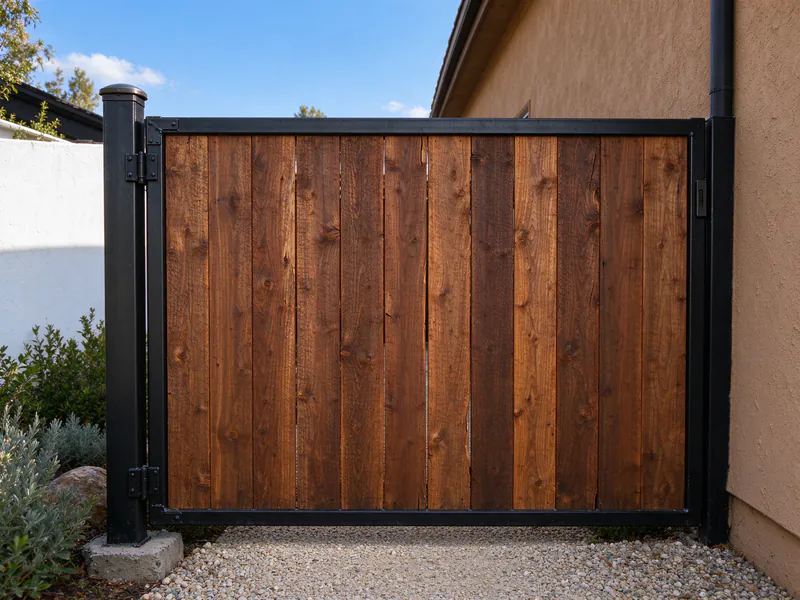
The gate frame keeps the leaf square. A wood gate is a rectangle that wants to become a parallelogram under its own weight, so it gets a diagonal brace running from the bottom of the hinge side up to the top of the latch side, or a steel frame inside the boards. A turnbuckle cable kit, running the other diagonal, pulls a drooping leaf back up. Vinyl gates need a metal-reinforced frame, especially wide ones. Steel and aluminum frames are welded or bolted and hold shape best, but steel adds weight to the posts.
Hinges are matched to the leaf. Strap and tee hinges suit light wood walk gates. Heavier gates use adjustable bolt-through hinges, which let the leaf be trued up later, or bearing hinges on steel drive gates. Self-closing spring hinges are standard on pool gates, where Temecula’s handout requires gates to swing away from the pool and close and latch on their own; the pool fence page covers the details.
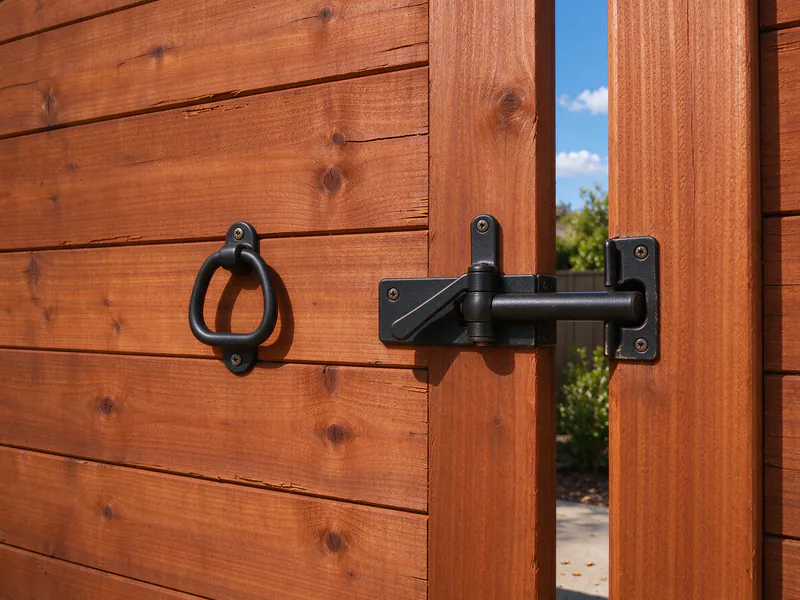
Latches are where daily use shows up. A gravity latch catches when the gate swings shut. A lockable latch takes a padlock or key. A pool latch sits at 60 inches or higher and catches on its own. A latch that scrapes or misses is usually a symptom of the gate or post moving, not a bad latch. The fence repair assessment helps narrow down which.
Gate dragging or not latching?
Send a photo of the hinge side and the latch side. The gap at the latch usually shows whether it's the post, the frame or the hinges.
Gate alignment, stops and drop rods
A gate is hung plumb on its hinge side and level across the top, with a gap at the latch sized for the hardware, and a ground clearance that holds through the whole swing. That last part is where Temecula’s sloped lots come in, as the hillside fence page shows for the fence itself. A gate stop on the latch post keeps the leaf from swinging past closed, which protects the hinges and keeps the latch lined up.
On a double gate, the inactive leaf is held by a drop rod into a sleeve or hole in the driveway, and both leaves close against a center stop. A second hole for each leaf in the open position keeps the gate from swinging shut in wind. Without stops, a pair of leaves can swing past each other and twist the hinges in one gust.
Driveway slope and swing clearance
Many Temecula driveways rise from the street to the garage. A gate that swings uphill hits the pavement partway open, so its arc is limited to the point where the bottom rail meets the grade. The usual answers are swinging the leaves out toward the downhill side, cutting the bottom of the gate to the slope, raising the gate and closing the gap below with a separate panel, or rising hinges that lift the leaf as it opens. Each one is checked against what has to pass under the gate. The leaf also needs clear space to open into: parked cars, walls, planters and a mailbox all have to stay out of the arc.
Slide gates need the opposite: a level run along the fence line for the panel to roll back. A V-track gate needs a panel about 3 feet longer than the opening; a cantilever gate, which rides on rollers with no track across the drive, needs about half again the opening’s width. Slide gates shouldn’t roll up or down a slope.
What a gate costs
A national budgeting range for a walk gate runs about $200 to $1,500 per gate, and for a double drive gate about $2,000 to $6,000. Where a gate lands depends on its width and weight, frame material and infill, gate posts and footings, digging through hardpan or rock, hinges, latches and locks, drop rods and stops, slope work, and whether the gate is set up for an operator later. The Temecula fence cost guide explains how gates are priced as their own lines. An existing gate that sags may need repair rather than replacement, and the sagging gate guide helps sort that out. To get a written scope, send the opening’s details.