Cask Fence Temecula plans and manages chain link fence installation in Temecula and the surrounding cities of southwest Riverside County, carried out by licensed and insured contractors. Chain link is the practical fence: dog runs, side yards behind the garage, the back of acreage parcels, utility areas, sports courts and commercial lots. It costs less per foot than almost any other permanent fence, it doesn’t rot and it lets wind and light through. It also offers no privacy and doesn’t suit every neighborhood, which is why the material, the coating and where it goes are worth planning together. For larger commercial and security work, see the commercial fencing page.
Gauge and mesh: what the numbers mean
Chain link fabric is described by its wire gauge, its mesh size and its height.
Gauge is the thickness of the wire, and the scale runs backward: a lower number means thicker, stronger wire. Lighter gauges are common on low residential fences, heavier ones on taller fences, dog runs and commercial lines where the fabric gets pushed, climbed or hit. Thicker wire resists denting and cutting and holds its shape longer when tensioned.
Mesh is the size of the diamond opening. A larger diamond uses less wire and costs less. A smaller one is harder to climb, harder to get a hand or foot through and stops smaller animals, so it shows up around courts, pools and higher-security areas.
Height is the fabric height, and the framework has to suit it. A taller fence has more fabric for the wind to push on and pries harder at the ground line, so posts get heavier and footings bigger as height goes up. Asking for gauge, mesh, height and post sizes in writing is the easiest way to compare two quotes for “chain link” that may not be the same fence at all.
Galvanized or black vinyl-coated
Most chain link is galvanized steel, coated with zinc so it doesn’t rust. Plain galvanized is the bright silver fence everyone recognizes, and it is the economical choice where looks don’t matter.
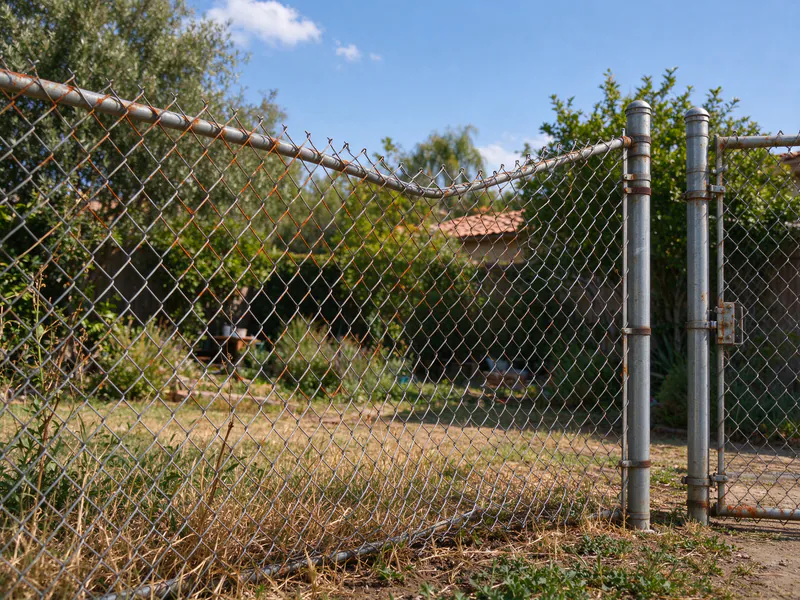
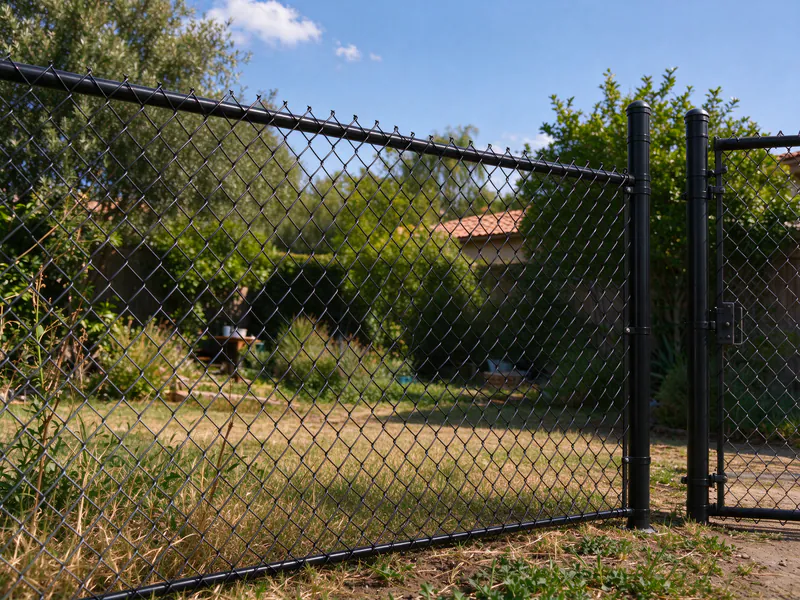
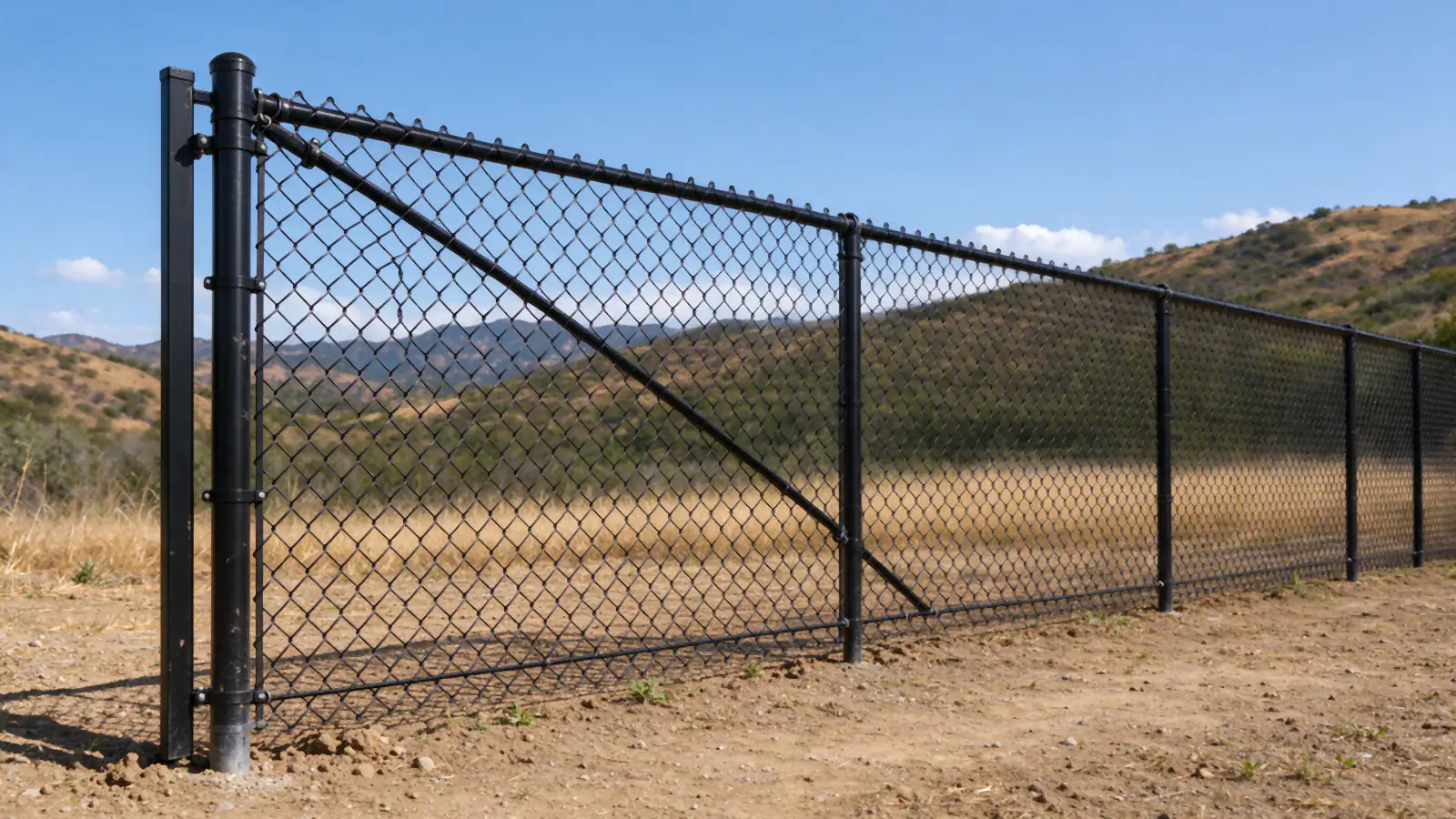
Black vinyl-coated chain link adds a bonded coating over the steel wire. The black fades into planting and shade much better than silver, so the fence nearly disappears from a distance, which is why it is so often chosen for backyards and front edges. The coating adds another layer between the steel and the weather. For the look to work, the posts, top rail and fittings should be coated to match. Green and brown coatings also exist, though black is the most common.
In Temecula’s sun, any coating fades slowly over time. Inland air means salt is not the usual problem here; irrigation water sitting on the bottom of the fabric and posts in wet soil are more likely to cause wear.
Terminal posts, line posts and the top rail
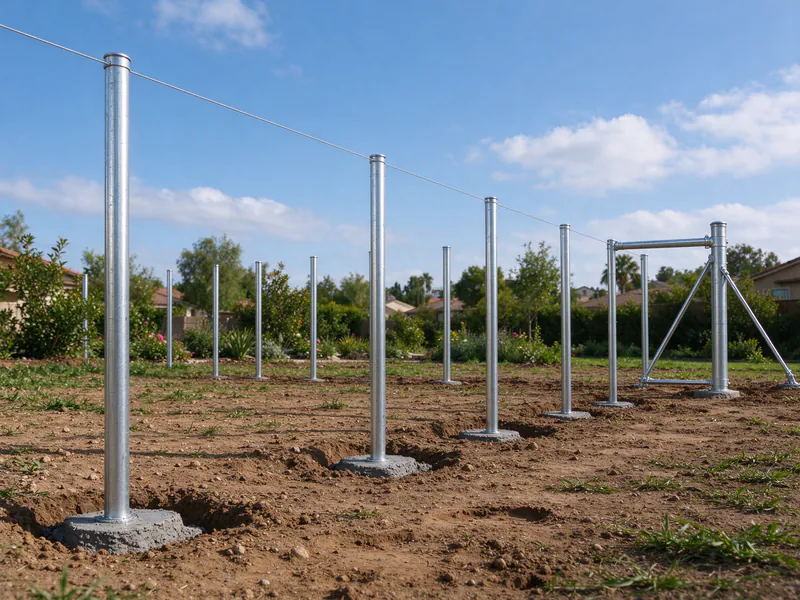
Chain link is a tension system, and terminal posts are where that tension lives. A terminal post is any post where the fabric ends or changes direction: ends, corners and gate posts. They are larger in diameter than line posts and set in bigger footings, because the stretched fabric pulls on them constantly. On longer runs, terminal posts are braced to the next line post with a horizontal brace rail and a truss rod, so the pull doesn’t lever them over.
Line posts sit between terminals and hold the fabric up and in line. Their spacing is set by the system and the fence height, and it belongs in the written scope. The top rail runs along the top of the line posts through loop caps and keeps the fabric from sagging between them.
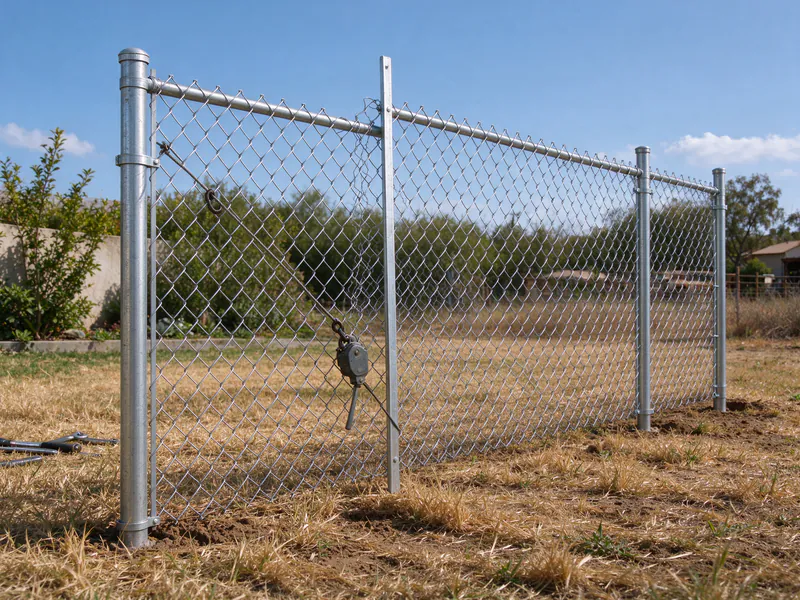
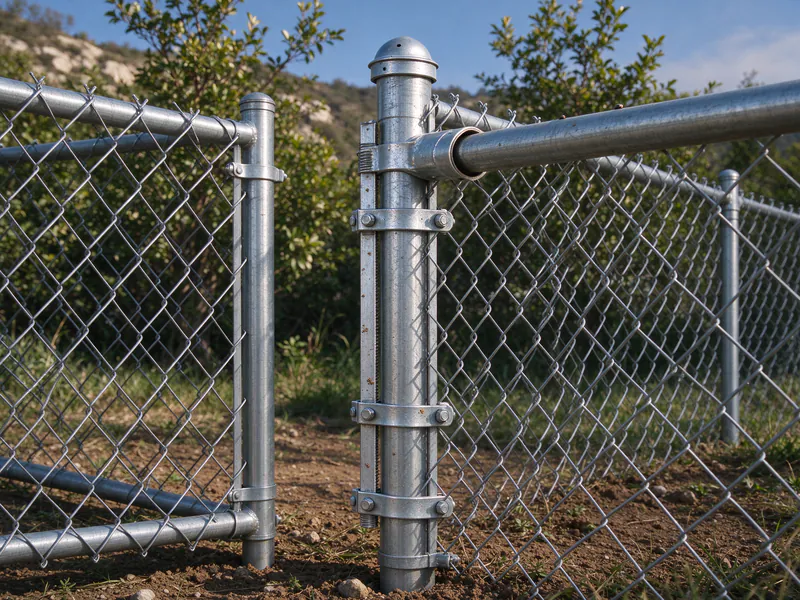
At each terminal post, the fabric is threaded onto a tension bar, a flat steel bar woven through the end diamonds. Tension bands clamp that bar to the post at intervals, so the fabric’s pull is spread along the whole post height. Tie wires fasten the fabric to the line posts and top rail. When a fence starts to sag, it’s usually a terminal post that has moved or a brace that has slipped, not the fabric itself.
Tension wire at the bottom
With no bottom rail, the lower edge of the fabric is the loose end of the system. A bottom tension wire, a heavy wire stretched between terminal posts and tied to the fabric’s lower edge, holds it down and in line so it can’t be pushed out from below. Some fences add a bottom rail instead.
That bottom edge is where pets escape and where homeowners report the most frustration: fences finished well above the dirt, leaving a gap a dog can dig through. The fabric should sit close to the finished grade, with tension wire holding it there. For a dog that digs, a buried wire barrier or a concrete mow strip along the base does more than wire alone. The dog fence guide covers that.
When an existing fence has a loose or bulging section, a repair has to deal with the posts and tension, not just add tie wires. The fence repair page and repair or replace guide explain the difference, and the repair assessment tool helps sort out which you have.
Privacy slats and windscreen
Privacy slats are strips, usually plastic, woven vertically through the mesh. They block much of the view, and some types close nearly all of it. Fabric windscreen does a similar job and is common on courts and job sites.
The cost is wind. Open chain link lets most of the wind pass straight through. Add slats or screen and the fence starts behaving more like a solid panel. Temecula’s Building & Safety handout puts design wind at 97 mph with Exposure C, and a Santa Ana gust on a slatted fence pushes hard on every post. If slats are part of the plan, posts and footings should be sized for them from the start. Adding slats to an old, lightly built fence is a common way to end up with a leaning one. The fence posts and soil guide covers how footing size relates to wind.
Chain link or wood?
| Question | Chain link | Wood privacy fence |
|---|---|---|
| Main job | Containment and boundaries | Privacy and screening |
| Looks | Utilitarian; black coating blends in | Warm, finished look |
| Wind | Open fabric passes most wind | Solid panel takes the full load |
| Ground line | Steel posts don’t rot or feed termites | Wood posts are the weak point |
| Upkeep | Tension checks, occasional repairs | Stain, board and post replacement |
| Cost | Lower per foot | Higher per foot |
The answer usually comes down to what the fence is for. If it needs to hide the yard, chain link isn’t the fence, even with slats. If it needs to keep a dog in, mark the back of a large lot or fence an area nobody looks at, chain link does the job for less and lasts longer at the ground line than a wood post. Many properties use both: wood or vinyl on the lines people see, chain link at the back. The wood fence page and the privacy fence styles guide cover the other side.
Not sure chain link suits the spot?
Tell us what the fence has to do and who will see it. That usually settles the material.
Where chain link fits around Temecula, and where it doesn’t
Neighborhood rules decide as much as budget. In Temecula Valley Wine Country, the county’s design guidelines say chain link fences, exposed metal and contrasting colors should be prohibited, especially in public view, and they keep most fences to 4 feet except pool fences and retaining walls. A ranch rail or a low open fence is the more likely fit there, and the Wine Country page covers the area. Many HOAs in Temecula tracts also restrict chain link on lines facing a street, and the association’s decision has to be in writing under Civil Code 4765.
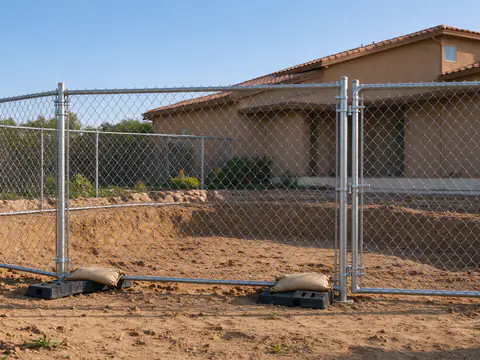
Chain link is a common choice for temporary work. Temecula’s pool handout requires a temporary fence and gate in place when pool construction starts, and rented chain link panels often fill that role; see temporary fence rental. The permanent pool enclosure is a separate requirement with its own height, clearance and gate rules, covered on the pool fence page.
On horse property, plain chain link isn’t the usual choice for pasture. The horse fence page covers that.
Gates in chain link
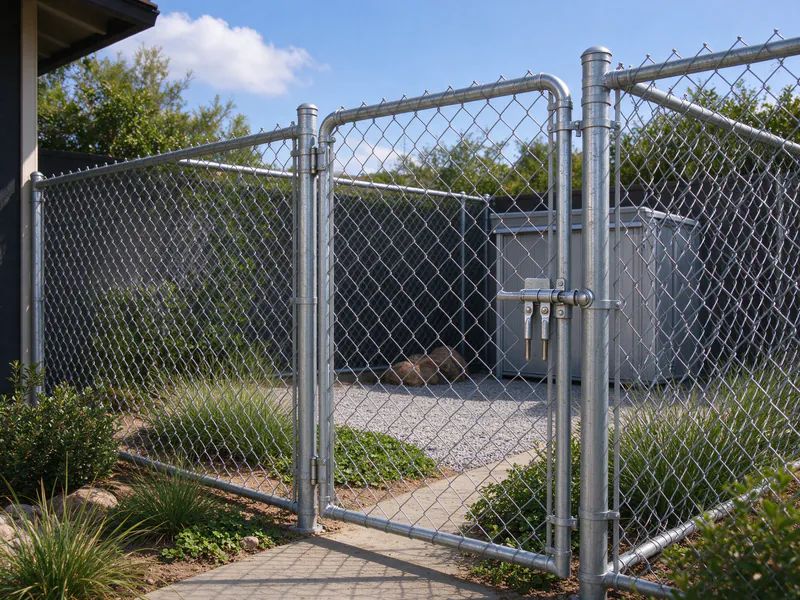
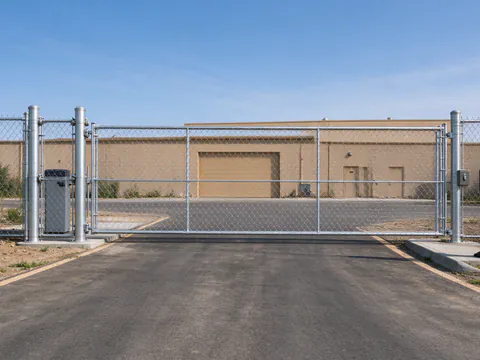
Chain link gates are framed from pipe and filled with the same fabric. Walk gates hang on terminal posts sized for the gate; wide drive gates swing as double leaves with a drop rod, or slide on a track or cantilever frame. A gate is only as square as its posts, so gate posts are among the heaviest on the fence. The gate installation page and the swing vs sliding gate guide cover the choice.
What a chain link fence costs
A national budgeting range for a galvanized chain link fence from 4 to 10 feet tall runs about $8 to $40 per linear foot. Within that range, a Temecula job moves with linear footage, height, gauge, mesh, coating, the number of terminal posts and gates, slats or screen, digging through hardpan or rock, slope and removal of an old fence. The Temecula fence cost guide breaks those down, and the fence cost estimator gives a range for your own run. For a written scope, send us the details.