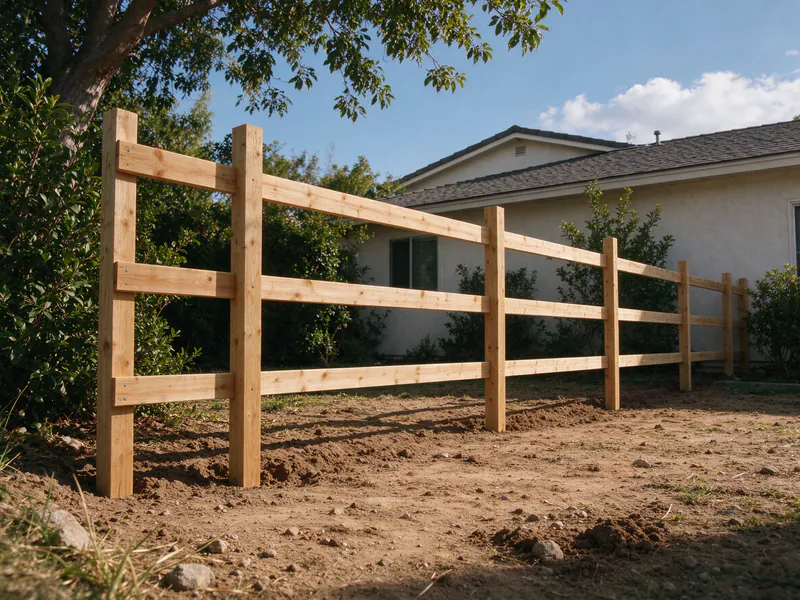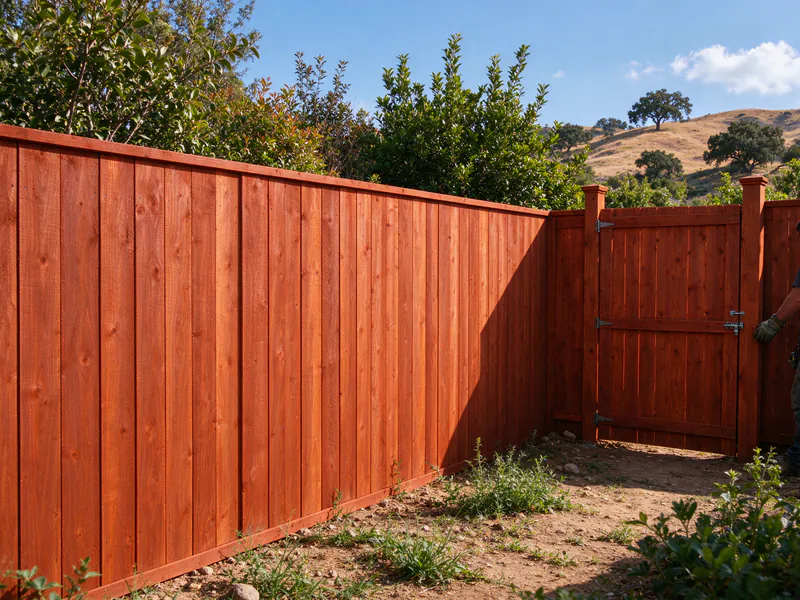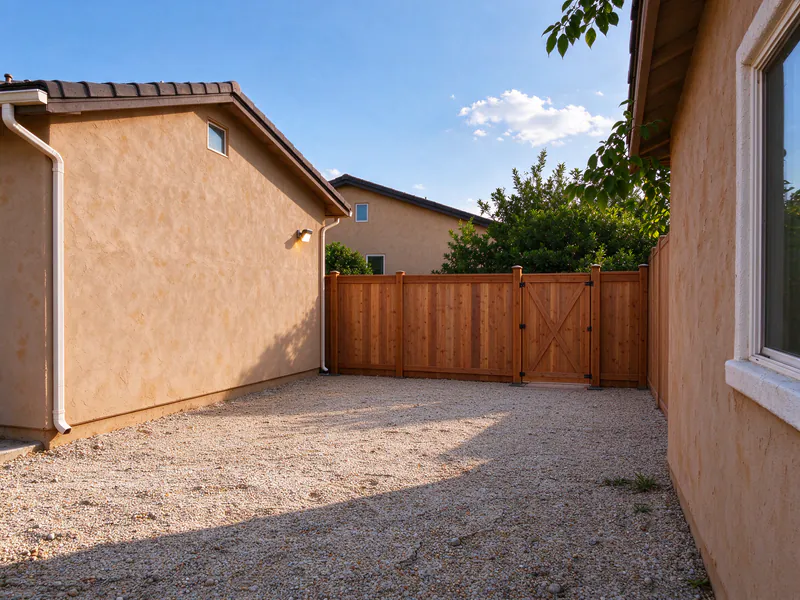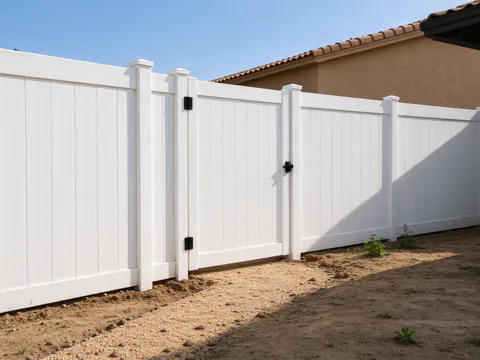
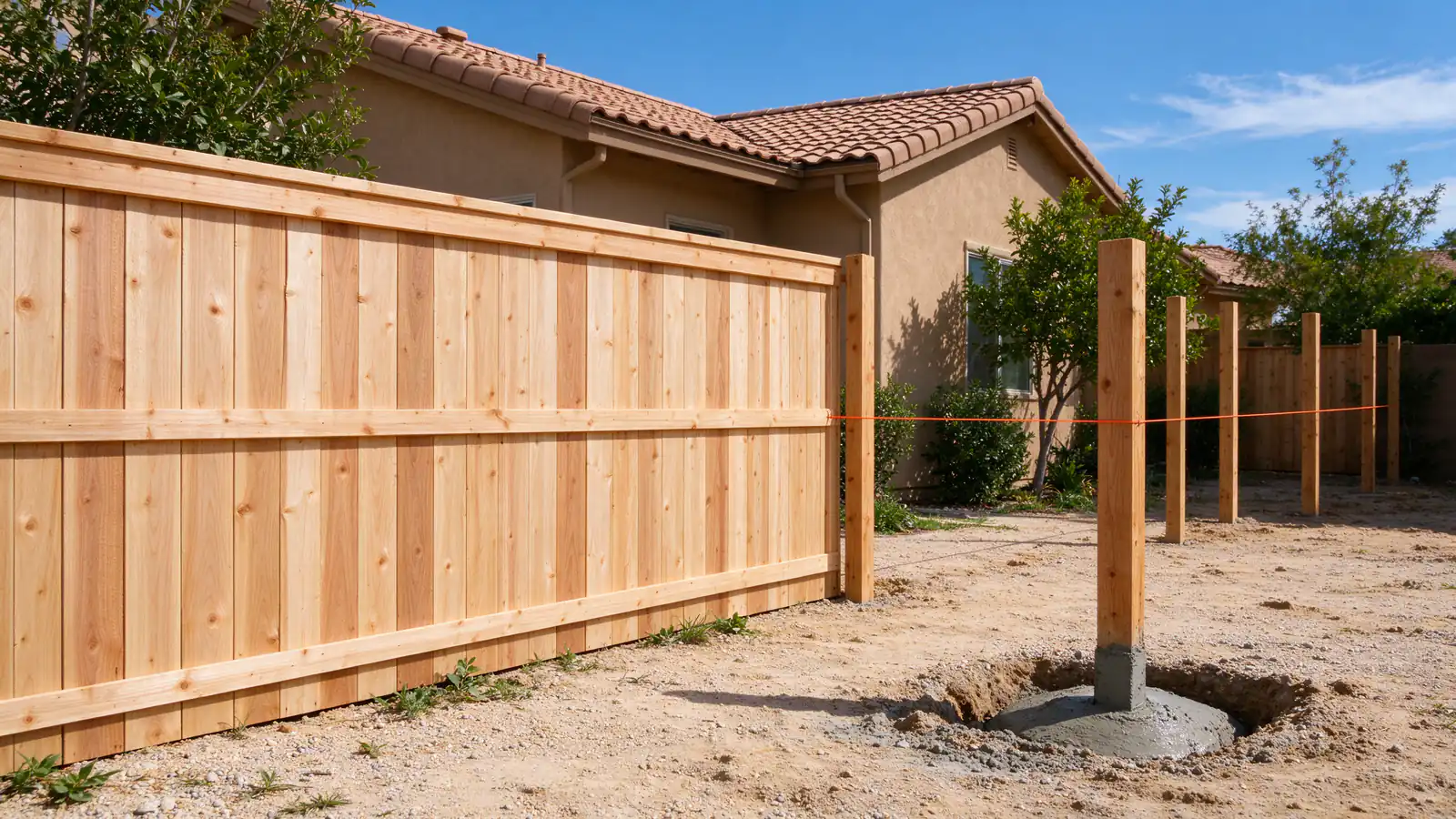
Cask Fence Temecula plans and manages wood fence installation for homes in Temecula and the nearby cities of southwest Riverside County, with the work carried out by licensed and insured contractors. Most wood fences here are 6 ft privacy fences on side and rear property lines, built from redwood, cedar, Douglas fir or pressure-treated pine. The choices that matter most are less visible than the boards: what the posts are made of, how deep they go into Temecula’s sandy loam and hardpan, and how the fence handles strong offshore winds and long, hot summers. If you are still deciding on a material, the wood vs vinyl guide and the vinyl fence page cover the other common option.
What happens on the first visit
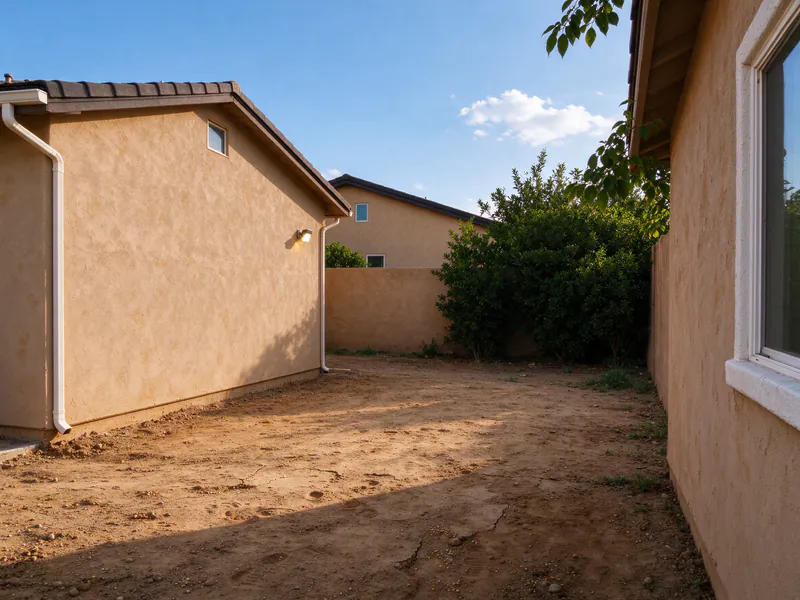
The visit starts at the line itself. That means walking it with you, noting where the existing fence, block wall or pilasters are, where a gate needs to swing or slide, and how much the ground falls along the run. An old fence shows where someone once built, not necessarily where the property line is, so if the line matters to you or a neighbor, a survey comes first. The property line survey guide explains when that’s worth paying for.
Next comes the ground. Sprinkler lines, low-voltage lighting and lines to a pool heater or spa are common in backyards, and utility locators mark only their own lines. Before any hole is dug, a DigAlert ticket has to be opened at least two working days ahead, as California Government Code 4216.2 requires. Slopes get measured too, because a fence on a grade is either stepped or racked, and that decision changes the panel layout. The stepped vs racked guide shows the difference.
What you get back is a written scope: species and grade for posts, rails and boards, post type and spacing, fence height, style, gates and hardware, tear-out of any old fence, and whether stain is included. If you are replacing a fence rather than adding one, the fence replacement page covers removal, and a fence with only a few bad posts may be a repair instead.
Redwood, cedar, Douglas fir and pressure-treated pine
All four are used here, and each one does a different job well.
Redwood is the material most people picture for a Southern California wood fence. Its decay resistance comes from the heartwood, the darker center of the log, so grade matters: heart grades hold up well above ground, while grades with a lot of pale sapwood behave more like ordinary softwood. Cedar is similar in look and behavior and is chosen mostly on grade, color and what suppliers have. Both are pleasant to work with, take stain well and resist twisting better than cheaper boards.
Douglas fir is strong and straight, which makes it a common choice for rails and framing. It is not naturally decay resistant, so untreated fir belongs well above the soil. Pressure-treated pine and fir get their resistance from preservative forced into the wood, and the tag on each piece says what exposure it is rated for. Only lumber rated for ground contact should go in a post hole. Homeowners do report finding untreated posts after an install, which is why the scope should name the post material and its rating in writing.
Many fences mix these. A redwood face on treated or steel posts, with fir or treated rails, puts each material where it performs best. The termites and rot guide covers how each one ages.
Wood posts or galvanized steel posts
Galvanized steel posts with wood rails and boards are a widely used approach in Southern California. The reason is simple: a wood fence usually fails at the ground line, where the post stays damp, fungi break down the wood and subterranean termites reach it from the soil. A steel post removes the wood from that zone. It doesn’t rot, it won’t feed termites and it stays straighter as the years go by.
The trade-offs are cost and appearance. Steel posts can cost more per post than treated wood, and the boards attach with brackets or to a wood frame bolted to the post. On a fence seen mainly from your own yard that barely matters. Where the post face shows, a wood facing can cover it. Some cities write steel posts into their own fence rules: Lake Elsinore, for example, lets its Planning Commission approve a wood fence in place of a required block wall only with galvanized steel posts at least every eight feet, as the Lake Elsinore page explains.
Treated wood posts still make sense for budget runs, low fences and fence lines far from the house. Either way, gate posts carry more load than line posts and are sized up, a point the gate installation page covers.
Setting posts in Temecula’s soil, and why wind sets the depth
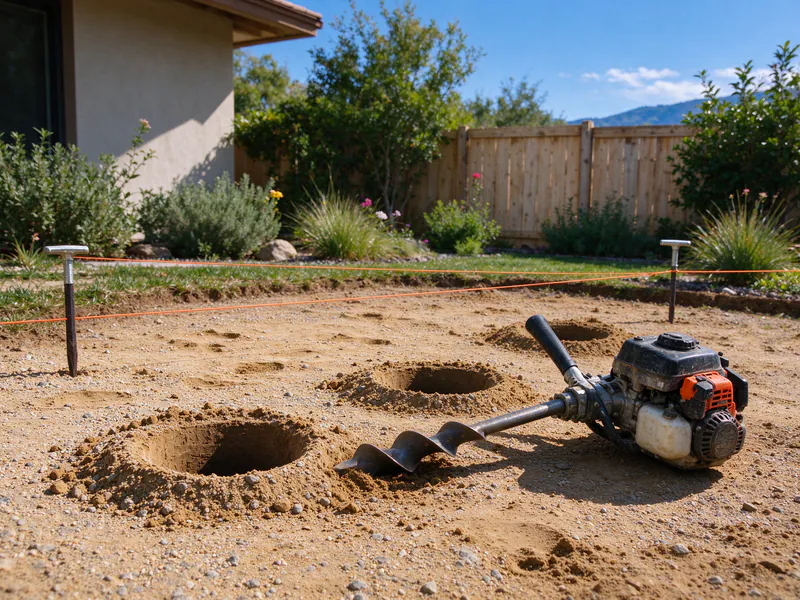
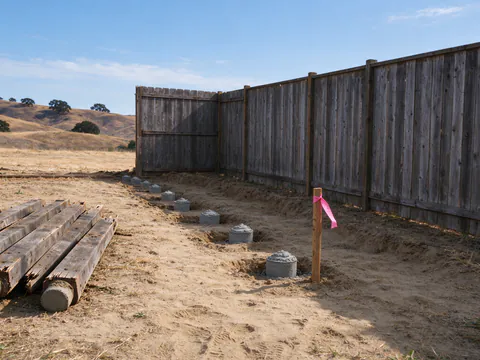
Federal soil survey data for Temecula shows mostly sandy and granitic loams with low shrink-swell. Some areas have a cemented hardpan layer, called a duripan, around 2 to 3 feet down, and hillside lots can hit granite. Graded tracts sit on engineered fill. An auger that hits hardpan or rock slows down, and the job may need a rock bit or a jackhammer. That is a cost and schedule driver, and it is hard to predict from the surface.
Frost is not a factor. The nearest NOAA climate station on the valley’s south edge averages well under one freezing night a year, so post depth here is set by wind, soil and height rather than frost. There is no single correct depth for every fence. The fence posts and Temecula soil guide works through it.
Wind is the load that counts. Temecula’s Building & Safety handout gives a design wind speed of 97 mph with Exposure C, the category for fairly open terrain. A solid 6 ft wood fence catches the full force of a Santa Ana gust like a sail, and that force levers on every post at the ground line. Deeper or wider footings, tighter post spacing and steel posts are the usual answers on exposed lines.
Exposed lot or a slope?
Tell us where the fence runs. Wind and grade change the post plan more than the wood does.
Board-on-board, shadowbox, stockade, horizontal and lattice-top
Style changes privacy, wind load and material use. The privacy fence styles guide goes deeper.
| Style | How it’s built | Privacy | Wind |
|---|---|---|---|
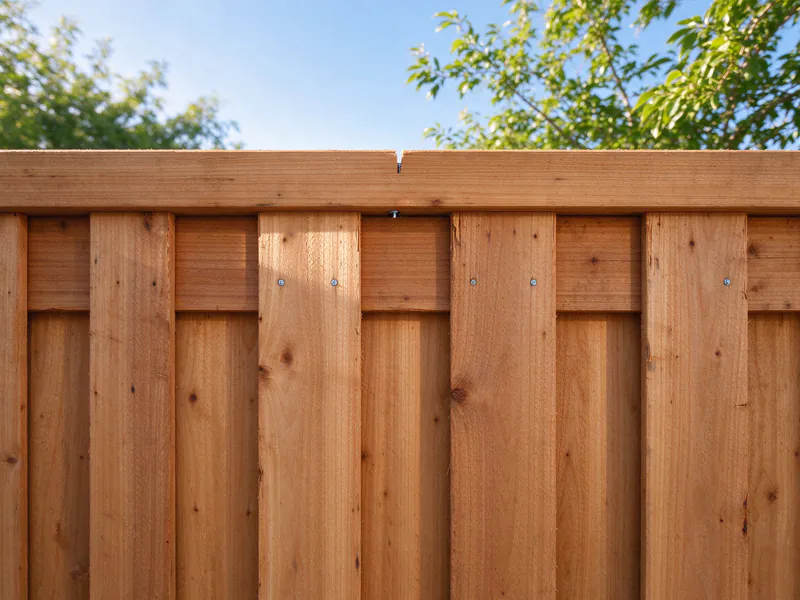
| Board-on-board | Two overlapping layers of boards on one side of the rails | Full | Behaves as a solid fence |
| Shadowbox | Boards alternate on each side of the rails, offset | Full head-on, partial at an angle | Lets some air through the offsets |
| Stockade | Boards butted tight edge to edge | Full when new; gaps can open as boards shrink | Solid |
| Horizontal | Boards run between posts, often with small gaps | Depends on the gap | Solid unless gapped; post spacing limits board span |
| Lattice-top | A solid fence topped with a short open lattice band | Full below the lattice | The open band catches less wind |
Board-on-board is the common Temecula privacy fence because it stays closed as boards dry and shrink in the summer heat. Shadowbox looks the same from both sides, which helps on a shared line. Horizontal fences suit modern houses but need closer posts or stiffer boards to keep the long runs from sagging.
Sun, termites and the spot where wood meets the house
Temecula’s sun wears on wood. The nearest NOAA station records about 60 days a year at or above 90°F, and UV slowly turns any unfinished wood silver-gray. That graying is surface weathering, not rot. Stain slows it and keeps the color, but no stain or sealer can repair wood that has already decayed.
UC IPM notes that subterranean termites, the most destructive kind in California, attack wood in contact with soil, while drywood termites can nest in dry fence lumber above ground. Its advice is to keep untreated wood out of the soil near structures. That points to the joint where a wood fence meets the house. In Very High fire hazard zones, California’s proposed Zone 0 rules would also bar new combustible fences within 5 feet of a home and move existing ones toward a noncombustible section where they attach. A metal gate or short metal section at the wall handles both. The fire-resistant fence page has the details.
Permits, HOA approval and your neighbors
The 2025 California Residential Code exempts fences not over 7 feet from a building permit, but local zoning still limits height by yard, so the allowed height is confirmed for your address. The City of Temecula’s fee schedule lists a non-masonry fence from 6 to 10 feet at $384 ($131 plan check plus $253 inspection), plus $91 for each additional 100 linear feet. The Temecula fence height and permit guide covers the rules.
In a planned community, the association’s architectural approval is a separate written step. California Civil Code 4765 requires those decisions in writing, with a way to ask for reconsideration. The HOA approval guide lists what to submit.
For a fence on a shared line, Civil Code 841 presumes neighbors share reasonable costs and calls for 30 days’ written notice describing the work, the cost and the split. The good neighbor fence law guide explains how that works.
What a wood fence costs
A national budgeting range for a 6 ft wood privacy fence in pressure-treated pine or Douglas fir runs about $10 to $50 per linear foot. Redwood and cedar run toward the top of that range and past it. Where a job lands depends on linear footage, height, species and grade, wood or steel posts, gates, digging through hardpan or rock, slope, tear-out and haul-away, and stain. The Temecula fence cost guide breaks those down, and the fence cost estimator gives a range for your own length and material. For a written scope, send the details.