Cask Fence Temecula plans fire-resistant fencing for homes in Temecula, the wine country, De Luz and the nearby cities, with the work carried out by licensed and insured contractors. The work centers on a small area: the 5 feet next to the house, and above all the point where a fence or side gate meets the wall. Replacing combustible wood or vinyl there with steel, aluminum, chain link or masonry is the change that California’s proposed Zone 0 rules and the main wildfire home-hardening standard both point to. For the wider planning picture, the Temecula fence planning guide puts fire zones next to permits, HOAs and neighbors.
How a fence carries fire to a house
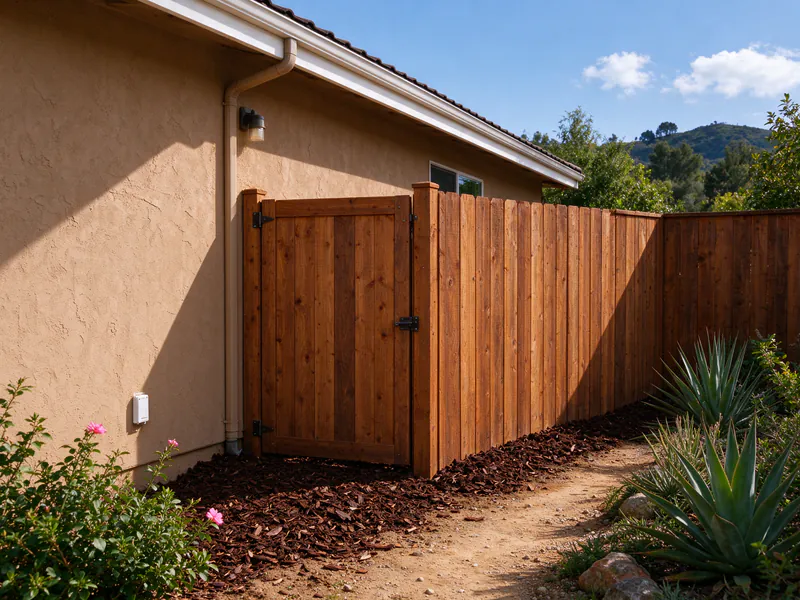
Most homes lost to wildfire ignite from embers and small fires near the house, not from the main flame front. A wood or vinyl fence that runs into the house wall is a continuous line of fuel. Embers land on it or in the leaves piled at its base, it catches, and it delivers flame directly to the siding, eaves or a window.
The Insurance Institute for Business & Home Safety (IBHS), an insurance-funded research group, describes Zone 0 as noncombustible for this reason: when the 5 feet around the house holds nothing that burns, embers that land there have little to ignite. A fence is one of the few structures that crosses that zone, which is why both regulators and IBHS single it out.
Fire hazard zones around Temecula
Fire hazard severity zones are mapped by CAL FIRE at three levels: Moderate, High and Very High. Riverside County Fire describes them as maps of hazard, not risk, and under AB 211 local agencies have to adopt the state’s Moderate, High and Very High designations for local responsibility areas and may not downgrade them. Inside cities, local agencies are responsible for fire protection (local responsibility areas). Outside them, much of the land is a state responsibility area.
Point checks against CAL FIRE’s current layers show how much the zones vary across the area. The wine country, De Luz, La Cresta and the Santa Rosa Plateau sample points fall in Very High zones in the state responsibility area. The Redhawk point maps Very High, and the Wildomar and Lake Elsinore city center points also map Very High. Harveston and Murrieta Hot Springs map High. Old Town Temecula and Canyon Lake map Moderate. The city center points of Temecula, Murrieta and Menifee fall in no zone at all, along with French Valley, Winchester and Fallbrook. Those are single points, though, and the zone changes from parcel to parcel inside every community.
The only reliable answer is your own address. The City of Temecula publishes a fire hazard severity map with an address lookup based on CAL FIRE’s 2025 update. The wine country page, the Wildomar page and the Lake Elsinore page cover the higher-hazard areas in more detail.
Zone 0: the proposed 5-foot rule for fences
California is moving toward “Zone 0” rules for the area within 5 feet of a home. A July 2026 Board of Forestry staff memo describes the draft regulations as they apply to fences:
- They would apply in Very High fire hazard severity zones in local responsibility areas, and in state responsibility areas.
- New combustible fences within 5 feet of a structure would not be allowed.
- Existing combustible fences inside that 5 feet could remain and be repaired with the same materials.
- Fences more than 5 feet from the house wouldn’t be affected.
- Where a fence or gate attaches to an occupied structure, a noncombustible section, such as a noncombustible gate, would be required within five years of the rules taking effect.
- New construction would comply right away; existing homes would be phased in.
These rules are proposed. Their final adoption and effective date haven’t been confirmed at an official source, so treat any date you hear as something to check. The direction is clear enough to plan around, though: anything new built against the house in a Very High zone should be noncombustible, and the attachment point on an existing fence is the piece that would eventually change.
Already replacing a fence or gate?
That's the cheapest time to make the last few feet noncombustible. Mention your fire zone when you send the details.
Wildfire Prepared Home and the 5-foot fence standard
IBHS runs a designation program called Wildfire Prepared Home. Its base standard asks homeowners to replace any wood or vinyl fence, posts and gates within 5 feet of the home with noncombustible material such as metal, chain link, iron or masonry. That goes further than the draft Zone 0 rules, which would let an existing fence stay and focus on the attachment point.
The designation isn’t a grant or a rebate. Whether it affects your insurance is a question for your insurer. If you’re working toward it, the fence scope should cover everything inside the 5 feet: the gate, the posts and every panel.
Metal sections and gates at the house
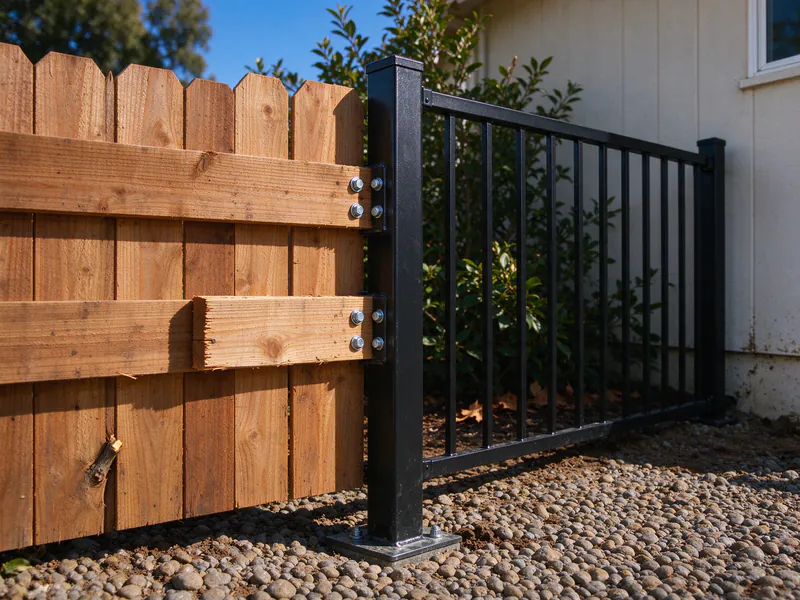
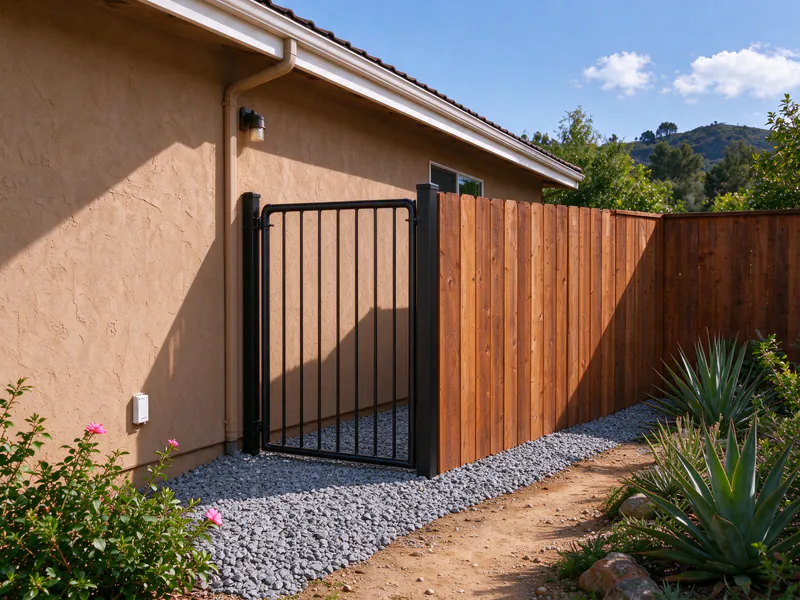
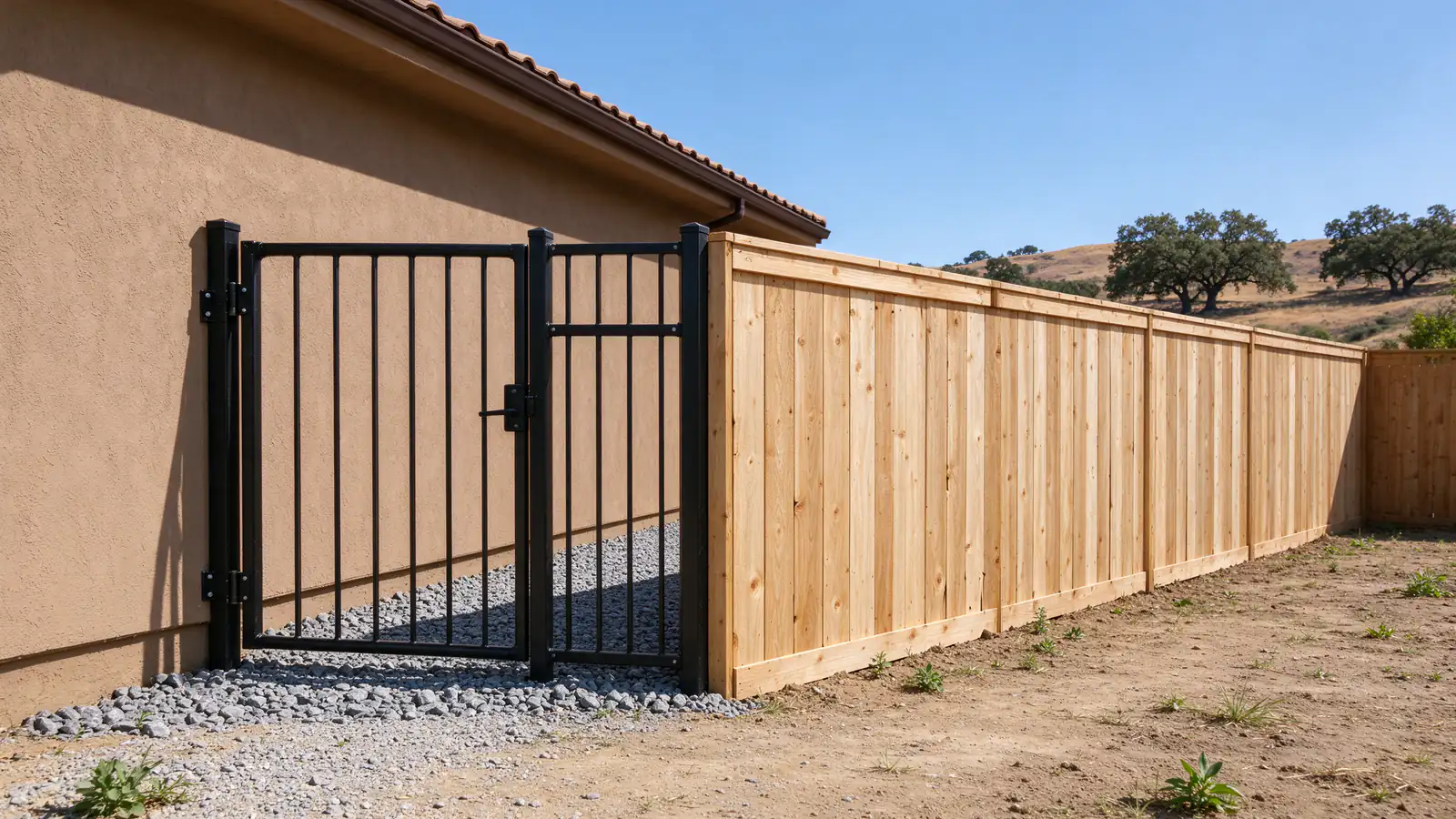
In practice, a fire-resistant fence near a Temecula house is usually a short transition, not a whole new fence. The side gate between the house and the side-yard fence becomes steel or aluminum. The first section of fence out from the wall, out to 5 feet, becomes a matching metal panel or a short block return. Where it meets the existing fence, a steel post or a block pilaster carries the joint.
Two details make that transition work. First, the gate and section should hang from their own post set in the ground, not from anchors in the stucco. Stucco is a thin cement skin, and gates hung from it pull loose. Second, the joint between the metal section and the wood fence is where the combustible part now starts, so it should sit at or past the 5 foot mark, not just shy of it. The gate installation page covers gate posts and hardware.
Steel, aluminum, chain link and masonry
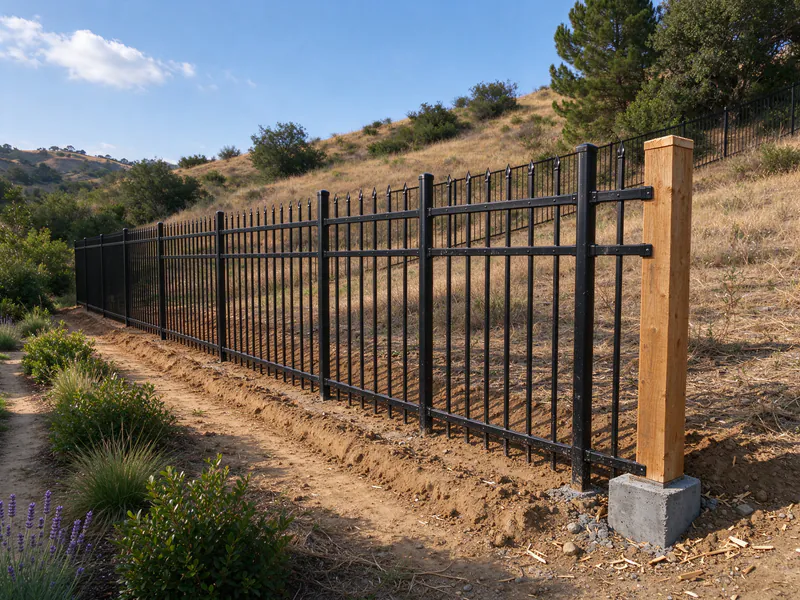
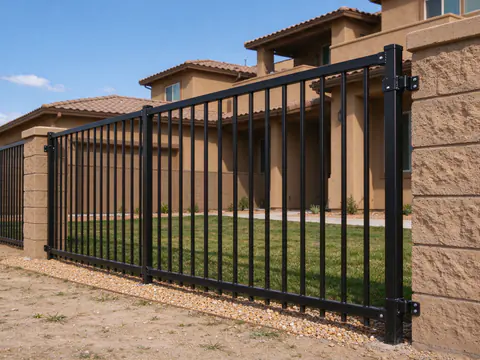
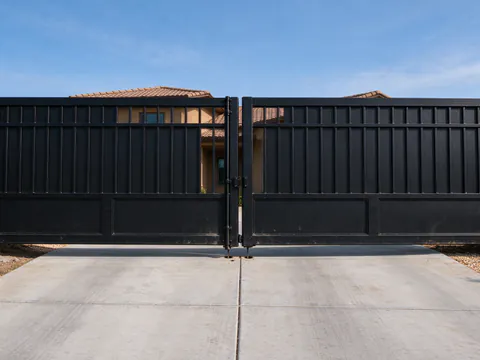
Steel and wrought iron. Tubular steel and wrought iron don’t burn and hold their shape in heat. They’re strong enough for heavy or wide gates, and solid steel infill panels can add privacy. They need a good finish to resist rust. The wrought iron fence page covers the options, and the aluminum vs wrought iron guide compares the two metals.
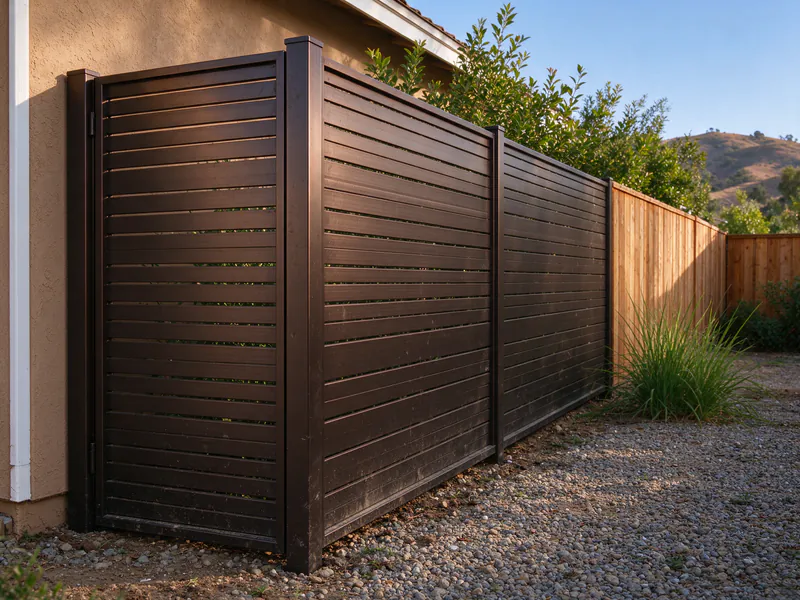
Aluminum. Aluminum doesn’t burn and won’t rust, which suits low-maintenance side yards. It softens at far lower temperatures than steel, so a light aluminum panel can bend in intense heat. For a fence section or a pedestrian gate, it still breaks the fuel path.
Chain link. Galvanized chain link is noncombustible and the least expensive way to close the 5 feet. Privacy slats and vinyl coatings add plastic, so a bare galvanized fabric is the cleanest choice right at the house. The chain-link fence page covers the system.
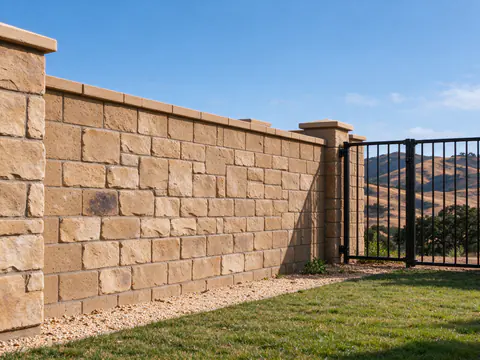
Masonry. A short block wall return gives full privacy and doesn’t burn. Under Temecula’s CD-24 standard only open fencing, such as wrought iron, may attach to block pilasters, and masonry work goes to a C-29 masonry contractor. The block wall page explains the standard.
Wood and vinyl. Wood is fuel. Vinyl softens and sags well below the temperature of a wildfire and can melt, as the vinyl fence heat and fire guide explains. Both still make sense farther from the house; the wood fence page covers wood on steel posts for the rest of the run.
Ember gaps and what collects at the base
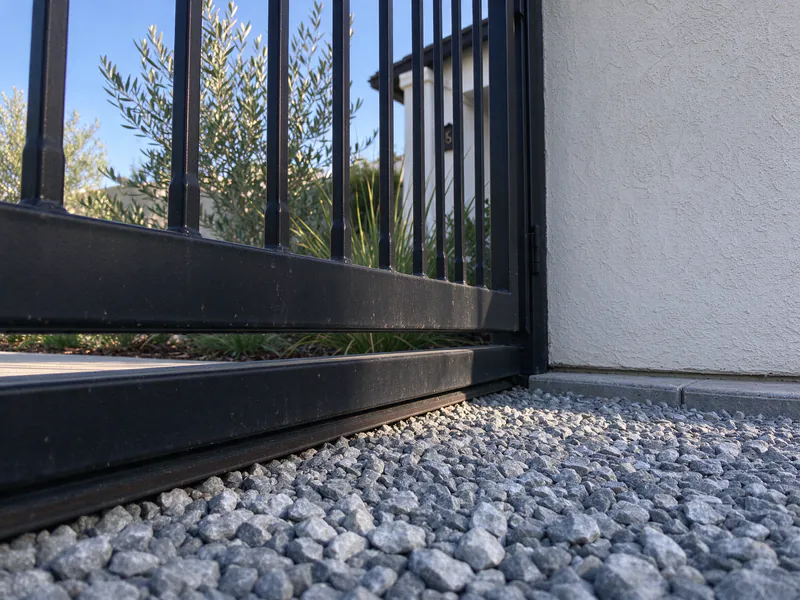
A metal fence can still help a fire along if what’s around it burns. Leaves, needles and mulch pile up against a fence base, in the corner where a fence meets the house, and under a gate. Those piles catch embers easily. Keeping the 5 feet clear of mulch and dead leaves, using gravel or pavers along the base, and leaving no stored firewood or wood scraps against the fence do as much as the material choice. The narrow gap between a gate and the house wall is a classic debris trap and worth checking after every windy week.
What a fire-resistant fence costs
As a national budgeting range, aluminum ornamental fencing runs about $40 to $75 per linear foot, wrought iron or tubular steel about $25 to $85, and galvanized chain link about $8 to $40. A walk gate runs about $200 to $1,500 each. A short masonry return is priced per project; in Temecula, the city’s fee schedule lists a masonry freestanding wall up to 6 feet at $478 for the first 100 linear feet. Because the noncombustible part is usually short, the main drivers are the number of places the fence touches the house, the gate size and hardware, removing the old section and its concrete, and the transition post. The Temecula fence cost guide has the full list, the fence replacement page covers tear-out, and an HOA may need to approve a new material, as the HOA approval guide explains. For a written scope, send your address and photos.