
A fence in Wildomar starts with a fire map. CAL FIRE’s local responsibility area map puts the Wildomar city center point in a Very High Fire Hazard Severity Zone, and California’s proposed Zone 0 rules for those zones are aimed squarely at the five feet of fence nearest the house. Cask Fence Temecula takes on fence and gate projects across Wildomar and manages each one through to the final walk, with the work done by licensed and insured contractors. That includes fire-resistant fencing, repairs to older fences and new wood or wrought iron runs.
Zone 0 and the fence that touches the house
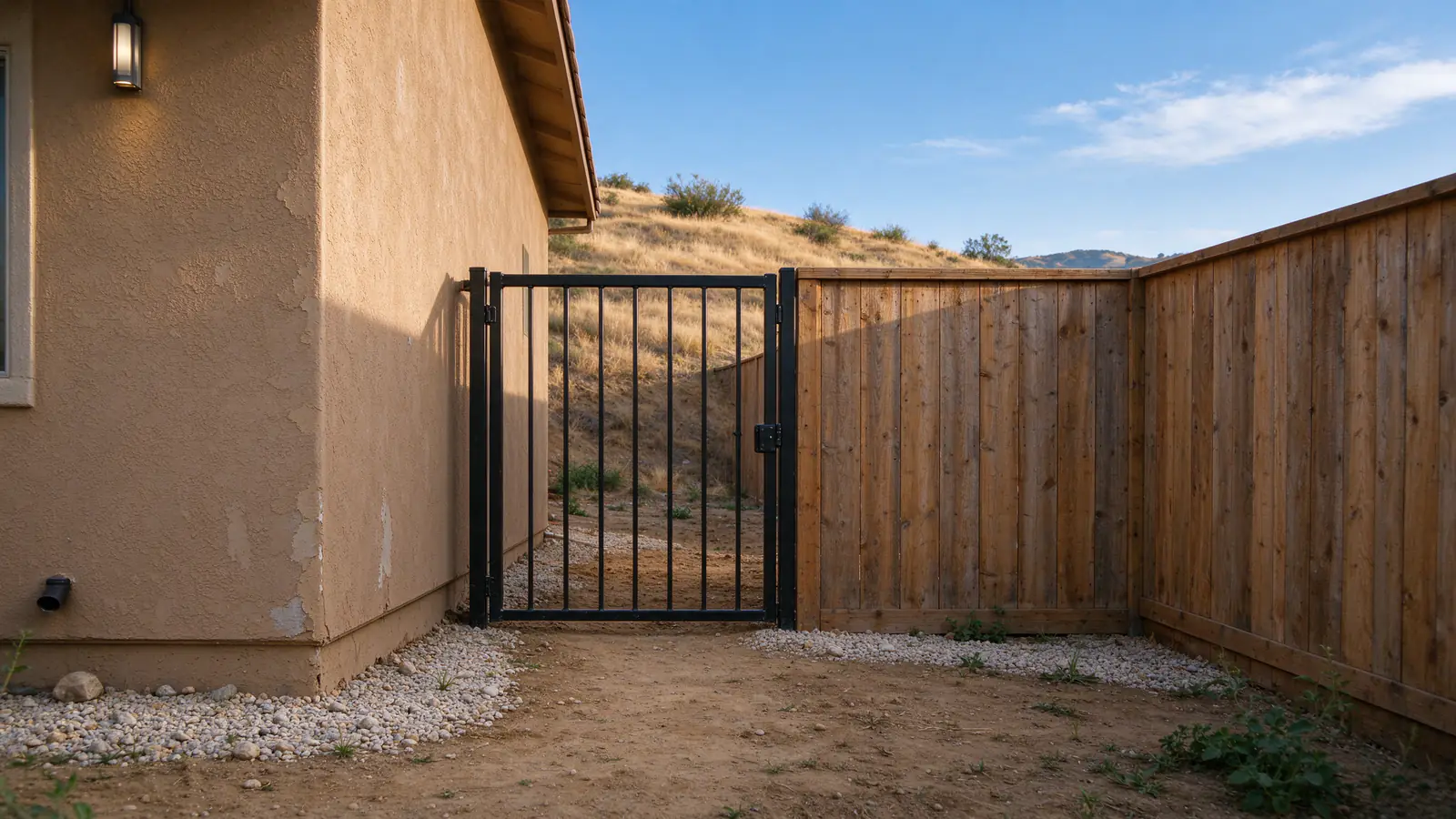
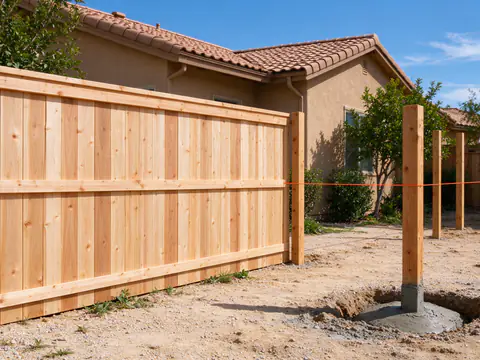
A wood fence that runs right up to a stucco wall gives a fire a path to the house. The proposed Zone 0 rules respond to that. As drafted, they would bar new combustible fences within 5 ft of a home in Very High zones, let existing fences stay and be repaired with the same materials, and require a noncombustible section where a fence or gate attaches to the house within five years. Fence more than 5 ft from the house would not be affected. The rules are moving toward adoption and are not yet in force. The draft also separates new homes from existing ones: new construction would have to comply from the start, while an existing house would get the phased timeline. For a homeowner replacing a fence anyway, building the house-side section noncombustible now avoids redoing it later if the rules are adopted.
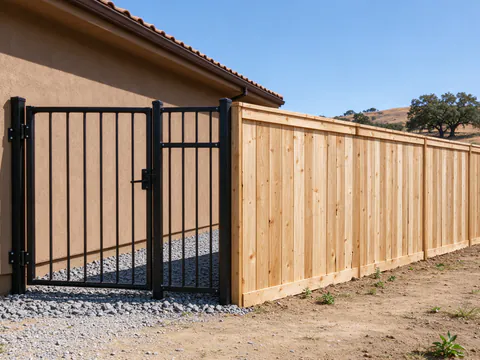
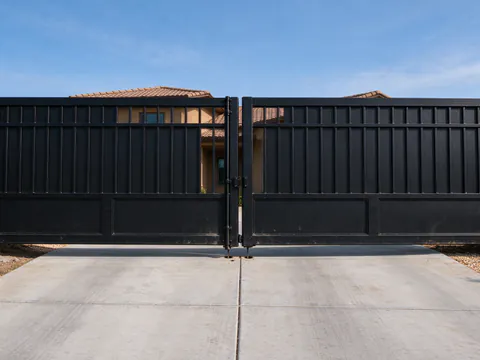
In practice, the fix is usually short. A metal gate at the side yard, or a few feet of metal or masonry where the fence meets the wall, takes the combustible part out of that zone while the rest of the wood fence stays. Wildomar’s zone varies by address, so the first step is looking up your own lot on CAL FIRE’s map. The vinyl, heat and fire guide covers how vinyl behaves when it gets hot, which matters here too.
Older lots: repair before replacement
Wildomar has 11,251 homes by the Census count. Two-thirds (66.7%) are single-family detached and 78.3% are owner-occupied. Only 40.1% date from 2000 on, a smaller share than in neighboring cities, so a good part of the housing stock is old enough that its fences have been through many summers.
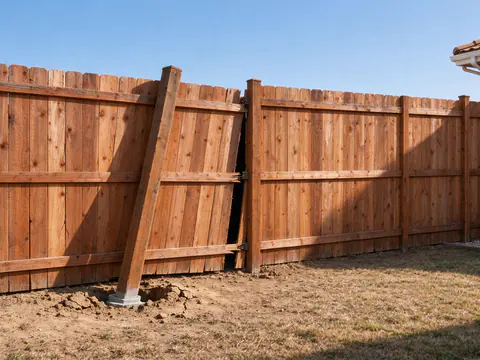
That puts the repair-or-replace decision at the center of many projects. Broken boards, loose rails and a sagging gate are component failures that a repair handles. Posts rotted at the ground line along most of the run, or termite damage, point to a fence failing as a system, where replacement is the better spend. The repair or replace guide and the termites and rot guide help tell them apart.
Loamy sand and how posts hold in it
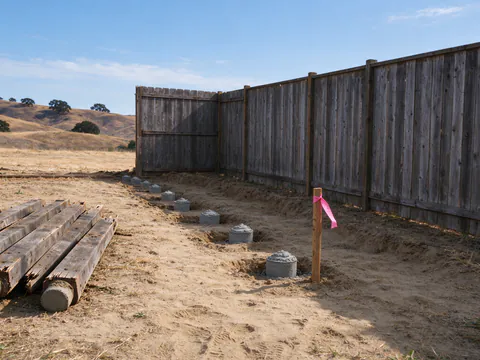
The USDA soil survey point at the city center maps Gorgonio loamy sand. Sandy soil digs easily, which helps on a long run, but it has little cohesion of its own. A post’s hold comes mostly from its depth and its concrete footing, and the sides of a hole can slough in while it is being dug. How tall the fence is, how much wind a solid panel catches and what the manufacturer specifies decide the depth, worked out per site. This is one sample point; other parts of the city may differ. More on that is in the guide to fence posts and local soil.
Metal, masonry or wood in a Very High zone
Material choice in Wildomar is less about the whole fence than about where each material sits. Wood more than 5 ft from the house would be untouched by the Zone 0 draft, so a long wood privacy run along the rear line can stay wood. The pieces that touch or come close to the house are the ones worth making noncombustible.
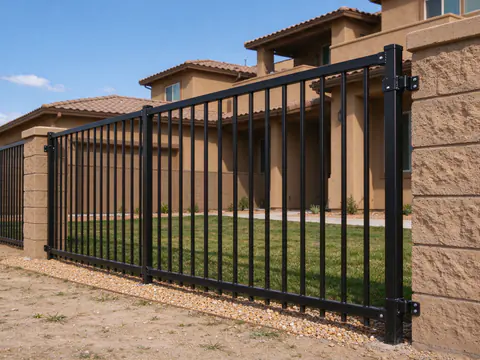
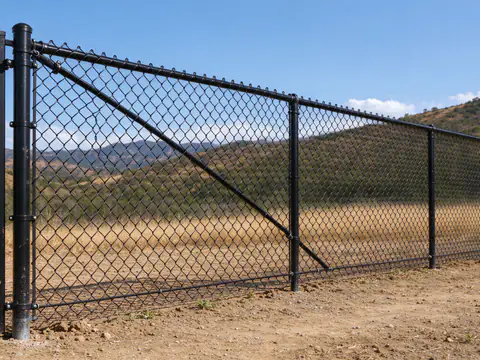
Wrought iron and tubular steel don’t burn, and a steel side gate is the simplest way to close the gap between a wood fence and a stucco wall. Chain link is also noncombustible and suits long side yards, back lines and utility areas where privacy isn’t the point. A short masonry return at the house is another option; block falls under the C-29 masonry license rather than C-13 fencing. Vinyl softens and sags at high heat, so it’s no substitute for metal at the house, a point the vinyl guide above takes further.
City of Wildomar permits and height limits
Wildomar is its own city, with its own municipal code and Building & Safety department. Its yard-by-yard fence limits are confirmed with the city for your address before a design is drawn. The building permit threshold is a state matter: under the 2025 California Residential Code, a fence of 7 ft or less needs no building permit, though the zoning limits still apply to it.
Planning a Wildomar fence step by step
- The call. What the fence has to do, roughly how long it is, and whether it ties into the house.
- The site visit. Someone walks the line looking for pins, grade changes, rock, drainage paths and how materials reach the back yard. An existing fence is a clue to the boundary, not proof, and the survey guide explains the options when the line is uncertain.
- Approvals and notice. Any HOA submittal, the 30-day written notice Civil Code 841 expects before a shared fence is replaced (see the good neighbor fence law guide), a city permit if the work needs one, and a DigAlert ticket filed two or more working days ahead of digging.
- The build. Posts go in and cure first. Rails, boards or panels follow, then gates are hung and tuned until they swing freely and latch cleanly.
- The final walk. Posts checked for plumb, each gate swung and latched, and the site cleared.
Each part of the job goes to a contractor holding the license for it, C-13 for the fence and C-29 for any masonry.
Budget numbers for Wildomar come from the same national ranges used across the area: see the fence cost guide or try the cost estimator with your footage. Then tell us about the property and the fence you have in mind.