
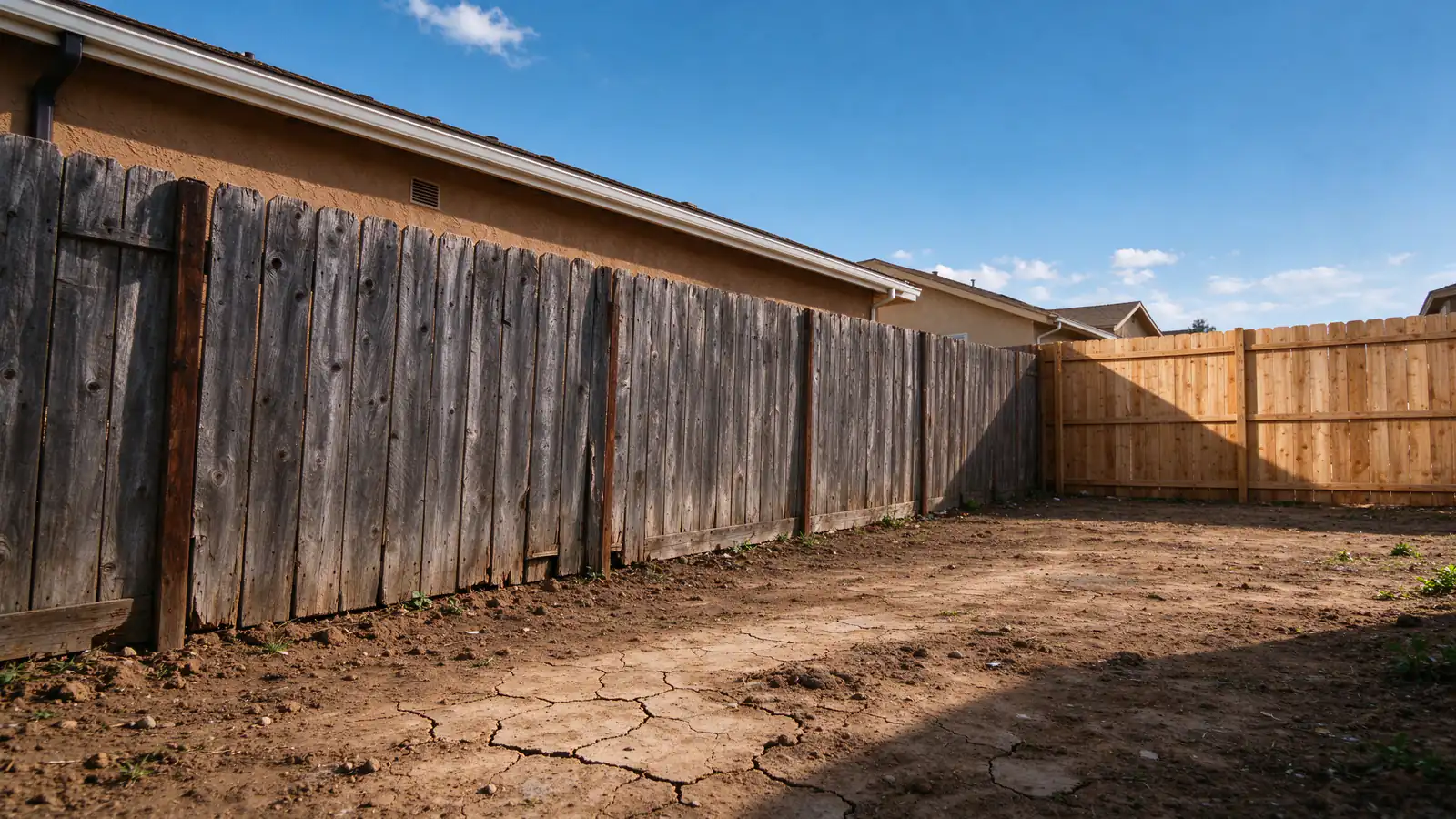
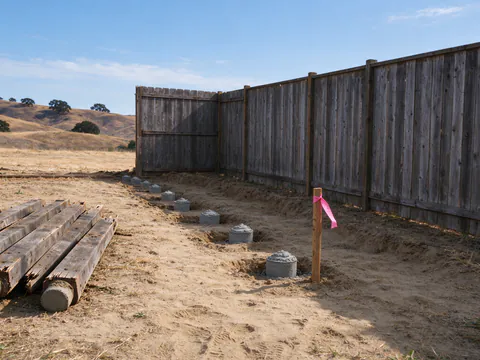
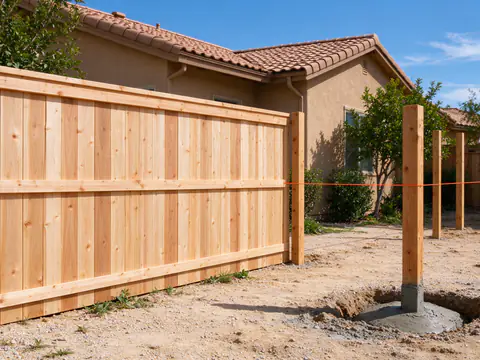
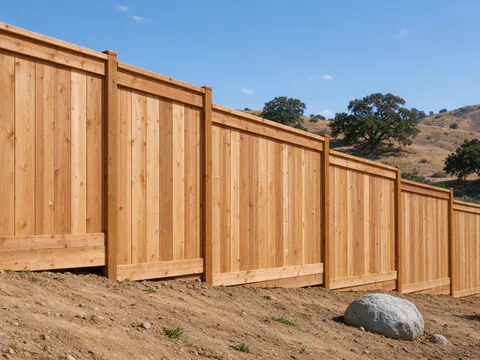
In Canyon Lake, the first approval for a fence usually comes from the association, not the city. It’s a gated city with a property owners association, most of its homes predate 2000, and its soil includes a clay that moves with the seasons. Cask Fence Temecula plans and manages fence, gate and wall work in Canyon Lake, carried out by licensed and insured contractors, with each part going to a contractor licensed for it. Most of that work here is fence replacement or repair rather than a first fence.
Why the association comes before the drawing
The property owners association’s architectural standards govern exterior changes inside the gates, and fences are one of them. Those standards have been revised over the years under the association’s CC&Rs, so this page doesn’t quote a height or material rule. The current requirements for your lot are confirmed with the association before a design is drawn or materials are ordered.
California Civil Code 4765 sets the ground rules for that review. Where an association’s documents require approval of a physical change, it has to run a fair, reasonable and expeditious process with a stated maximum response time. Decisions are made in good faith and in writing. A denial has to explain why and describe how to ask for reconsideration, and the applicant can ask the board to reconsider at an open meeting. The HOA fence approval guide covers what a submittal usually includes.
A practical result: in Canyon Lake the schedule is often set by the review, not the build. Planning starts with the association’s submittal, and the rest of the paperwork runs alongside it.
Bosanko clay and why posts move
A federal soil survey point in Canyon Lake maps Bosanko clay on 9 to 15% slopes. Its linear extensibility is 8.8%, which the survey rates as high shrink-swell, and soft bedrock sits about three feet down at that point. That is one sample, not every lot, but it describes a soil that behaves differently from the sandy loams around Temecula.
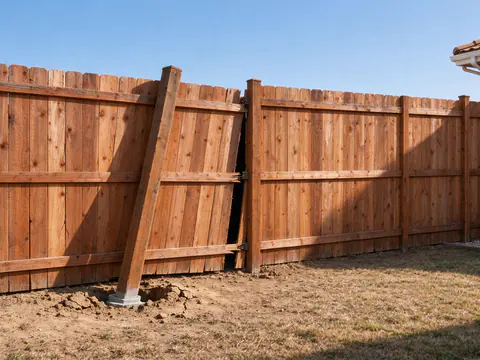
Expansive clay swells when it takes on water and shrinks as it dries. A post set in it gets pushed and released every wet and dry season, and over years that can leave it out of plumb or loose in its footing. Rot at grade, termites and wind lean posts too, so a leaning fence is checked post by post before anyone names a cause. The fence posts and soil guide explains how footing design and drainage change on clay, and why post depth is set per project rather than by a fixed number.
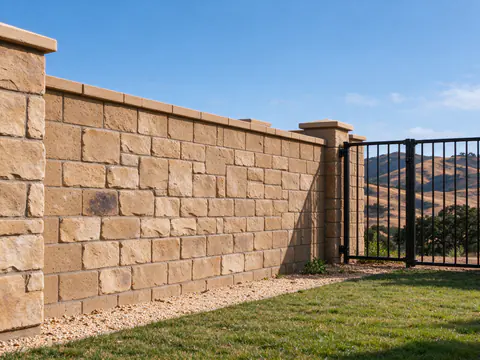
Block walls feel the same movement. A long, rigid masonry wall on high shrink-swell clay is prone to cracking where the ground moves under it. Diagnosing a cracked wall is masonry work under the C-29 classification, separate from the C-13 fencing license, and the block wall page covers how walls are built and inspected. On sloped lots, a grade change behind a wall can turn it into a retaining wall, which the retaining wall page covers.
Older lots, existing fences and the repair question
Census figures describe a settled housing stock. Of Canyon Lake’s 4,507 homes, 87.1% are single-family detached, 84.8% are owner-occupied and 14.9% were built in 2000 or later. That last figure is low next to the newer tract cities around it, and it means most fences inside the gates have already been through a replacement or are due for one.
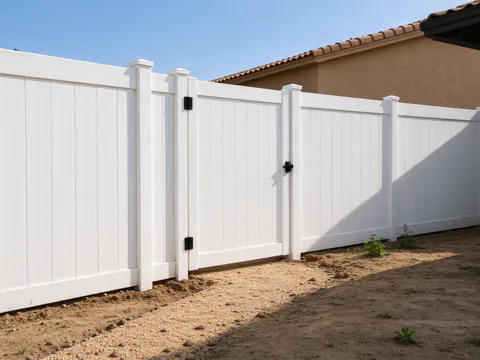
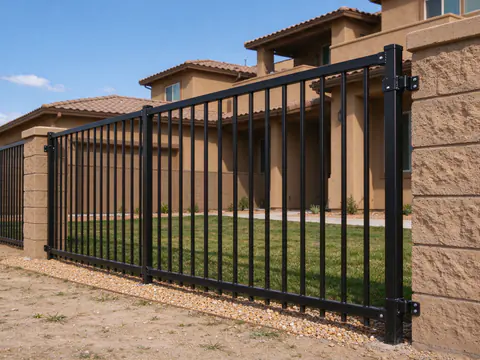
That makes the repair-or-replace decision the common one here. A fence with one or two failed posts and sound boards can often be repaired. A fence where most posts have moved, the boards are brittle and the rails have pulled loose is usually past that point. The repair or replace guide walks through the signs, and the termites and rot guide covers what happens to wood posts in soil contact. When a fence is replaced, the material question opens again: wood, vinyl or open wrought iron, subject to what the association allows.
The old fence also isn’t proof of the property line. Fences get rebuilt on old post holes for decades, so a replacement on a disputed or unclear line starts with the pins, and the property line survey guide explains when a surveyor is needed.
Fire zones at a Moderate center point
CAL FIRE’s 2025 local responsibility area map places the Canyon Lake center point in a Moderate Fire Hazard Severity Zone. California’s proposed Zone 0 rules, as described in a July 2026 Board of Forestry staff memo, would reach Very High zones in local responsibility areas and state responsibility areas, so a Moderate address would fall outside them. The zone is a parcel-level fact, though, and lots near open slopes can map differently. Check the address, and if it maps Very High, read the fire-resistant fence page before a wood fence goes against the house.
City permits and shared side lines
The 2025 California Residential Code exempts fences not over seven feet from a building permit. Whether the city’s adopted code changes that is confirmed for your address with City of Canyon Lake Building & Safety, which also handles walls and engineered work. Association approval is a separate step, and a permit exemption doesn’t replace it.
On a shared side or rear line, California Civil Code 841 presumes that neighbors share the reasonable cost of a dividing fence and calls for 30 days’ written notice describing the work, the cost and the timeline. The good neighbor fence law guide covers that notice. Before posts are dug, someone has to call DigAlert at least two working days ahead, and private lines to pool equipment or landscape lighting won’t be marked.
The order of work on a Canyon Lake lot
It starts with a call about the line, the material and what the fence has to do. The site visit walks the line, looks for pins, and notes the clay, the grade, drainage and how materials get through the gate and into the yard. Then comes the paperwork: the association submittal, written notice to any neighbor sharing the fence, a permit where one applies, and the DigAlert ticket. The build follows: tear-out, posts set and cured, rails and boards or panels, gates hung and adjusted. A final walk checks that posts are plumb, gates swing and latch, and the debris is gone. For a budget, start with the cost estimator or the fence cost guide, then send the address and a few photos of the line.