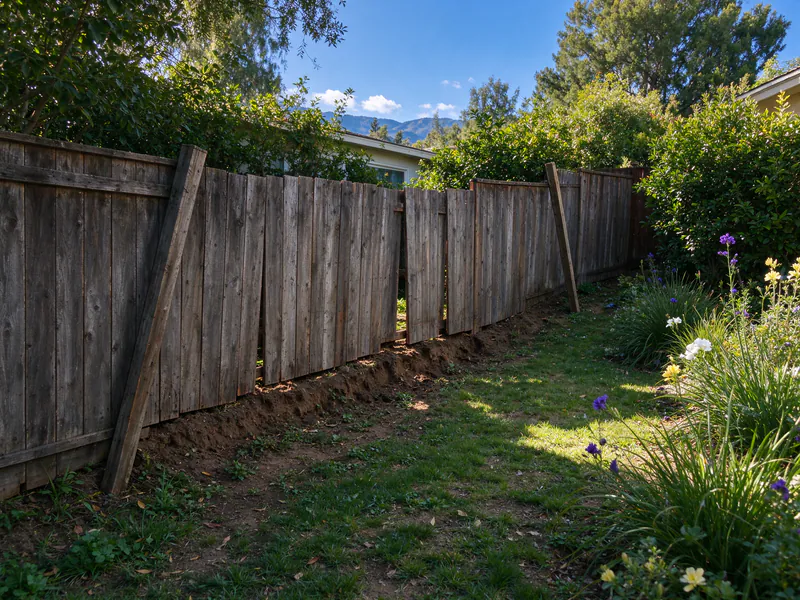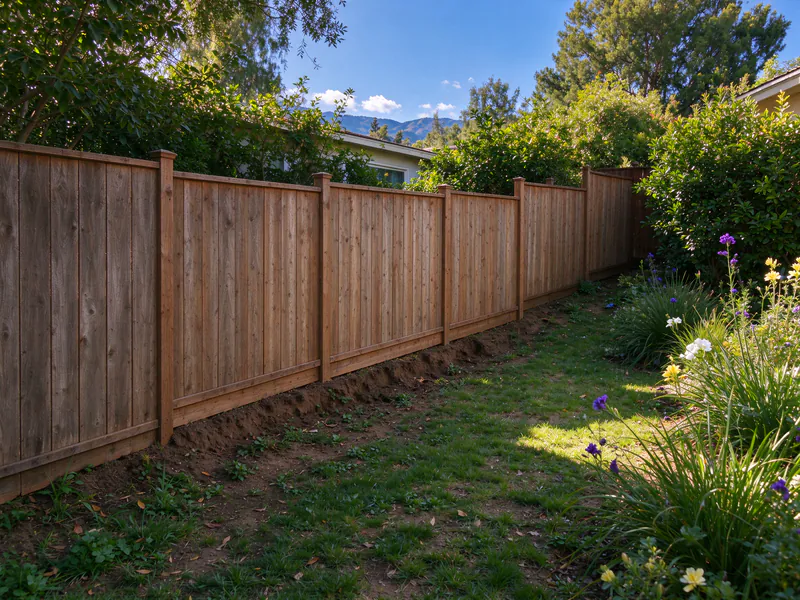
Cask Fence Temecula plans hillside fence installation for sloped lots around Temecula, from manufactured slopes behind tract homes to the steep, rocky ground in De Luz and the wine country, with the work carried out by licensed and insured contractors. A fence on a slope has to solve problems a flat-yard fence doesn’t: how the panels meet a falling grade, where a gate can open, how to set posts in hardpan or rock, what to do when the fence sits on or above a retaining wall, and where the water goes. For the panel geometry alone, the stepped vs racked guide is a good place to start.
Stepped or racked: choosing how the fence meets the slope
Every run on a slope is either stepped or racked, and the decision is made per run.
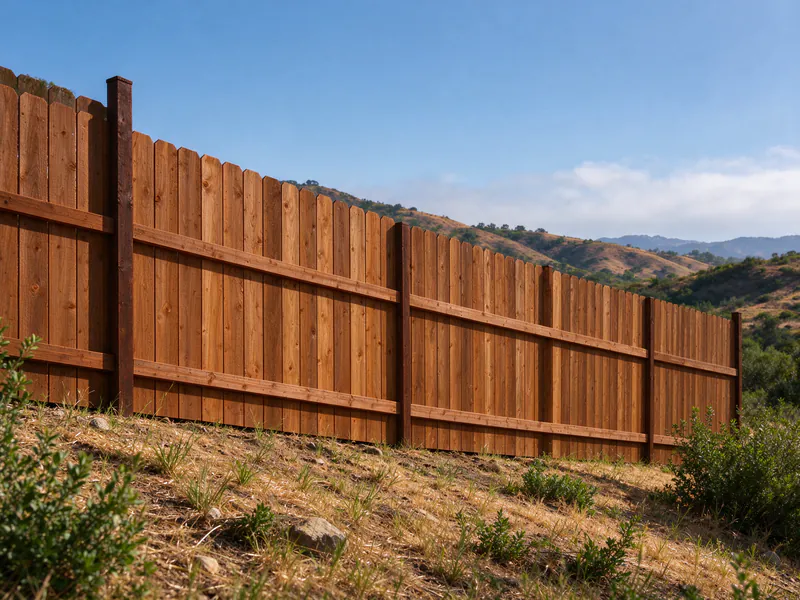
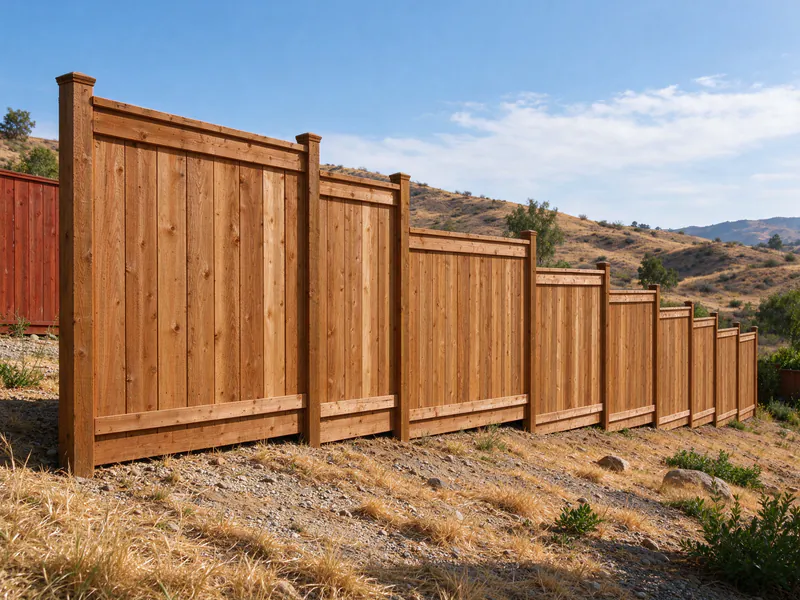
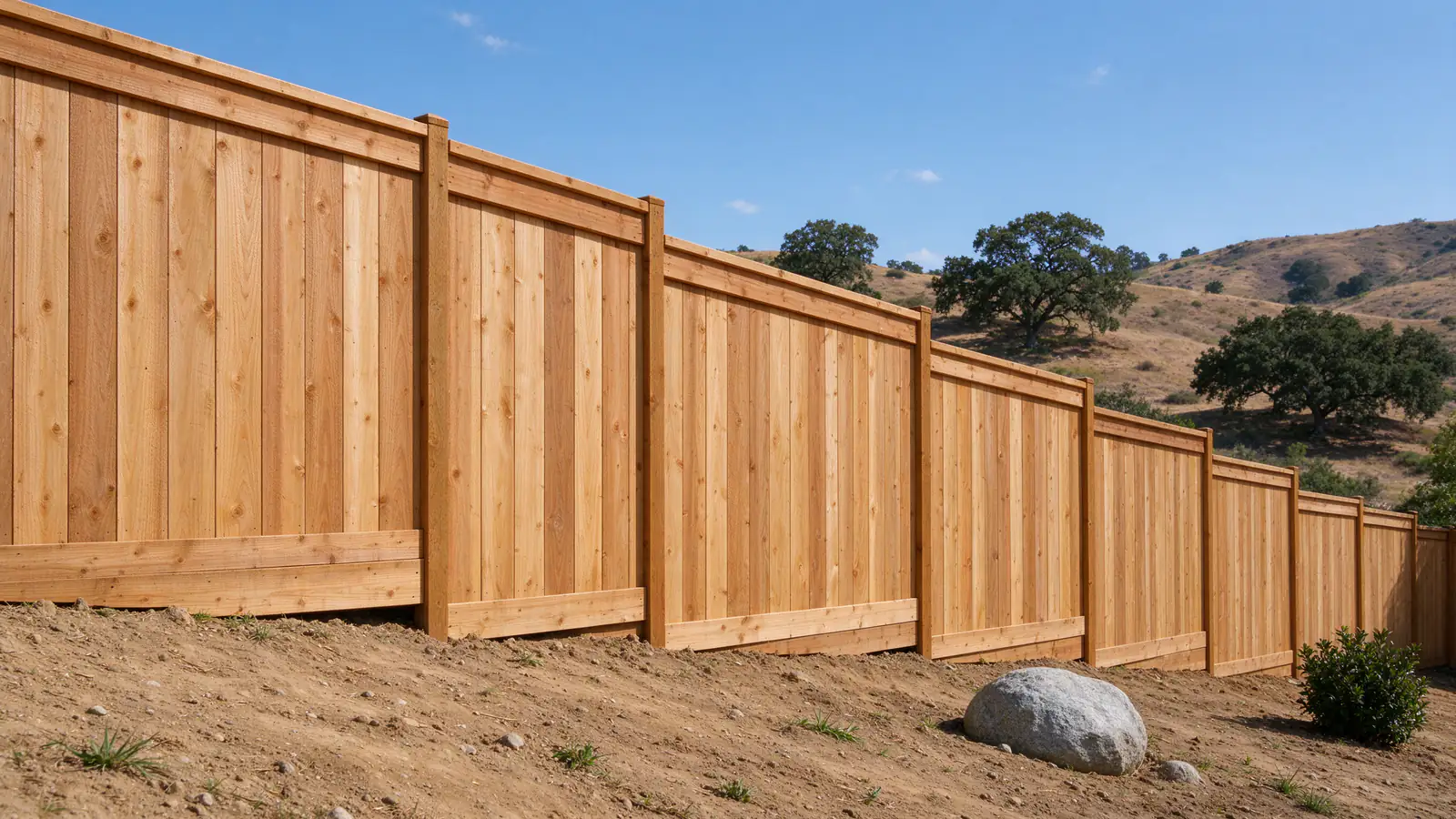
A stepped fence keeps each panel level and drops it at every post, so the top line looks like a staircase. It works on any grade and with nearly any material, because the panels themselves stay square. The cost is a triangular gap under the low end of each panel. On a gentle slope that gap is small. On a steep one it’s tall enough for a dog to walk through, and it has to be closed with a kickboard, trimmed boards or a short infill.
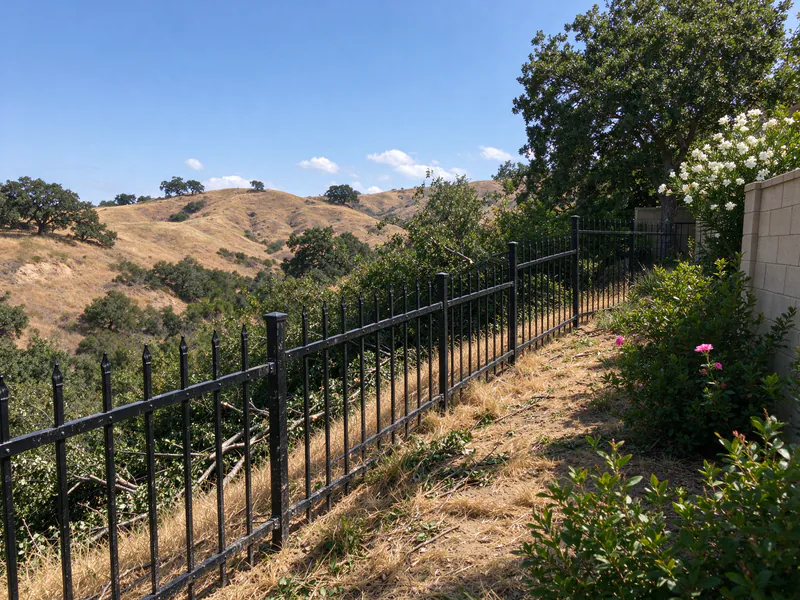
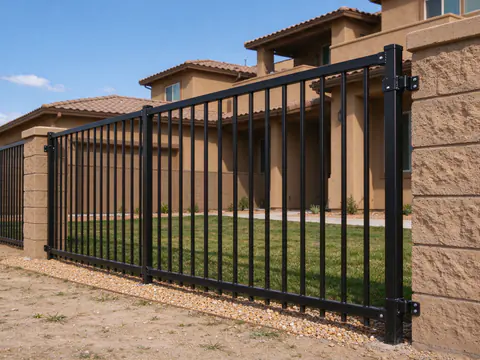
A racked fence tilts the panel so its rails run parallel to the ground, and the top line follows the hill. The bottom stays close to grade, which keeps gaps small and suits pet fencing. Not every panel can rack. Wood built on site can be framed to any angle. Chain link follows the ground naturally. Many aluminum and steel ornamental panels are made in rackable versions that shift a set amount. Most vinyl privacy panels can’t rack much, if at all, because their rails lock into routed posts at fixed heights.
Some fences mix both: racked where the slope is even, stepped at a sharp break in grade. The wrought iron and steel fence page covers rackable metal panels.
Gaps at the bottom, dogs and washouts
The bottom edge is where hillside fences most often disappoint. Homeowners report installers leaving the bottom about an inch and a half above grade after agreeing to set it at dirt level, which left gaps dogs dug under and fill dirt that washed out in the first rain. On a slope that problem grows, because the ground keeps falling away from a level panel.
The answer is to agree in writing how the bottom will be finished before work starts: racked panels following the grade, a kickboard run along the base, boards cut to the ground line on a built-on-site wood fence, or a buried wire apron where a dog digs. Fill dirt packed against the bottom of a fence on a slope tends to wash out in the next storm and isn’t a substitute. The dog fence guide covers containment details.
Gates on a grade
A gate needs a clear arc to swing through. On a slope, a gate swinging uphill hits the ground within a short distance and can’t open fully, and a gate set level on a sloped line leaves a wedge-shaped gap underneath. The best fix is placement: put the gate where the line crosses the flattest ground, and swing it toward the low side.
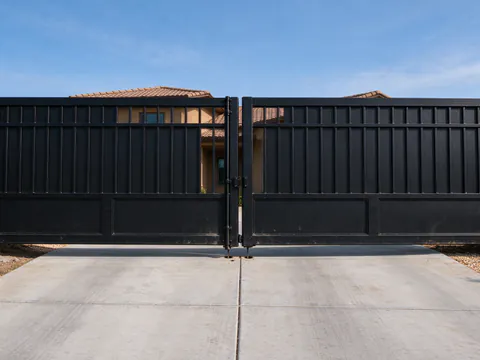
When the gate has to go on the slope, the options are a small level landing graded in front of it, a narrower leaf or a pair of leaves that each need less room, a gate with a raked bottom rail that follows the grade, or a sliding gate where the fence line offers room for it to roll back. Gate posts on a slope also carry more load than their neighbors because the gate’s weight hangs off one side, so they’re sized up and set deeper. The gate installation page covers gate posts and hardware, and the swing vs sliding gate guide compares the two.
Hardpan, rock and drilling post holes on a hillside
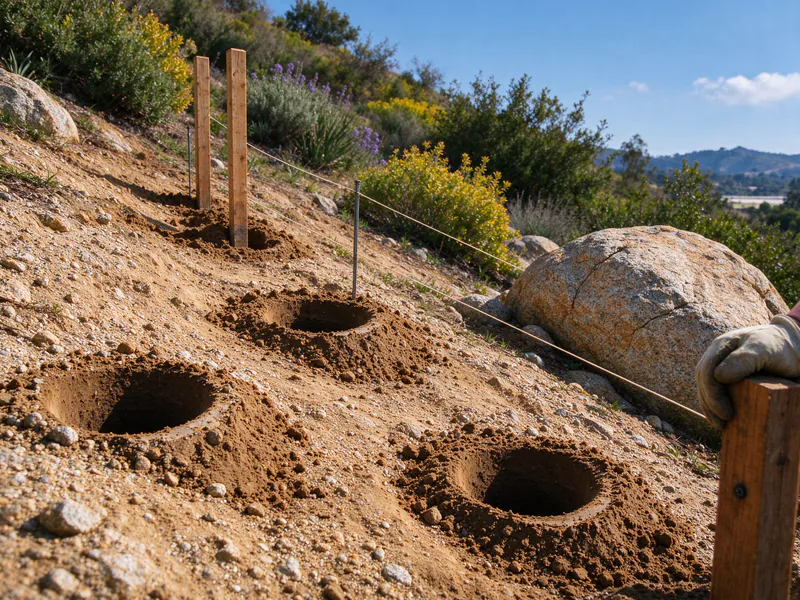
Hillside lots are where post holes get hard. Federal soil survey points around the area show a cemented hardpan layer, called a duripan, about 2 feet down at Temecula’s center and around 2 to 3 feet down at points in Paseo del Sol, Menifee, French Valley and Winchester. On the steep De Luz slopes, the survey maps a stony soil and rock outcrop complex on 30 to 75% grades with bedrock about 26 centimeters down, less than a foot, and rock outcrop over roughly 40% of the ground.
An auger that hits hardpan slows to a crawl. The usual next steps are a rock auger bit, a jackhammer to break the layer, or coring into solid rock and grouting a post in. Each one adds time, and none of them is predictable from the surface, which is why rock is a cost and schedule driver on hillside quotes. A post can’t be driven into rock, so systems that rely on driven posts need a different plan on that ground. There is no single correct post depth; height, wind exposure, soil and the post system all set it, as the fence posts and Temecula soil guide explains. Locally, the Fallbrook page and the wine country page cover the rocky ground south and east of the city.
Before any of it, a DigAlert ticket has to be opened at least two working days ahead under California Government Code 4216.2. Utility operators mark their own lines only. Irrigation lines on planted slopes are private and often run right where a fence line crosses.
Hit rock on your last project?
Tell us what stopped the auger and where. It changes the drilling plan and the post layout.
Fences on or above retaining walls
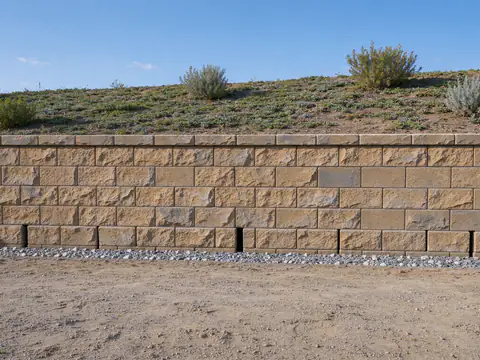
On a hillside lot, the fence and the retaining wall are often one decision. Temecula’s CD-24 standard for freestanding block walls doesn’t allow more than 6 inches of grade difference from one side to the other. Past that, the wall is holding back soil and has to be designed as a retaining wall, not as a garden wall.
The city’s CD-25 standard includes a detail for the common tract situation: a block privacy wall built on top of a retaining wall. The retaining part is limited to 2 feet, solid grouted in every cell, with drainage through open head joints in the first course, and the privacy wall above is limited to 6 feet. Anything retaining more than 2 feet under a privacy wall goes to the full CD-25 retaining tables or an engineered design. The 2025 California Residential Code explains why: retaining walls that hold back more than 48 inches of unbalanced fill, or walls over 24 inches that resist lateral loads in addition to soil, have to be engineered. A fence on top adds wind, which is a lateral load. Height alone doesn’t settle it: CD-25 is not designed for loads from vehicles or structures above the wall, and drainage behind the wall matters as much as its size.
The other option is to set the fence on its own posts behind the wall. At least one segmental wall maker’s installation spec puts fence posts at least 3 feet behind the top course so they stay out of the reinforced backfill. Open fencing, such as wrought iron or tubular steel, is the only infill CD-24 allows to attach to block pilasters. Walls themselves are masonry or concrete work, done by contractors licensed for it (C-29 masonry, C-8 concrete), while the fence goes to a C-13 fencing contractor. The retaining wall page and the block wall page cover those builds.
Footings near the top of a slope
Many back yards in Temecula and Murrieta tracts end at a manufactured slope, often at a 2:1 grade. Both CD-24 and CD-25 require footings next to a slope to keep at least 5 feet of soil between the edge of the footing and the slope face, measured to daylight. For a block wall at the top of a slope, that can mean a deeper footing or setting the wall back from the edge. For post fences, the same logic applies: a post set right at the crest has little soil on the downhill side to resist wind.
Erosion and drainage
Hillside fences have to live with water. Temecula’s design rainfall intensity is 3 inches per hour, and winter storms put a lot of water on a slope in a short time even though the annual total is low. CD-24 also says no water course or natural drainage may be obstructed.
A few practical rules follow. A fence should cross a drainage swale with its bottom raised or open there, not dam it, because a solid panel across a swale catches debris and turns into a small dam. Spoil from post holes shouldn’t be spread loose on the slope face, where the next storm carries it down. Hardpan slows water soaking in, so water can collect above it after rain and soften the soil around a post. And on a slope with a wall, the drainage behind the wall matters more than the fence on top.
Height rules and the property line on a slope
Height limits are measured from grade, and on a slope “grade” can mean different things on each side of the fence. Allowed heights are confirmed for your address, as the height and permit guide explains. Property lines on hillside lots often run along or near the top or toe of a slope, and old fences there were often built where digging was easiest, not on the line. The property line survey guide covers when to confirm it.
What a hillside fence costs
Material sets the baseline. As a national budgeting range, a 6 ft pressure-treated or fir wood privacy fence runs about $10 to $50 per linear foot, galvanized chain link about $8 to $40, and aluminum ornamental fencing about $40 to $75. A slope moves a job within or above those ranges because of things that don’t appear on flat ground: the steepness and how often the grade changes, rock drilling or coring, stepped panels and the infill under them, gate landings or sliding gates, access for equipment on the slope, hauling spoil off, and any retaining wall or engineering. The fence cost estimator gives a starting range, the horse fence page covers ranch fencing on acreage, and you can send the slope details for a written scope.