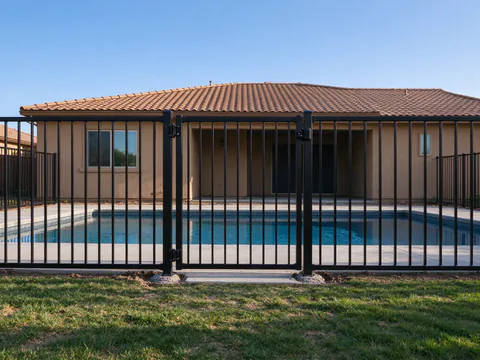
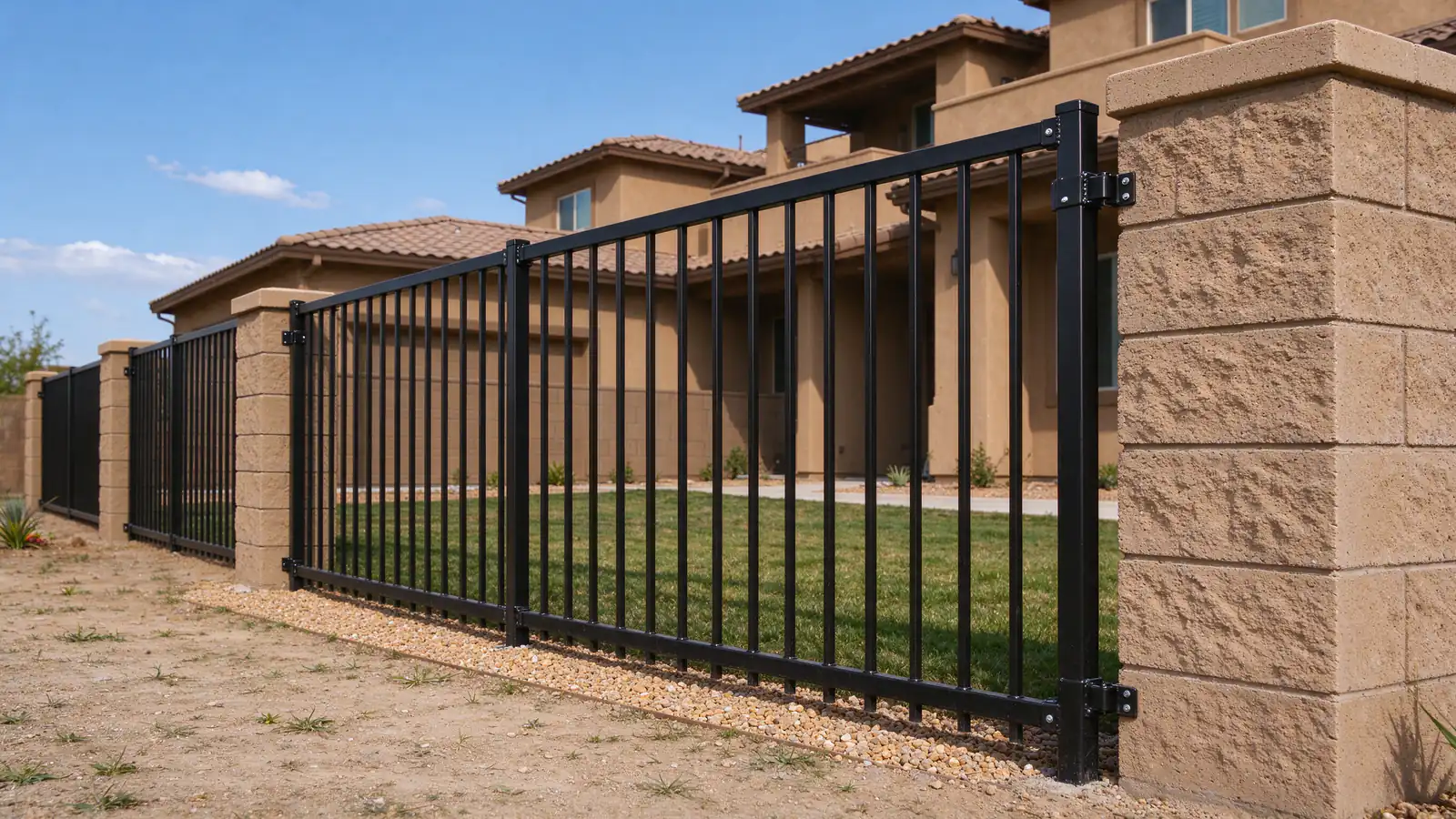
Cask Fence Temecula plans and manages ornamental metal fences and iron gates for homes in Temecula and the nearby cities of southwest Riverside County, with the work carried out by licensed and insured contractors. In this area “wrought iron” mostly means an open, black or bronze metal fence: across a front yard, around a pool, on top of a block wall or between block pilasters on a tract street. It keeps the view open, which is why many local codes and HOAs allow it in places a solid fence isn’t allowed. The questions that decide whether it lasts are what metal it is, how the finish was applied and what the fence is fastened to. The aluminum vs wrought iron guide compares the two main metals in more depth.
Tubular steel, true wrought iron and aluminum
Three different materials get sold under the same name.
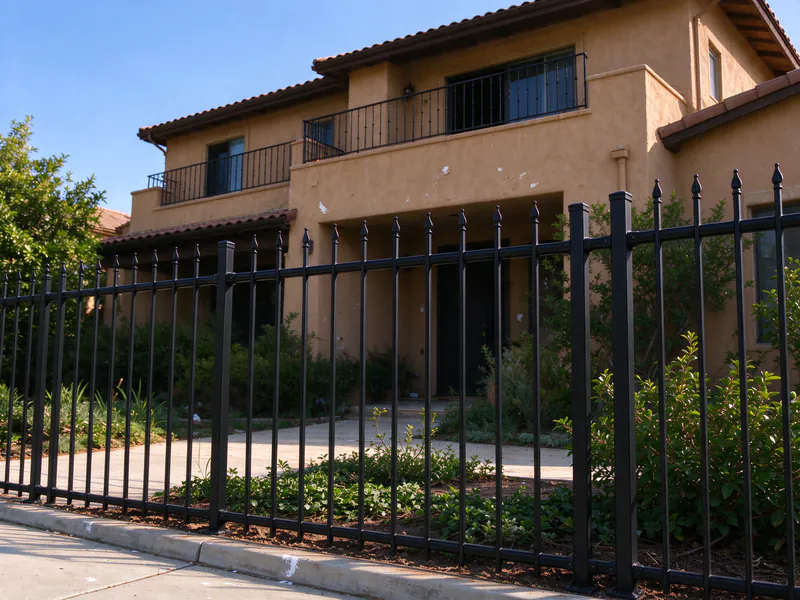
Tubular steel is what most people are actually buying. Square or round steel tube is cut and welded into panels with pickets, rails and posts, then coated. It is strong and stiff, takes heavy gates well and can be fabricated to almost any pattern. Its weakness is rust wherever the coating fails.
True wrought iron is solid iron worked by a blacksmith. It is heavy, very strong and rare now, so it turns up in restoration and custom work more than in new tract fences.
Aluminum is the lighter option. It comes in pre-made panels with pickets that pass through the rails, and it does not rust. It is common for pool enclosures and for long decorative runs where nothing heavy hangs from it. Aluminum flexes more under impact than steel and is not the first choice for a big drive gate. For a pool or a dog run, it’s often the simplest product that meets the rules.
All three are decorative fencing in the sense that they define a space and frame a house without hiding it. What they don’t do is screen. If privacy is the goal, the wood fence and vinyl fence pages are the better starting point.
Powder coat, galvanizing and where rust starts
Steel fences are protected by their coating, so the coating is what you are really choosing. Panels are commonly powder coated, which means a dry powder is sprayed on and baked into a hard, even finish. Some steel is galvanized, given a zinc layer, before it is coated, which adds a second line of defense if the paint gets scratched.
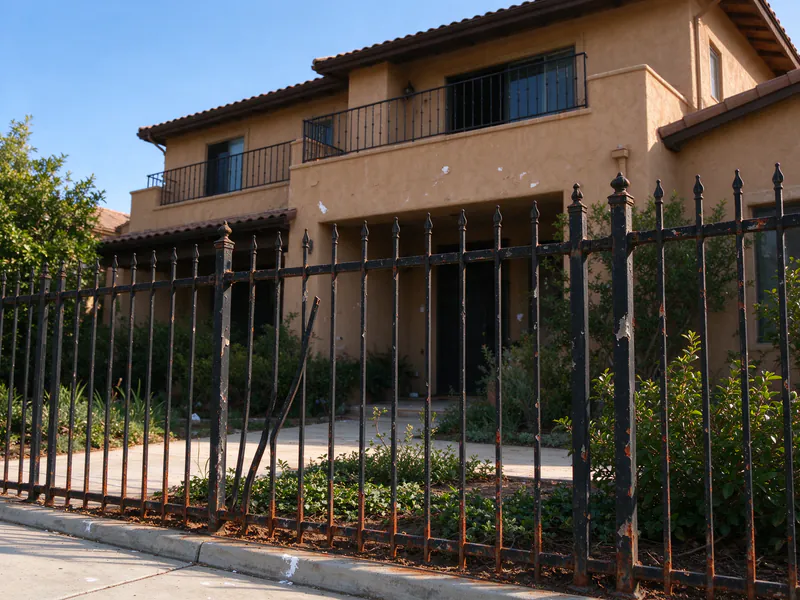
Rust starts at breaks in that protection. Welds done after coating, field cuts, drilled holes for brackets, scratches from installation and chips from string trimmers are the usual starting points. The bottom of the fence is the most exposed, because sprinklers wet it daily and soil, mulch and leaf litter hold the moisture against the steel. Temecula is inland, so salt air is not the usual concern it is on the coast. Water from irrigation and contact with soil are.
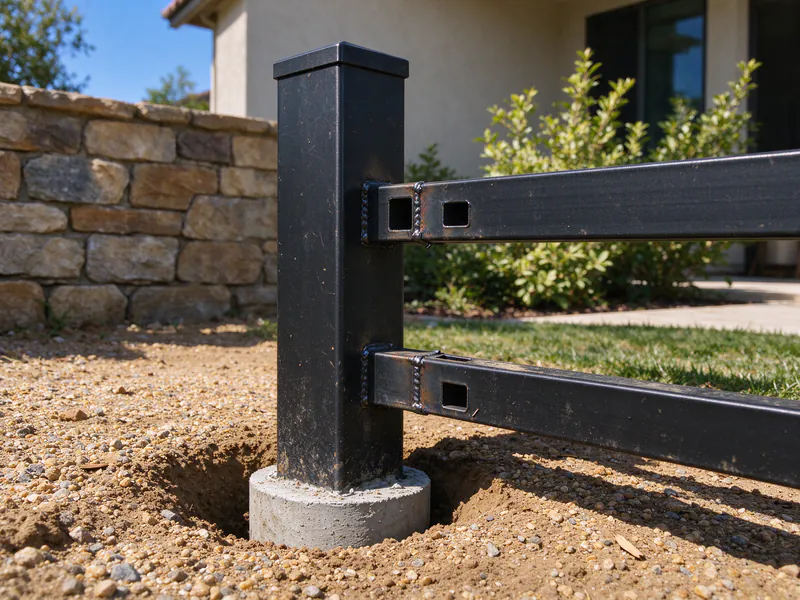
That points to a few practical steps. Cuts and holes made on site should be primed and touched up the same day. Post bases should be set so concrete sheds water away from the steel. Sprinkler heads near the fence should be aimed away from it. Aluminum avoids rust but not sun: its coating can fade and chalk over years of strong UV, and touch-up paint matched to the maker’s color keeps it even.
Iron between block pilasters, and what CD-24 allows
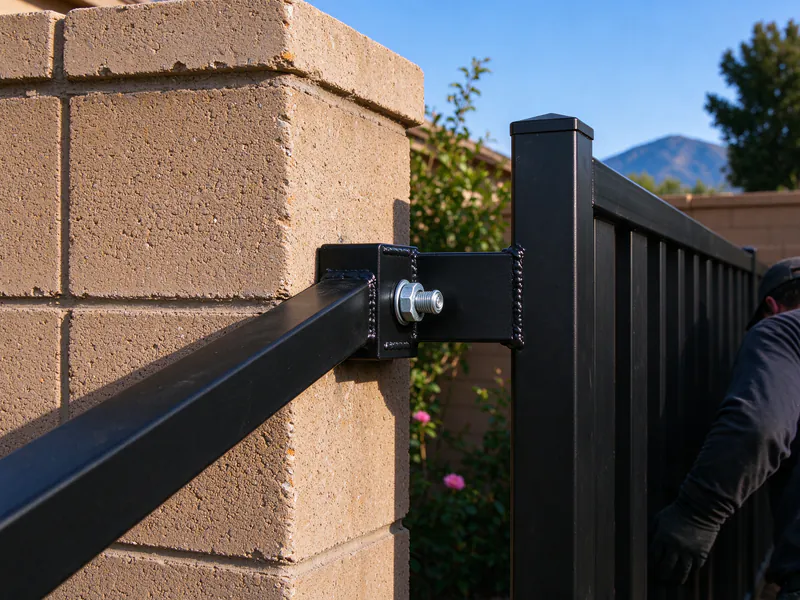
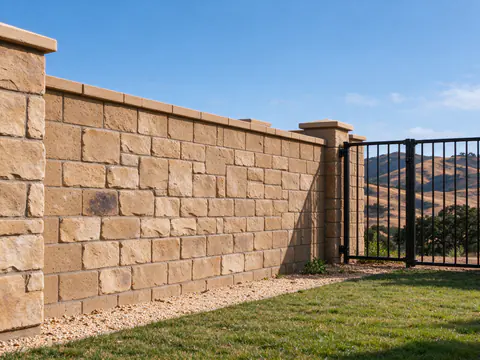
A block wall with pilasters and iron infill is one of the most common perimeter details on Temecula tract streets and view lots. The block gives the line weight and the iron keeps the view. The City of Temecula’s CD-24 standard for freestanding block walls and block pilasters sets the rules for the masonry part, and several of them are really iron rules:
| CD-24 item | What it says |
|---|---|
| What may attach | Only open-type fencing such as wrought iron may attach to a pilaster; solid fencing may not |
| Pilaster spacing | No more than 20 ft apart when infill fencing is attached |
| Gates on a pilaster | No more than 200 lb and 4 ft wide per pilaster |
| Pilaster build | 12 by 12 or 16 by 16 in. block, solid grouted, four #4 bars, 6 ft maximum height |
| Lights | Lighting or electrical on a pilaster needs an electrical permit |
The 200 lb and 4 ft limit is the one that catches people. A walk gate on a pilaster is normal. A drive gate, or any gate that is going to be automated, usually needs its own steel posts in their own footings, and the gate installation page covers that.
The pilasters and wall are masonry, built under the C-29 masonry license class, while the iron is fence work under C-13, so a combined job goes to contractors licensed for each part. The block wall page covers footings, rebar and inspections.
Adding iron to existing pilasters?
Send a photo of the pilasters and the spacing between them. That tells us whether the iron can attach as built.
Ornamental styles, slopes and pets
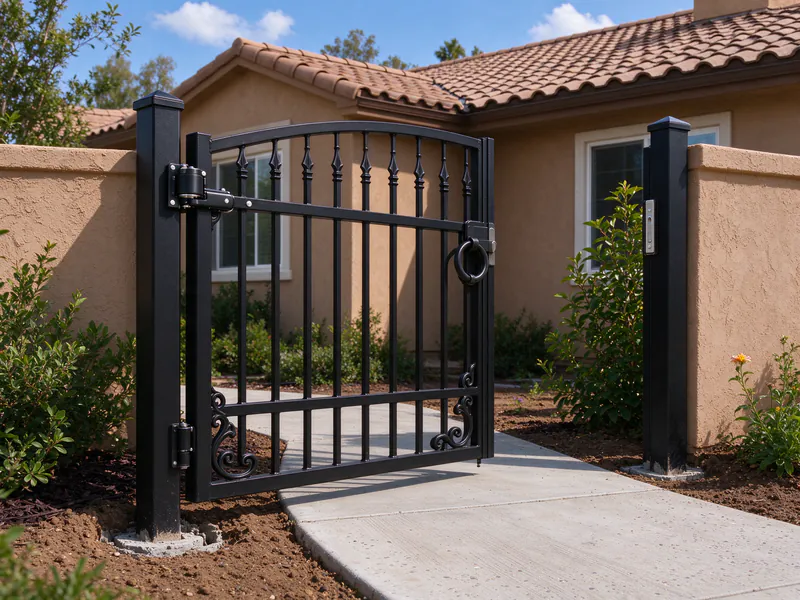
Ornamental metal fences come in a handful of common patterns: flat top, where the top rail runs above the pickets; pressed or spear top, where pickets end in points or finials; and arched or scalloped panels for gates and entries. A third rail can be added for stiffness on taller panels. Spear tops look traditional but are a poor choice where children climb or where a gate is automated, since sharp points are a hazard.
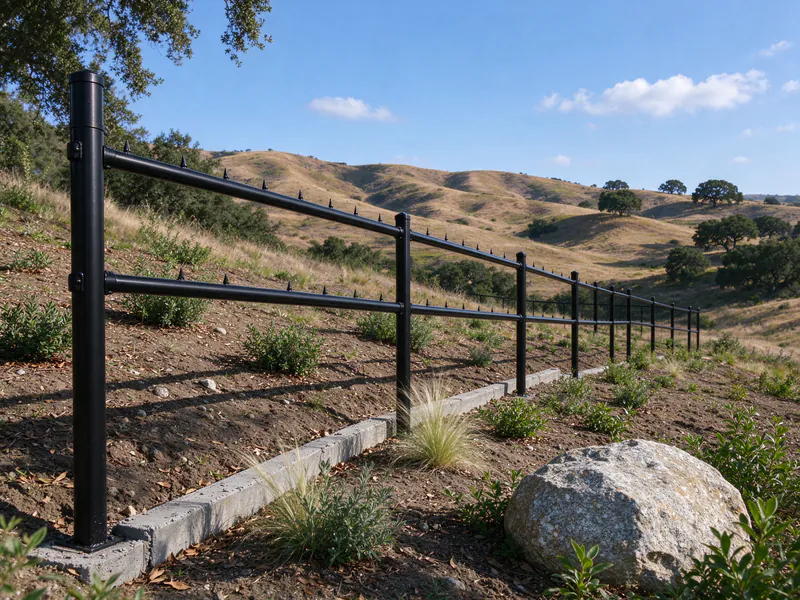
On slopes, metal panels can be racked so the rails follow the grade, or stepped so each panel sits level. Many aluminum panels rack within a set range, while welded steel panels can be fabricated to the slope. The stepped vs racked guide shows the difference, and the hillside fence page covers steeper lots.
Small dogs fit through standard picket spacing. Panels with extra pickets along the bottom, often called puppy pickets, close that gap without changing the look higher up. The dog fence guide covers the rest.
Pool-rated spacing and Temecula’s pool rules
Iron and aluminum are common around pools because they keep the water in view, which is part of the point of a barrier. A pool enclosure under California Health and Safety Code 115923 must be at least 60 inches high, have no more than 2 inches of clearance at the ground and have no openings that pass a 4-inch sphere. It cannot offer hand or footholds.
Temecula’s pool and spa handout, CD15, adds detail. There can be no climbable decorative work on the side away from the pool. Gates must swing away from the pool, close and latch on their own, and have the latch at least 60 inches above the ground. Horizontal rails on the outside face can act as a ladder, so panel orientation matters. The inspector confirms the finished enclosure, and no fence product is automatically compliant. The pool fence page and the Temecula pool fence requirements guide go through it.
Front yards and open fencing
Open iron is often allowed where a solid fence is not, and the heights differ by city. Lake Elsinore is a clear example: its code caps fences in required front yards at 36 inches but lets wrought iron fences go to 5 feet, as the Lake Elsinore page explains. Temecula’s own front-yard limits sit in its Development Code and are confirmed for your address, along with any corner sight-line rule. The Temecula fence height and permit guide covers what to check. HOA design rules in many Temecula communities also name iron color and style, and the association’s decision has to be in writing under Civil Code 4765.
Iron gates, manual and automated
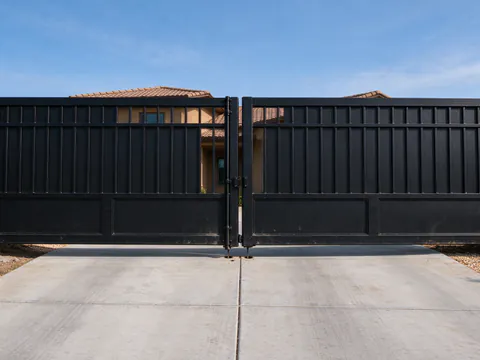
Iron walk gates and drive gates are a big part of ornamental work. Gate weight is the first design question, because it sets the post size, the hinges and whether a pilaster can carry it. Swing gates need clear ground through their arc; slide gates need a level run along the fence line. The swing vs sliding gate guide compares them.
Automating an iron gate changes the rules. An automated slide gate has to be screened from the bottom to at least 6 feet so a 2-1/4 inch sphere can’t pass through it, and a manual latch on a gate that will be automated is removed because it becomes a hazard. The automatic gate page covers operators and safety.
Steel near the house
Steel and aluminum don’t burn. That makes metal the usual answer for the section of fence closest to a home in a high fire hazard area. California’s proposed Zone 0 rules would bar new combustible fences within 5 feet of a home in Very High hazard zones and call for a noncombustible section where a fence or gate meets the house. A metal section or gate at the wall does that job. The fire-resistant fence page covers the details.
What a wrought iron or aluminum fence costs
A national budgeting range for a wrought iron or tubular steel fence runs about $25 to $85 per linear foot. Sources disagree on where most jobs land, which is why the range is wide. Aluminum ornamental fencing has its own national budgeting range of about $40 to $75 per linear foot. Within those ranges, a Temecula job moves with linear footage, height, picket and tube size, finish, custom fabrication, gate count and weight, attaching to pilasters or setting new posts, slope and tear-out. The Temecula fence cost guide breaks those down, and the fence cost estimator gives a range for your own run. To get a written scope, send the details.