
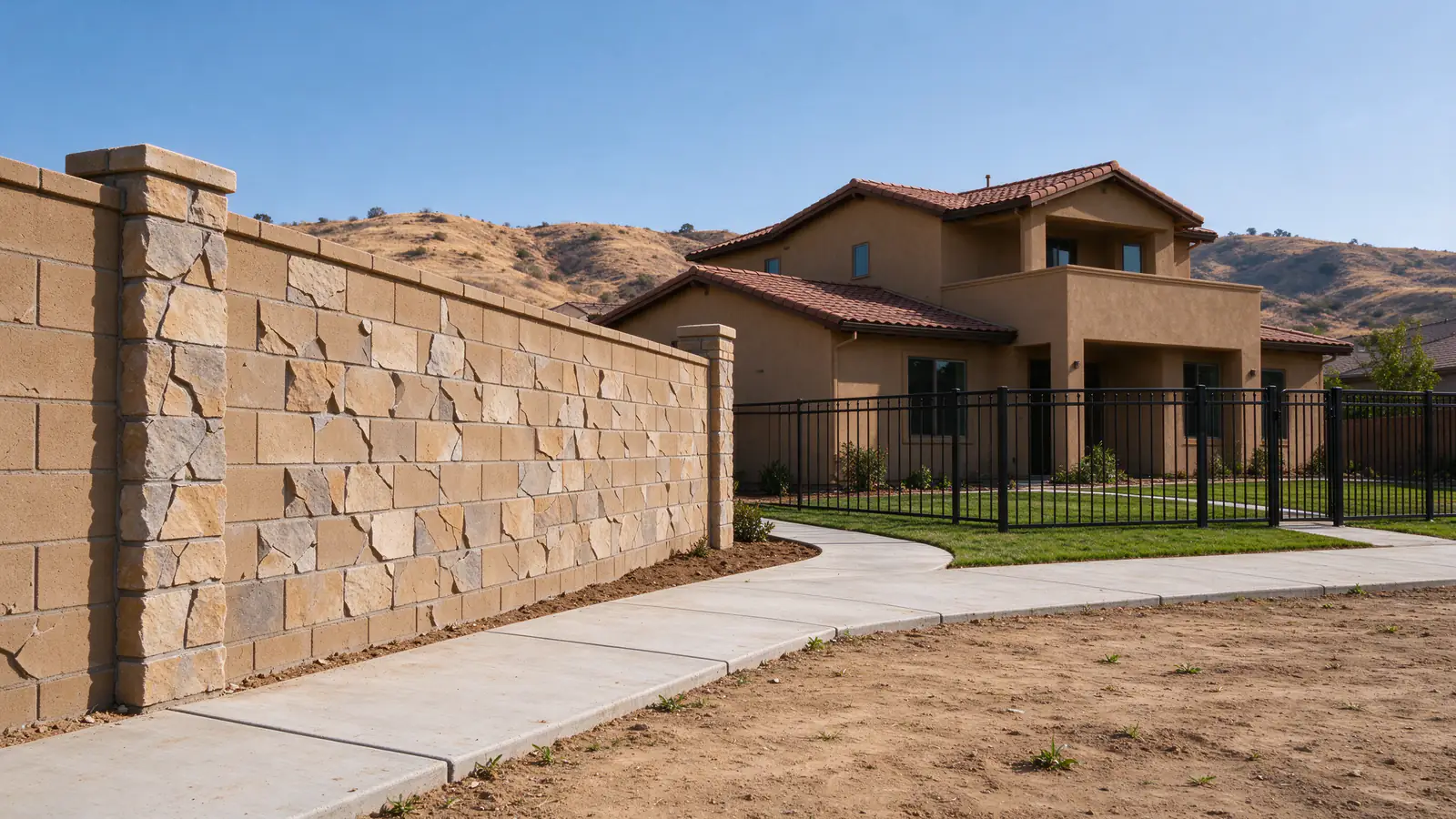
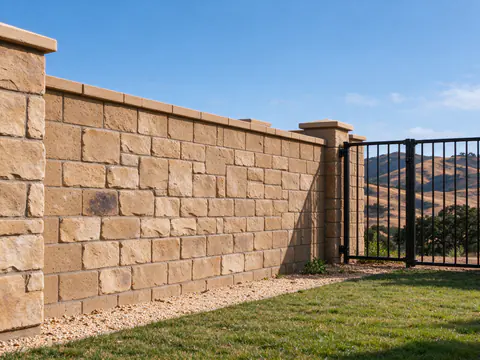
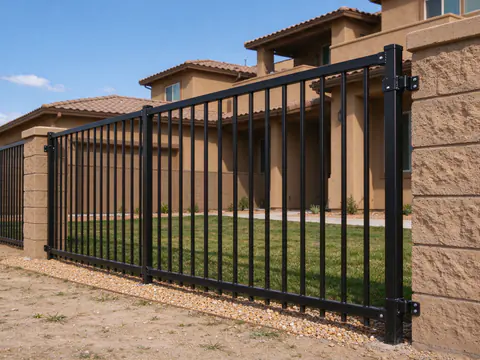
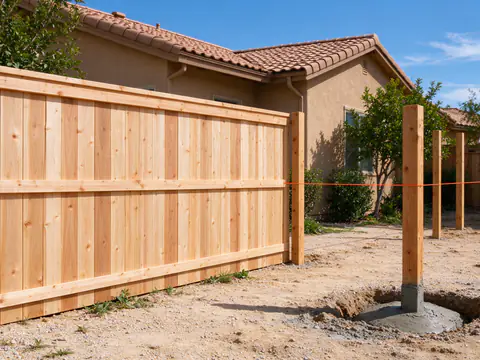
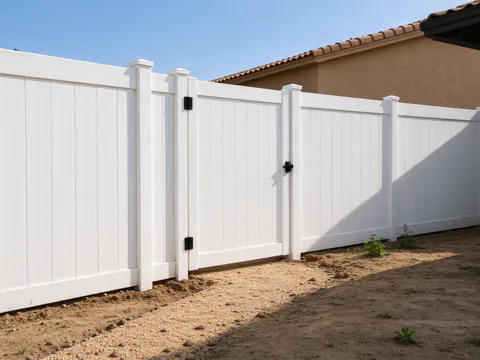
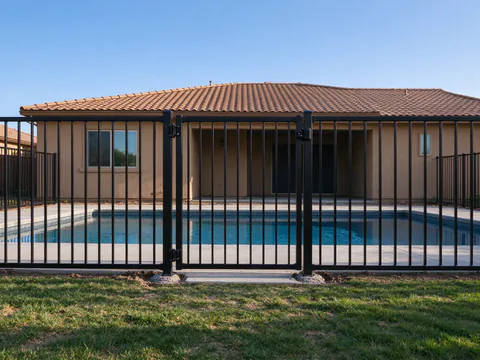
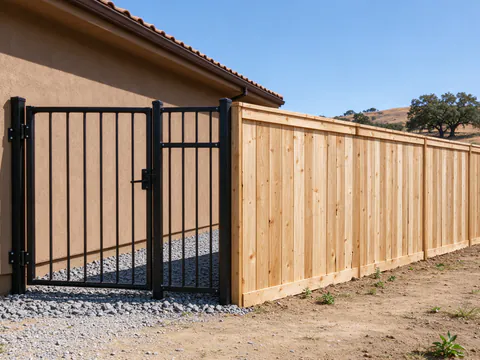
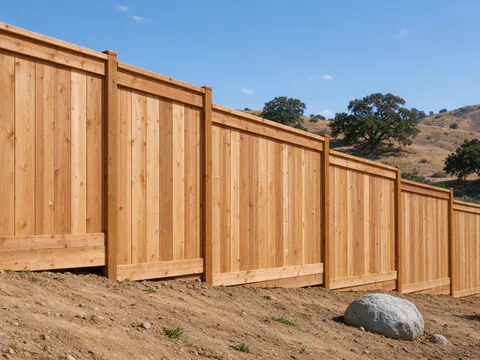
Lake Elsinore writes more of the fence decision into its code than Temecula does. The city sets a six-foot minimum on side and rear property lines, keeps front yards low except for open iron, and calls for decorative block on walls that face tract perimeters and principal streets. Cask Fence Temecula plans and manages fence, gate and wall work in Lake Elsinore, with each job carried out by licensed and insured contractors. That covers block walls along streets, wrought iron across front yards, and wood or vinyl between neighbors.
What LEMC 17.44.080 says about height and materials
The rules sit in section 17.44.080 of the Lake Elsinore Municipal Code, and they are short:
| Where the fence or wall is | What the code says |
|---|---|
| Side and rear property lines | Minimum height of six feet; along a major arterial the Planning Commission may require eight |
| Required front yard | Maximum height 36 inches, except wrought iron fences may be five feet |
| Tract perimeter, or next to a principal street in the General Plan | Decorative masonry block unless the Design Review Board approves otherwise |
| Any wall over eight feet in total height | Needs specific Planning Commission approval |
Height is measured from the highest grade on either side of the fence or wall. On a lot that sits lower than its neighbor, a fence that looks six feet from your yard may measure less from the higher side. That matters when a fence sits on top of a retaining wall, which is covered on the retaining wall page.
The front yard rule is why open iron is so common here. A solid wood or vinyl fence across the front has to stay at 36 inches, while wrought iron can reach five feet. So a front enclosure for a dog or a pool usually ends up as iron, often with a matching gate.
Block walls in tracts, wood fences on infill lots
Census figures show why block walls are everywhere in Lake Elsinore. Of the city’s 22,574 homes, 75.5% are single-family detached, 69.3% are owner-occupied and 50.2% were built in 2000 or later. Much of that newer housing came in subdivisions, and section 17.44.130(D) spells out their fencing. New subdivisions of four or more units get a solid block wall at least six feet high on side and rear lines of lots under 12,000 square feet. Infill projects of fewer than four units get a solid wood fence at least six feet high, unless the line faces a street, where decorative masonry is required.
Wood can replace required block on interior lines, but only with Planning Commission design review and under conditions that describe a well-built fence: galvanized steel posts at least every eight feet on proper footings, a box-framed style with overlapping boards so there are no gaps, paint or treatment on both sides, and little visibility from the street. The wood fence page explains why steel posts help in this climate. Block walls fall outside the C-13 fencing license and are built under the C-29 masonry classification.
Pool equipment and the 10-foot rule
Section 17.76 adds a pool-specific requirement in the R-1 zone. Pool equipment within 10 feet of a property line must be separated from the neighboring lot by a masonry wall at least six feet high. A wood or vinyl fence doesn’t satisfy it. When a pool goes in on a narrow side yard, the equipment pad location decides whether a short masonry wall is part of the job. Pool barrier rules are separate again, and the pool fence page covers them.
Fire hazard zones and the five feet next to the house
CAL FIRE’s local responsibility area map places the Lake Elsinore city center point in a Very High Fire Hazard Severity Zone, and zones change from one address to the next. California’s proposed Zone 0 rules would bar new combustible fences within five feet of a home in those zones, let existing ones stay and be repaired, and require a noncombustible section where a fence or gate attaches to the house within five years. Those rules are moving toward adoption, not in force. A metal gate or short masonry return at the house is the simple answer, and the fire-resistant fence page goes further.
Soil, slopes and the lots that back onto hillside
A federal soil survey sample near the city center maps Vallecitos loam with bedrock about four feet down. That is one point, not the whole city, but it means an auger can meet rock on some lots. On flat tract lots the fill is engineered and digging is usually routine. The fence posts and soil guide explains what changes when it isn’t.
Where a lot backs onto open hillside, the fence line often follows a slope that drops below the pad. Even where the Planning Commission approves wood in place of required block, section 17.44.130(D) rules it out on side and rear lines in hillside developments that sit atop slopes more than six feet high and would be significantly visible from a street. In those spots, block, iron, or a combination is the likely answer. The hillside fence page and the stepped vs racked guide cover how the panels follow the grade.
Where a house faces a busy road, the arterial rule can raise the wall to eight feet and the material rule points to decorative block. Where an older home sits on its own lot between newer tracts, the existing fence may be wood or chain link that predates the current standards. On infill lots the code says new fencing requirements may be waived when an existing fence is well maintained, so repairing what’s there may be an option. The fence repair page helps weigh that against replacement.
Permits, neighbors and digging
The 2025 California Residential Code exempts fences not over seven feet from a building permit, so a typical six-foot wood, vinyl or iron fence usually needs none. Walls, taller fences and anything engineered go through City of Lake Elsinore Building & Safety, and the zoning rules above apply whether or not a permit is needed. Planned communities add their own architectural review, which the HOA approval guide covers.
On a shared line, California Civil Code 841 presumes neighbors share the reasonable cost of a dividing fence and calls for 30 days’ written notice before the work. The good neighbor fence law guide explains the notice, and the survey guide covers lines nobody is sure of. Before any post hole is dug, a DigAlert ticket has to be open at least two working days ahead.
For a budget, the fence cost guide and the cost estimator use the same national ranges that apply here. To start a Lake Elsinore project, send the address and what the fence needs to do.