
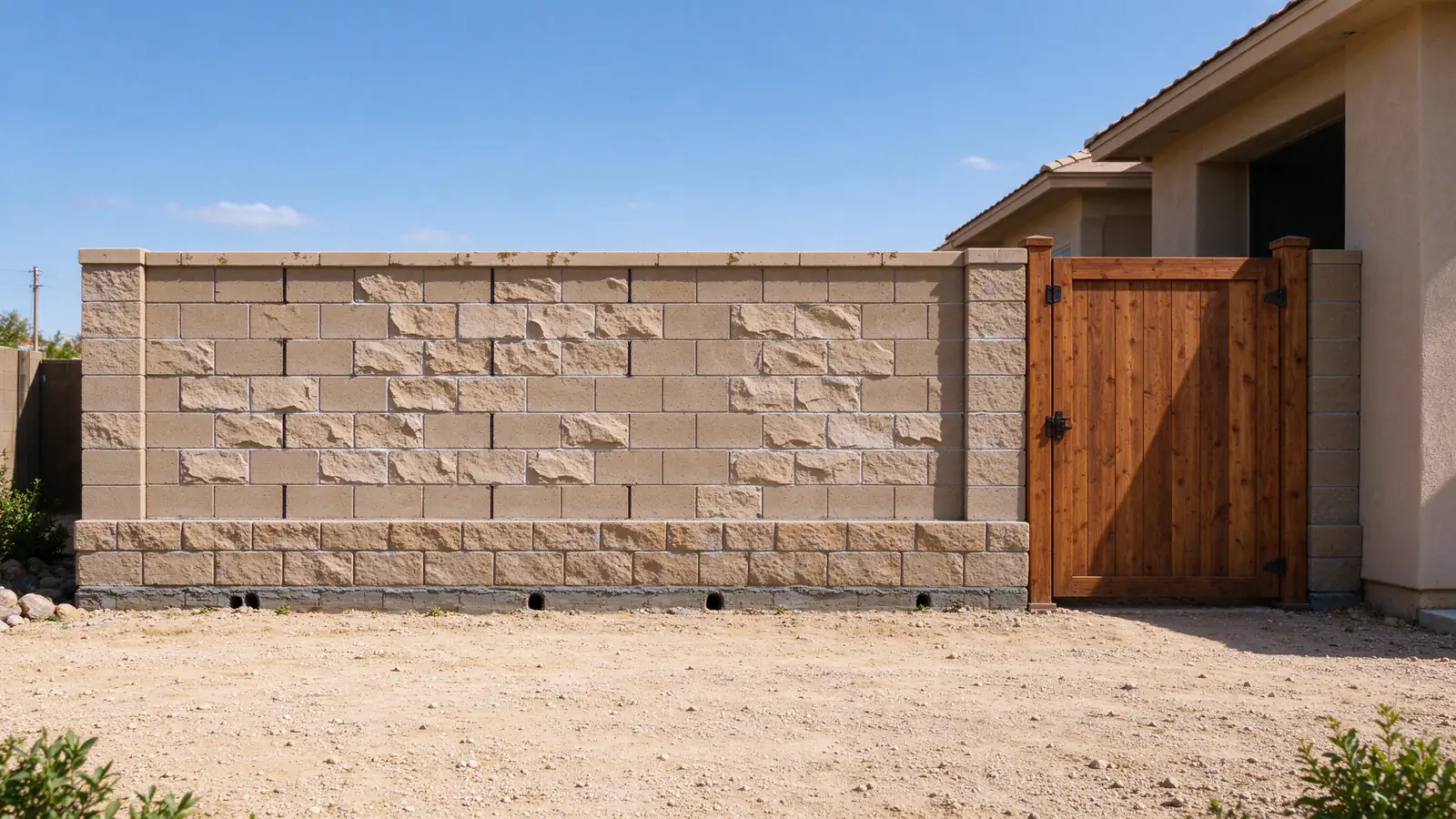
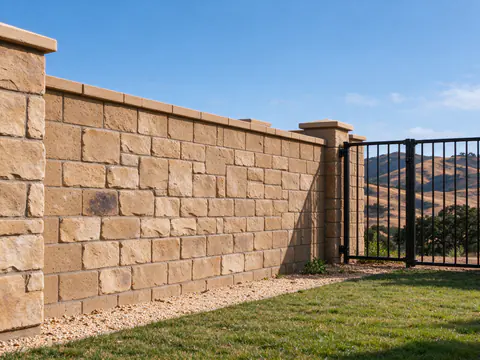
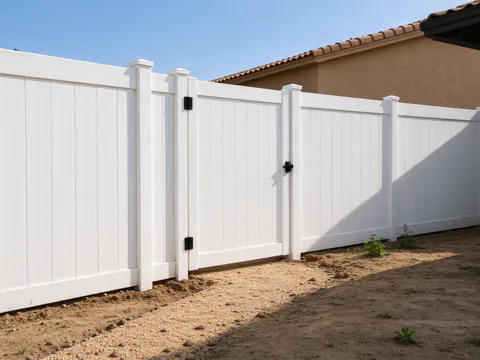
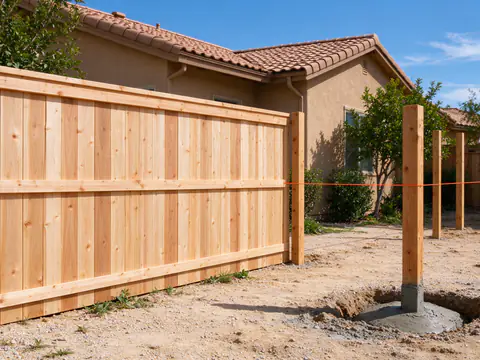
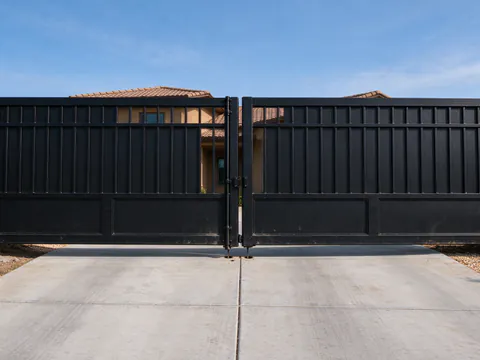
Murrieta shares Temecula’s block wall drawings but not its permit counter. The city’s TD-114 detail for a block wall on a 2 ft retaining base carries the same Western Riverside County Code Uniformity Program title block and tables as Temecula’s standards, yet every Murrieta permit, plan check and fence height question goes to the City of Murrieta. Cask Fence Temecula plans and manages fence, gate and wall projects in Murrieta, each one carried out by licensed and insured contractors. The work runs from vinyl and wood between neighbors, block walls where yards sit at different heights, and repairs to fencing that came with the house.
Two cities, one set of wall drawings
The cities of western Riverside County drew up a common set of wall standards so that a block wall detail means the same thing on either side of a city line. Temecula’s CD-24 and CD-25, Murrieta’s TD-114 block wall atop 2-foot retaining wall and the County of Riverside’s 284-255 and 284-256 all come from that program, with matching tables.
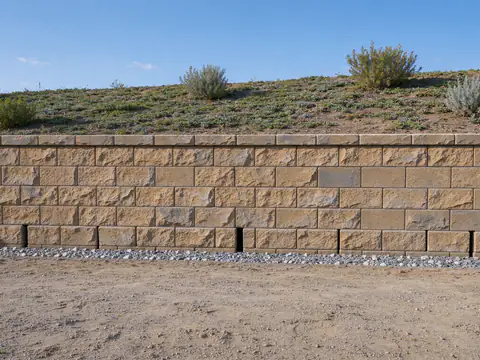
For a Murrieta homeowner, that sameness is useful. The TD-114 condition is a common one in tract neighborhoods: the neighbor’s yard sits up to 2 ft higher, and a privacy wall goes on top. The bottom 2 ft is a retaining wall, solid grouted in every cell, with head joints left open in the first course so water can weep out. The wall above can be up to 6 ft of 8 in. block, grouted only in the cells that hold steel. Once the retained height passes 2 ft, the job leaves TD-114 and becomes a full retaining wall design, or an engineered one.
The regional retaining tables also explain why two walls of the same height can cost very different amounts. Under the shared standard, a 5 to 6 ft wall with level ground behind it sits on a footing about 45 in. wide; the same wall holding back a 2 to 1 slope needs about 69 in. and a much deeper key. None of these standards cover a wall that carries a driveway, a pool deck or another structure above it. Those always go to an engineer.
Murrieta’s own height limits, confirmed per address
The shared drawings cover how a wall is built. How tall a fence or wall may be, and where on the lot, is a zoning question, and Murrieta writes its own fence, hedge and wall rules. We confirm the limits for each address with the city before a height or layout is settled, rather than assume they match Temecula’s or a neighboring city’s.
The building permit question is separate. The 2025 California Residential Code exempts fences not over 7 ft from a building permit, so a typical 6 ft side yard fence usually needs none. Retaining walls are exempt only up to 4 ft measured from the bottom of the footing, and only when nothing above them adds load, which means a wall showing about 3 ft above grade can already be past the line. Block walls, taller fences and engineered work go to City of Murrieta Building & Safety. Where the home sits in a planned community, the association’s architectural review comes first, as the HOA approval guide explains.
A city that is mostly post-2000 tract housing
Census figures put Murrieta at 36,988 homes, 71.2% of them single-family detached and 68.0% owner-occupied, with 55.8% built in 2000 or later. That housing mix shapes the work. Newer subdivisions tend to come with block perimeter walls and builder-installed side yard fences, and the decisions a Murrieta homeowner faces are often about what to do with those original fences as they age.
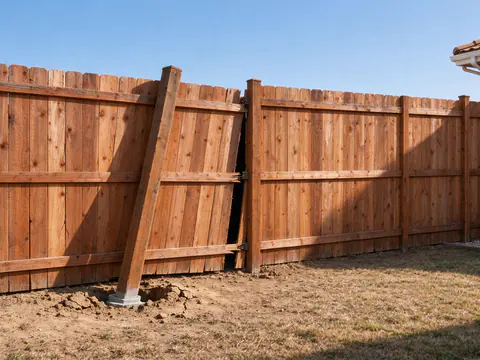
A leaning section after a windy spell, a sagging gate or a few broken boards is usually a repair. Posts rotted or loose along most of the run, or a material the owner no longer wants, points toward replacement. The repair or replace guide walks through how to tell the difference without guessing. Where a fence is shared, the replacement isn’t one owner’s decision alone, and California Civil Code 841 sets the notice that comes first.
Slope-edge back yards and the 5 ft daylight rule
Many tract back yards in this part of the valley end at a manufactured slope. The regional block wall standard requires footings next to a slope to keep at least 5 ft of soil between the footing and the slope face, measured to daylight, and it assumes slopes no steeper than 2 to 1. A wall right at the edge of the pad may have to step back from the top of the slope or go deeper than the standard table to keep that distance.
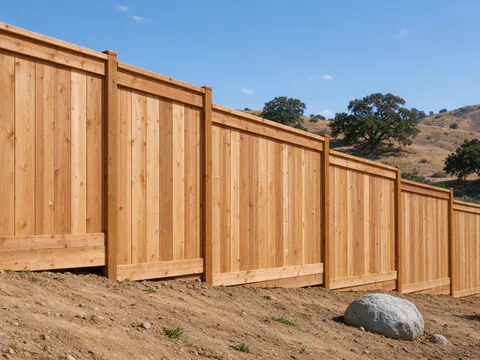
A fence on the same edge is lighter, but it still has to follow the ground. Panels can be stepped down in level sections or racked to run parallel with the grade, and the choice depends on the material and how steep the run is. The stepped vs racked guide shows both, and the hillside fence page covers post setting on slopes. No research point gives the soil at a particular Murrieta lot, so rock, fill and hardpan are checked on the site visit, not assumed.
How a Murrieta job usually runs
It starts with a call about what the fence or wall needs to do and roughly where it runs. A site visit then walks the line: survey pins if they can be found, the grade on each side, signs of rock, where water drains and how materials will get into the back yard. The survey guide covers what to do when nobody is sure where the line is, because an old fence is not proof of it.
Paperwork follows. That can mean an HOA submittal, written notice to a neighbor on a shared line under the good neighbor fence law, a City of Murrieta permit for a wall, and a DigAlert ticket opened at least two working days before any digging. Utility operators mark their own lines only, so private lines to pool equipment, spas or landscape lighting still have to be located by hand.
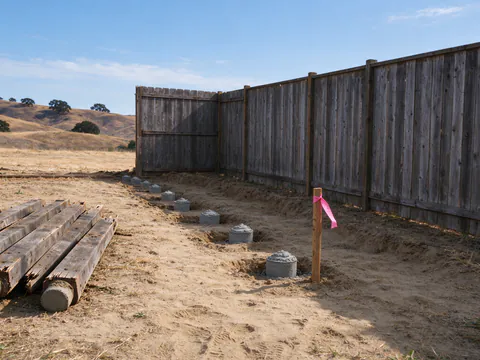
On the build, posts are set and allowed to cure, then rails and boards or panels go up, and gates are hung and adjusted. Under the regional standard, a permitted block wall is inspected at the footing, again before grout and at final. The final walk checks that posts are plumb, that each gate swings and latches properly and that debris is gone. Fencing falls under the C-13 license, block walls under C-29 masonry and flatwork under C-8 concrete, and each part goes to a contractor licensed for it.
Murrieta Hot Springs and other fire zone checks
CAL FIRE’s local responsibility area map puts the Murrieta city center point outside any hazard zone, while a point at Murrieta Hot Springs falls in a High zone. Zones change from one address to the next, especially toward open hillside. California’s proposed Zone 0 rules would apply in Very High zones, barring new combustible fences within 5 ft of a home and calling for a noncombustible section where a fence or gate meets the house. They are not yet in force. The fire-resistant fence page explains the options if your address maps Very High.
For a budget, the fence cost guide uses the same national ranges that apply in Murrieta, and the cost estimator runs the numbers on your footage. When you’re ready, send the address and a few photos of the line.