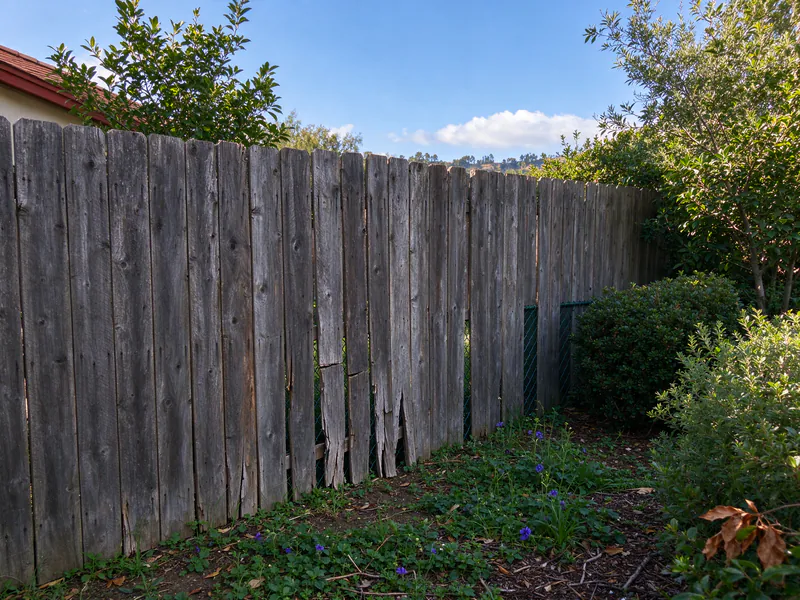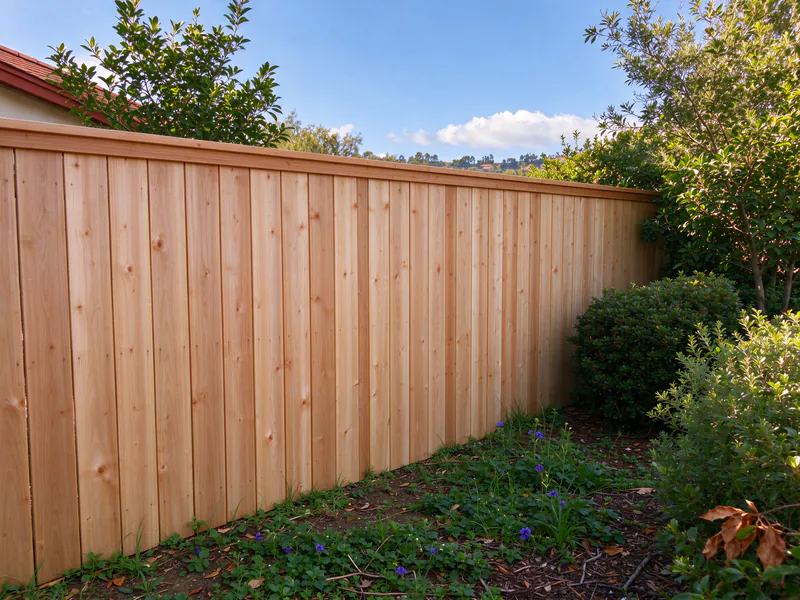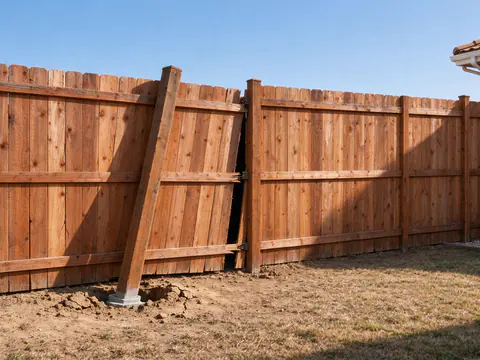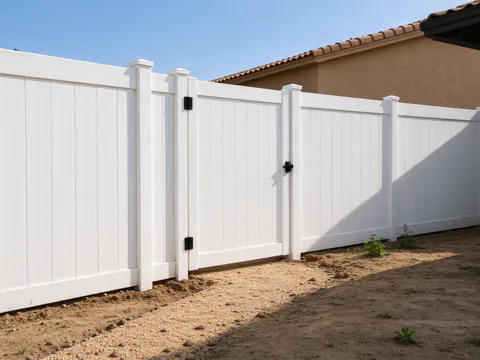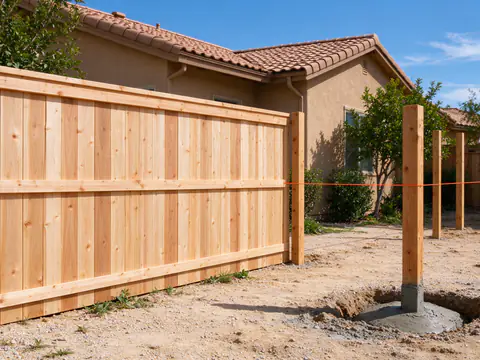
Cask Fence Temecula manages fence replacement for homes across Temecula and southwest Riverside County, from tear-out to the final walk, with the work carried out by licensed and insured contractors. Replacement is the right call when a fence is failing as a system: posts soft or loose along the run, rails pulling away in several places, or a fence that leans as a whole. If the damage is in one spot, the fence repair page is the better place to start, and the repair or replace guide helps you tell the two apart.
When replacement is the right call
A fence is due for replacement when the parts that hold it up are giving out in many places at once. Wood posts usually go first, at the ground line where moisture, fungi and termites meet. Once several posts on a run rock in their holes, replacing them one at a time costs more and still leaves a fence of mixed age. Vinyl fences reach the same point when panels crack or turn brittle across a run and the original profile is no longer made. Chain link reaches it when posts and rail are rusted through, not just when fabric sags.
Age alone isn’t the test. A twenty-year-old redwood fence on steel posts may need only boards, while a much younger fence on untreated posts may be done. The fence repair assessment gives a quick read on your own fence.
The housing stock shapes demand too. Census figures show only about 15% of Canyon Lake homes and under 20% of Fallbrook homes were built in 2000 or later, against roughly 90% in French Valley. Older neighborhoods have more fences at the end of their life, while newer tracts tend to start with block walls and vinyl. The Canyon Lake page and the Fallbrook page cover those areas.
Before anything comes down: the line and the paperwork
Survey pins and the true boundary
An old fence shows where someone built, not where the property line is. If the line matters to you or a neighbor, the time to confirm it is before the old fence is removed, while its position is still visible. California Civil Code 841 makes adjoining owners jointly responsible for boundaries and monuments, and tear-out is when survey pins and corner markers get disturbed. Any pin found along the line is flagged and left in place. Moving one is a surveyor’s job. The property line survey guide explains when a survey is worth paying for.
Written notice to neighbors
For a fence on a shared line, Civil Code 841 calls for 30 days’ written notice to each affected neighbor. The notice describes the problem, the proposed solution, the estimated cost, how the cost would be split and the timeline. The statute presumes equal benefit and equal responsibility for reasonable costs unless there’s a written agreement saying otherwise. If you’re changing material or height, say so in the notice, since that’s part of the proposed solution. Homeowners report the cost split as the hardest part of a shared fence, so a scope that shows each side’s share clearly does a lot of the work. The good neighbor fence law guide goes deeper.
HOA approval for a new style
In a planned community, a replacement that changes the look of the fence, such as a switch from wood to vinyl, a new color or a different height, is usually the kind of change an association reviews. California Civil Code 4765 requires those decisions in writing, within the timelines in the association’s own documents, with a way to ask for reconsideration if the answer is no. Even a like-for-like replacement may need a submittal, depending on the CC&Rs. The HOA approval guide lists what to send, and in Canyon Lake, the property owners association’s architectural committee is the body to ask.
Height and permits
The 2025 California Residential Code exempts fences not over 7 feet from a building permit, but zoning sets the height allowed in each yard. A replacement taller than the fence it replaces, or one in a front yard or on a corner lot, gets its height confirmed for your address first. The City of Temecula’s fee schedule lists a non-masonry fence from 6 to 10 feet at $384 ($131 plan check plus $253 inspection), plus $91 per additional 100 linear feet. Replacing a fence with a block wall is masonry work with its own standard and fees; see the block wall page. The height and permit guide covers the rules.
Switching from wood to vinyl or metal?
Get the HOA submittal and the neighbor notice started first. They take longer than the tear-out.
Tear-out: boards, posts and the concrete under them
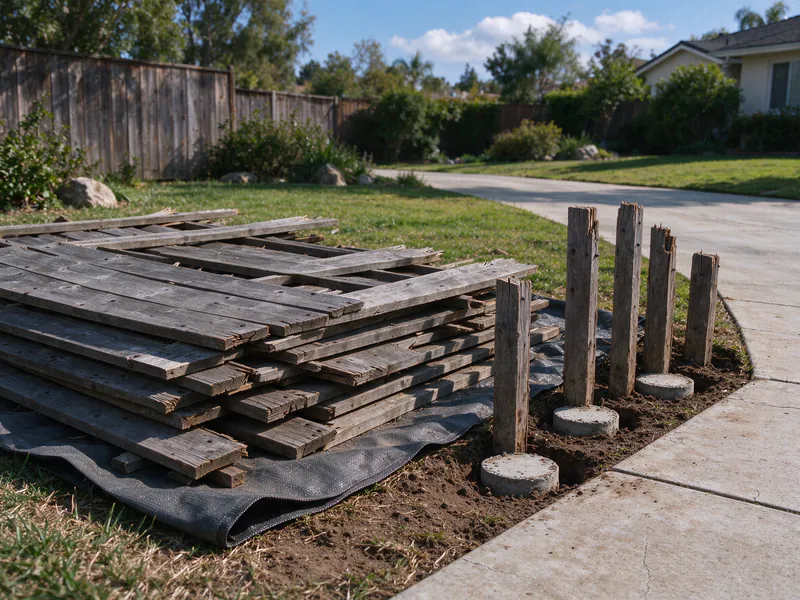
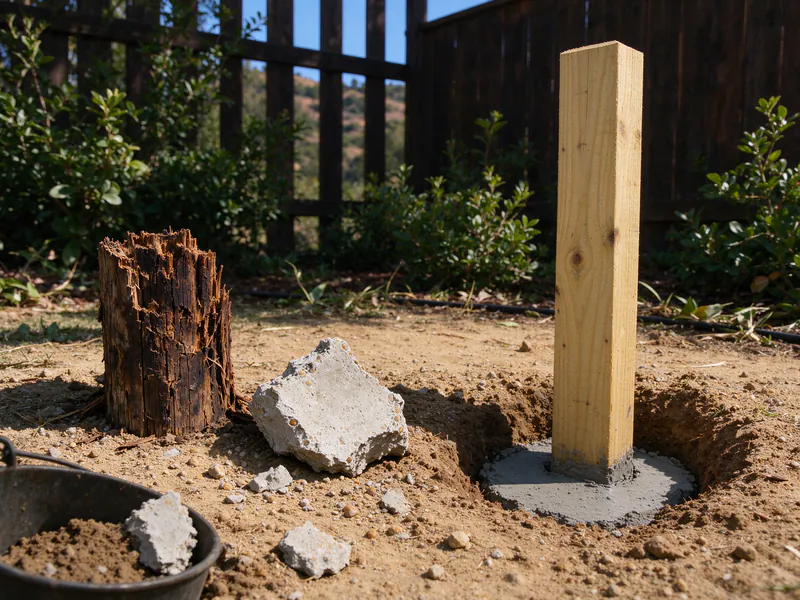
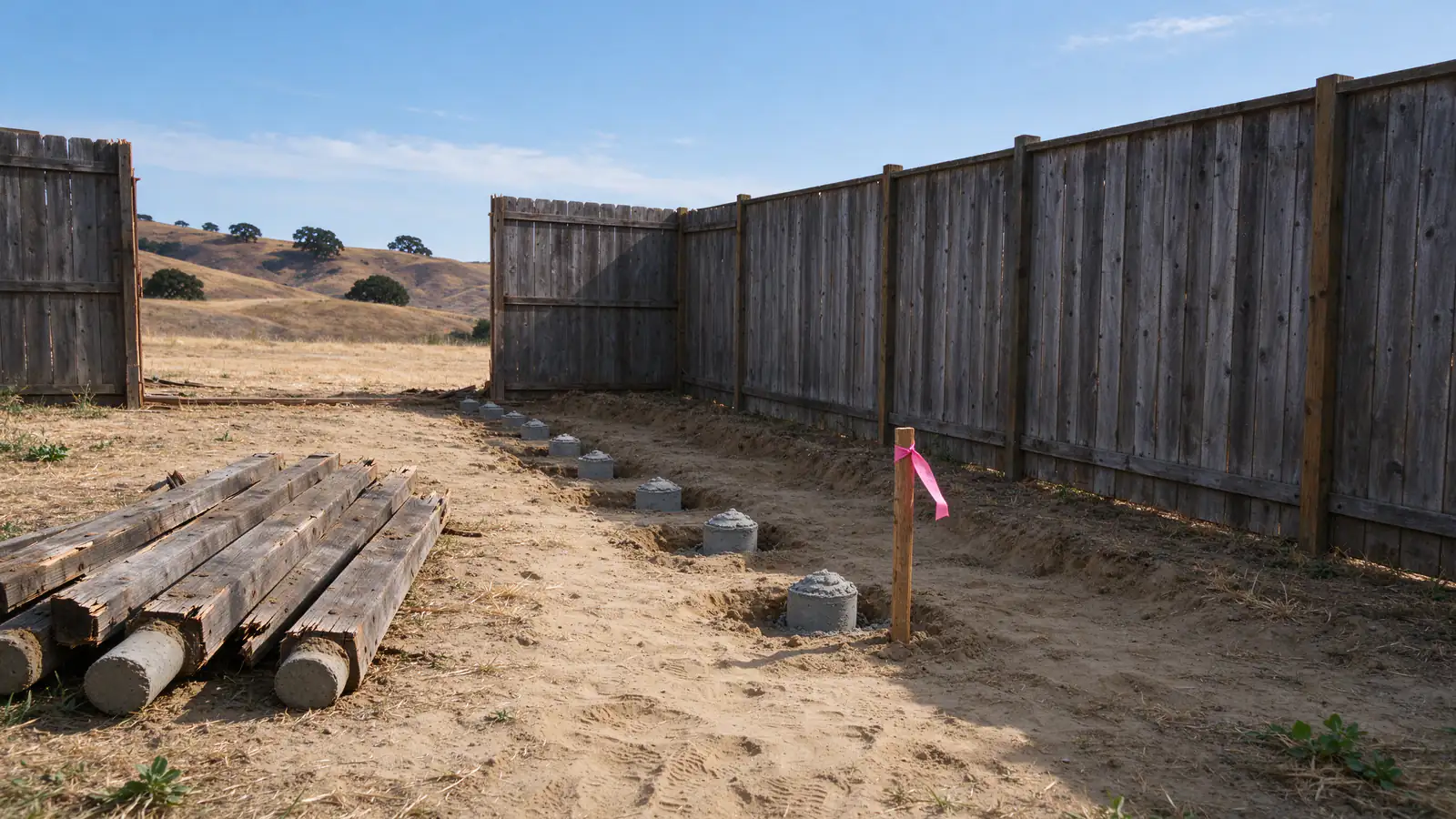
Tear-out runs in a set order. Boards or panels come off first, then rails, then posts. Posts set in soil pull out. Posts set in concrete come out with their plug, which can weigh a lot more than the post, or get cut at grade with the concrete broken out below. Where the new posts can sit a few inches off the old ones, the old concrete is sometimes left in the ground and the new holes offset, which saves time but has to be agreed in advance, because it shifts the post layout.
On lots with cemented hardpan, which federal soil surveys place roughly 2 to 3 feet down at points around Temecula, Menifee and French Valley, old footings are often wedged into the hardpan and slow to break out. The fence posts and Temecula soil guide explains what that layer does to digging.
Before new holes are dug, a DigAlert ticket has to be opened at least two working days ahead, and no more than 14 calendar days ahead, under California Government Code 4216.2. Utility operators mark their own lines only, usually to the meter. Sprinkler lines, low-voltage lighting and the lines to a pool heater or spa aren’t marked, and old fence lines often run right beside them.
Haul-away covers boards, rails, posts, concrete and spoil. Old pressure-treated lumber shouldn’t be burned or chipped for mulch, so it leaves with the rest of the debris.
Changing materials: wood to vinyl and other switches
Replacement is the natural time to change material. The common local switch is wood to vinyl, for a fence that won’t rot or feed termites and doesn’t need stain. It brings its own trade-offs. Vinyl panels come in fixed widths, so the post layout follows the system, not the old fence. Vinyl expands in heat, and the nearest NOAA station records about 60 days a year at or above 90°F, so panels and rails need their expansion room. Vinyl can crack on impact and isn’t unbreakable. The wood vs vinyl guide and the vinyl fence page cover the comparison, and the vinyl heat and fire guide explains how it behaves in hot weather.
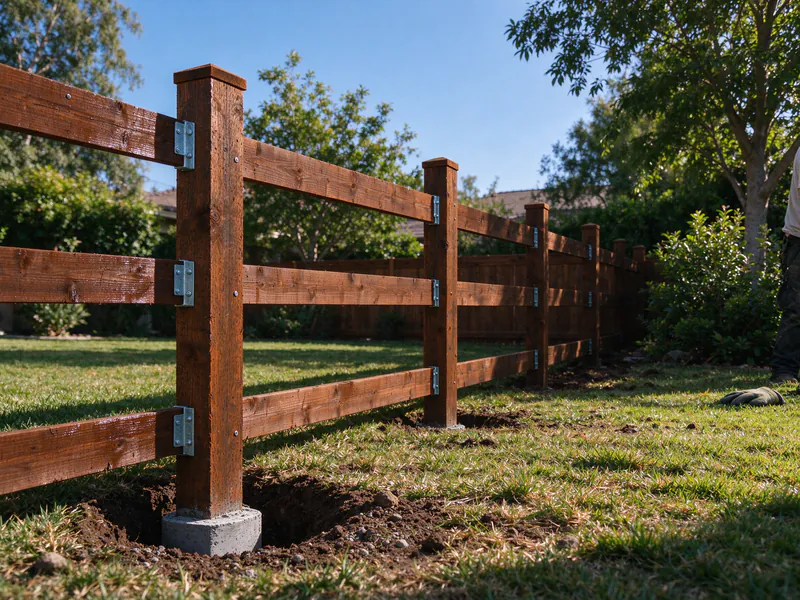
Staying with wood can still mean changing what failed. A new wood fence on galvanized steel posts takes the rot-prone part out of the ground; the wood fence page explains that approach. In a Very High fire hazard zone, replacement is also the cheapest moment to put a metal section or gate where the fence meets the house, as the fire-resistant fence page describes.
How a replacement runs
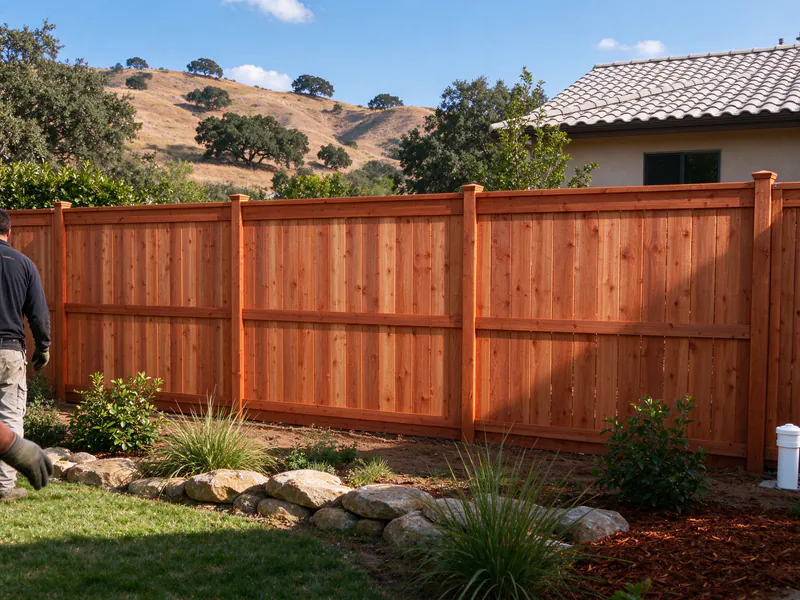
After a first call about the fence, the length and what’s next door, there’s a site visit that walks the line, notes pins and survey marks, grade, rock, drainage and access, and looks at how the old fence was built. Paperwork comes next: the HOA submittal, written notice for a shared fence, any permit, and the DigAlert ticket. Then the build: tear-out, new posts set and cured, rails and boards or panels hung, gates hung and adjusted. The job ends with a final walk to check that posts are plumb, gates swing and latch, and the debris is gone.
What fence replacement costs
Replacement is the new fence plus getting rid of the old one. A national budgeting range for old fence tear-out and haul-away runs about $3 to $7 per linear foot. On top of that sits the new fence: about $10 to $50 per linear foot for a 6 ft pressure-treated or fir privacy fence, $15 to $85 for vinyl privacy fencing, and $8 to $40 for galvanized chain link, each as a national budgeting range. Where a job lands depends on length, height, the old fence’s concrete, hardpan or rock, slope, gates, access for removal, and whether a neighbor is sharing the cost. The Temecula fence cost guide breaks those down, and the fence cost estimator gives a range for your own length and material. When you’re ready for a written scope, get in touch.