
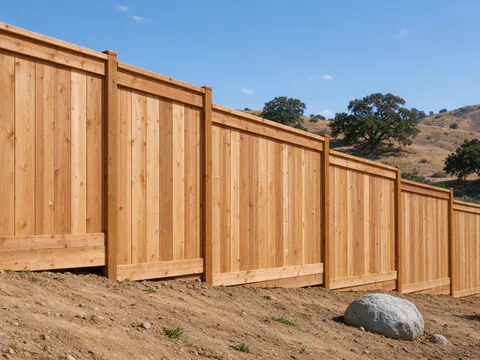
Fallbrook sits across the county line, and that changes the height rules before anything else. It is unincorporated San Diego County, so fences follow Section 6708 of the County Zoning Ordinance, which keeps front yards low but lets open ranch fencing run six feet tall along the road on acreage in rural zones. Cask Fence Temecula plans and manages fence and gate work in Fallbrook, carried out by licensed and insured contractors, from ranch and horse fencing on orchards and pasture to privacy fences between neighbors and drive gates.
Section 6708 heights, line by line
The rules are short, and they split fences into solid and open:
| Where on the lot | Solid fence or wall | Open fence |
|---|---|---|
| Main building area | Up to the height allowed for the main building | Up to the height allowed for the main building |
| Front or exterior side yard | 42 inches | 42 inches, or 72 inches on qualifying acreage (below) |
| Rear or interior side yard | 72 inches | 72 inches |
| Gates | Up to 12 feet | Up to 12 feet |
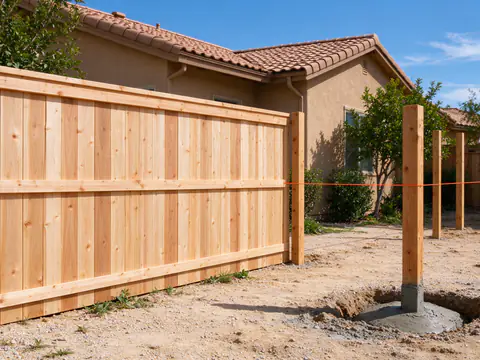
So a six-foot wood or vinyl privacy fence works on side and rear lines, while anything across the front stays at 42 inches unless the lot qualifies for the acreage exception. Fences that confine animals also have to meet the county’s animal regulations, which start at Section 3000. Where the county fire code or a local fire district ordinance is stricter, the stricter rule applies.
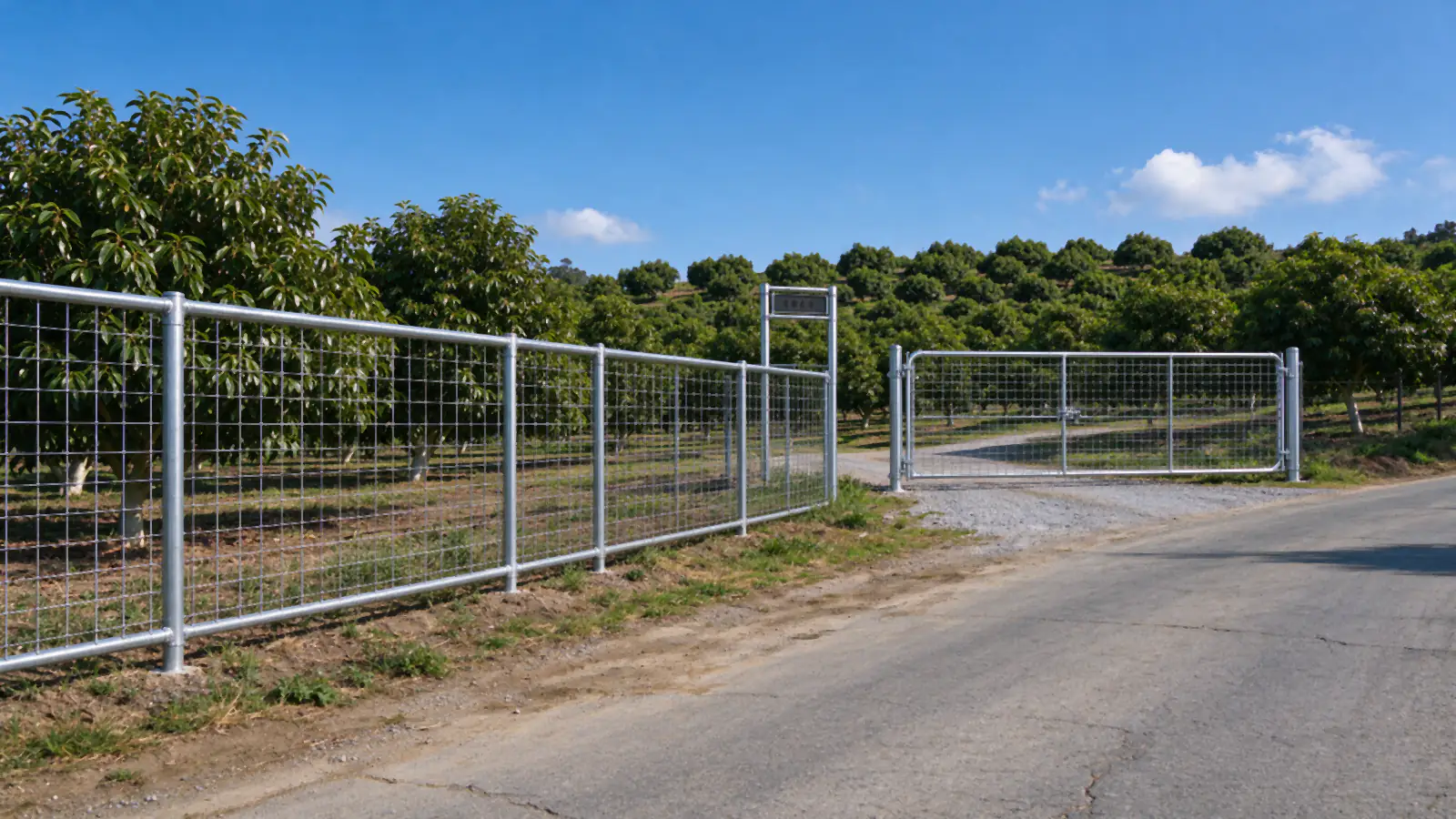
Open ranch fencing at the road on an acre or more
This is the rule that suits rural Fallbrook. On lots of one gross acre or larger in the A70, A72, RR, S82, S88, S90 and S92 use regulations, open fences of woven or barbed wire, wrought iron, pipe corral or rails may be 72 inches high in the front yard. The ordinance limits the supports: posts, pilasters and other support elements can be no wider than 24 inches in any direction, must sit at least eight feet apart edge to edge, and can’t exceed 72 inches. Razor wire and angled barbed wire are allowed only to protect high-value agricultural, commercial or industrial uses.
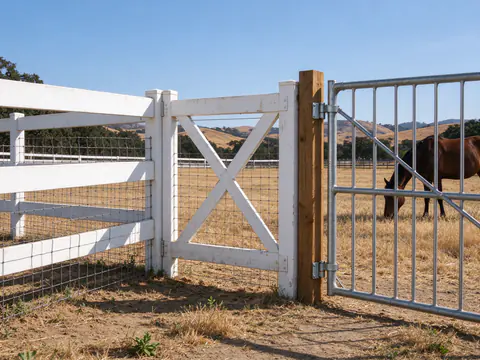
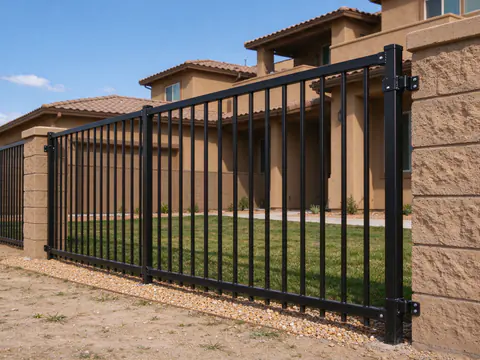
In practice that allows a tall pipe or no-climb wire fence along an orchard or paddock frontage without an exception, as long as it stays open and the zone and acreage qualify. A solid wall at the road doesn’t get the same allowance. The horse fence materials guide compares pipe, rail and wire mesh, and wrought iron is the other open option the rule names. Your lot’s use regulation and gross acreage are confirmed before a front fence is designed around this rule.
Gates, entry pillars and fire access
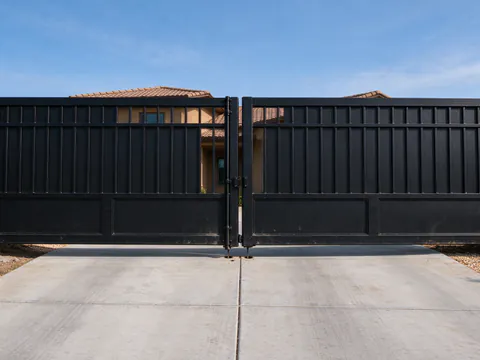
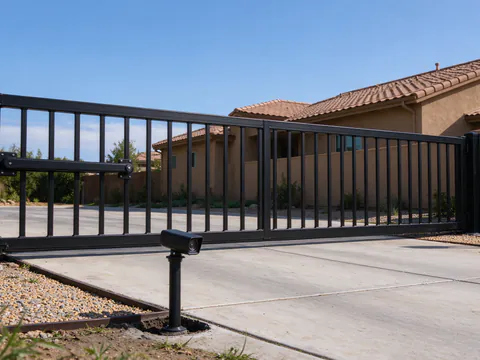
Section 6708 treats drive entries as their own item. On an individual lot, a gate can be up to 12 feet high. A gate entry structure, meaning the pillars and any gate house around a vehicle opening, has to sit at least 10 feet from the nearest edge of the public road right-of-way or private road easement serving the gate. Entry pillars can extend up to 15 feet on each side of the opening, but can’t top 12 feet for more than six feet on either side. For fire access, the structure has to leave 13 feet 6 inches of vertical clearance, and the county fire code and local fire district rules regulate gates across driveways, so the fire agency reviews them.
Gates across a shared private road easement have tighter rules: entry structures at least 50 feet from the intersecting road, and written consent from every owner with access rights before a building permit is issued. Swing or slide is a separate choice, covered in the swing vs sliding gate guide, and the automatic gate page covers operators.
Going taller: the two county exceptions
Two paths allow more height. Section 6708i lets the county grant an administrative exception for fences up to 7 feet 6 inches in interior side or rear yard setbacks that don’t abut a street, private thoroughfare or alley. It needs written consent from all contiguous owners, including those across a street or alley, plus an application and a fee. For anything else, Section 6708h allows an administrative permit, with notice to every owner within 300 feet and findings that the fence fits the community and won’t create a traffic or safety problem.
Older homes, older fences and the ground under them
Census figures describe an older, mixed housing stock. Of Fallbrook’s 10,444 homes, 64.3% are single-family detached, 58.5% are owner-occupied and 18.5% were built in 2000 or later. Many fences here have stood for decades, so a project often starts with whether to repair or replace what’s there. The repair or replace guide sets out the signs. A long-standing fence also isn’t proof of the boundary, which matters on acreage where old lines drift; the property line survey guide explains when to call a surveyor.
A federal soil survey point near the center of Fallbrook maps Fallbrook sandy loam with bedrock about four feet down. That is one point, and the hills toward De Luz get much rockier and steeper, so some lots need rock drilling or hillside fencing.
Fire maps, county permits and the dig ticket
CAL FIRE’s 2025 local responsibility area map places the Fallbrook center point outside a mapped hazard zone, but De Luz to the north maps Very High, and zones change from parcel to parcel. California’s proposed Zone 0 rules would bar new combustible fences within five feet of a home in Very High local zones and in state responsibility areas, so an address check matters on the rural edges.
The 2025 California Residential Code exempts fences not over seven feet from a building permit; whether San Diego County’s adopted code changes that for your project is confirmed per address with San Diego County Planning & Development Services. The zoning heights above apply either way. On a shared line, California Civil Code 841 presumes neighbors share the cost of a dividing fence and calls for 30 days’ written notice; the good neighbor fence law guide covers it. A DigAlert ticket is needed two working days before posts are dug, and private irrigation lines aren’t marked by the utilities. To start, try the cost estimator, then send the address, the acreage and what you want fenced.