
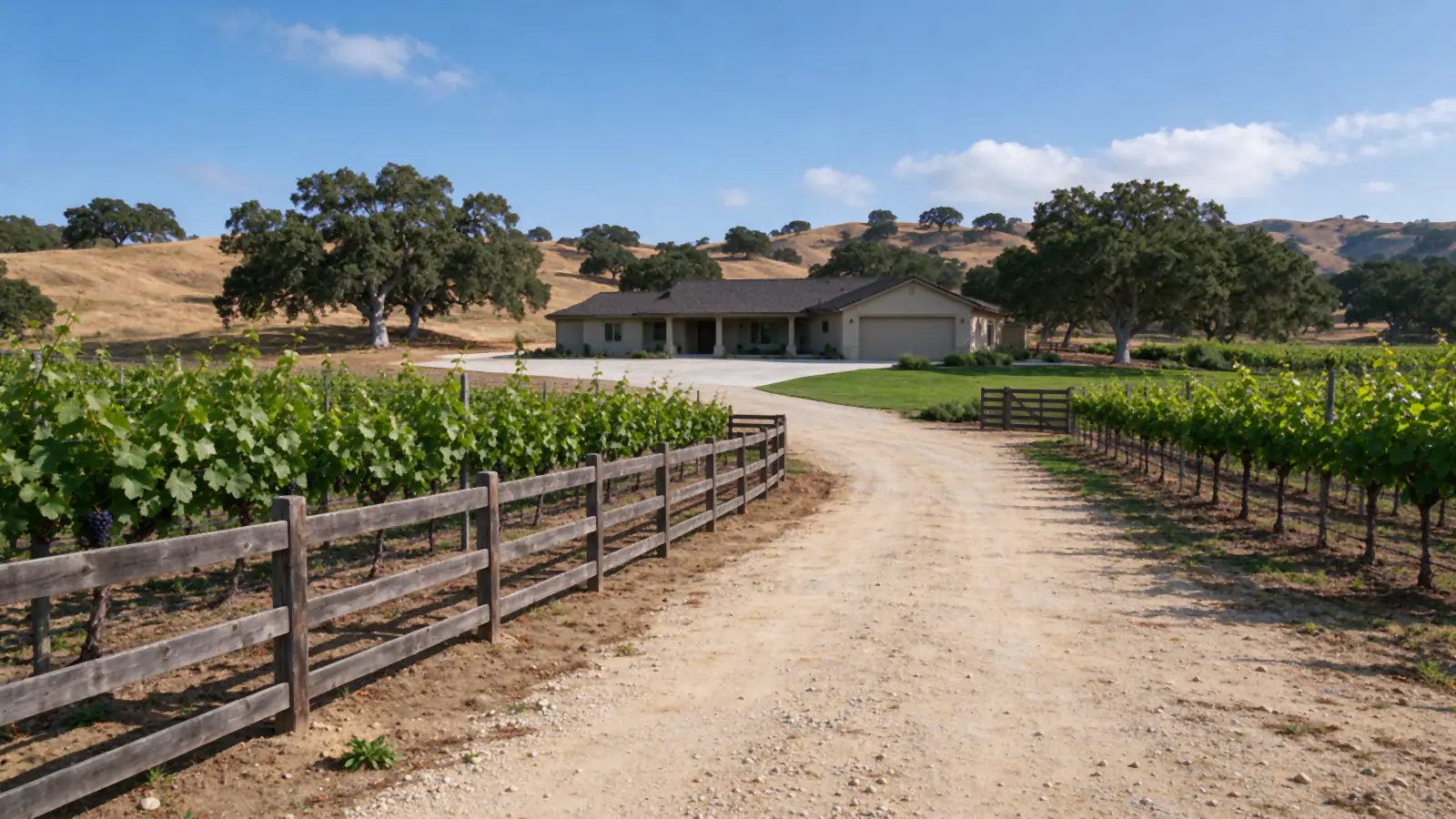
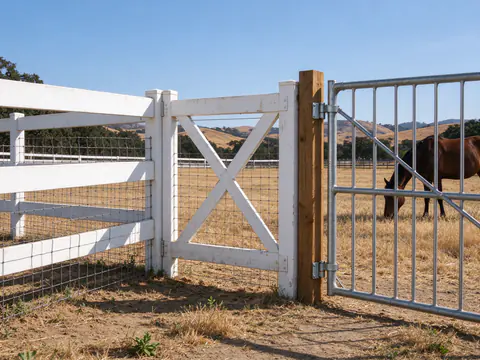
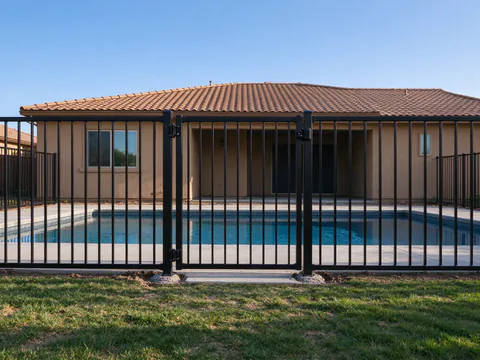
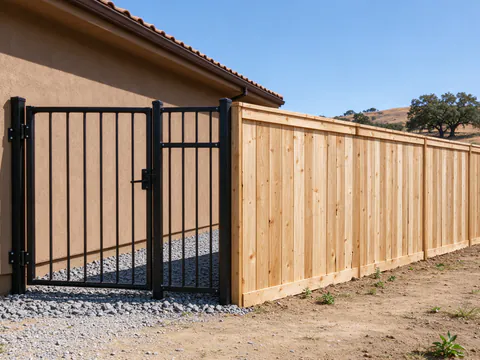
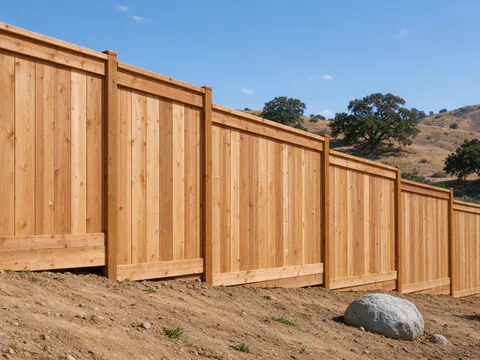
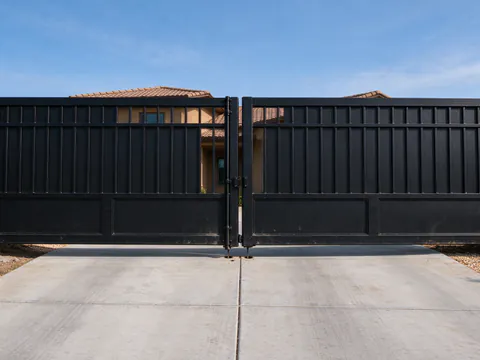
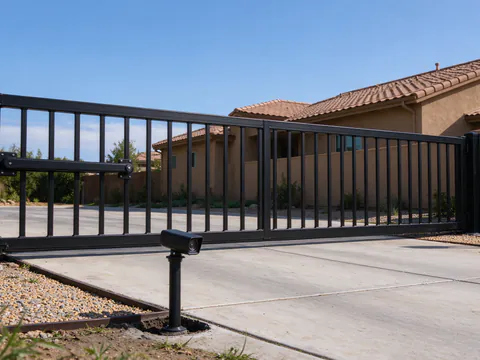
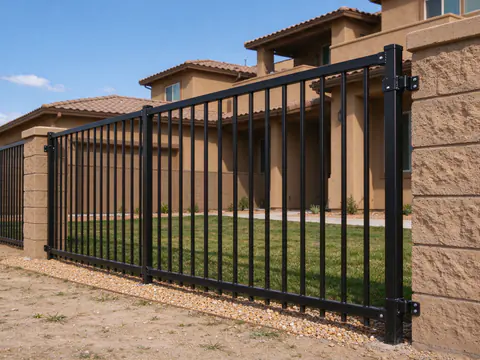
Wine country fencing is mostly about how little of the land gets fenced. Riverside County’s design guidelines for the Temecula Valley Wine Country ask for fencing around building pads rather than property lines, keep most fences and walls to four feet, and discourage chain link where the public can see it. Cask Fence Temecula plans and manages fence, gate and wall work across the wine country and the rural land west of Temecula, carried out by licensed and insured contractors. Here that usually means horse and ranch fencing, pool fences, entry gates and fencing on slopes.
What the wine country design guidelines say about fences
The County of Riverside adopted the Temecula Valley Wine Country Design Guidelines on March 11, 2014. Their aim is to keep the area’s open, rural character around vineyards and equestrian land, and the fence items are specific:
| Topic | What the guidelines say |
|---|---|
| Where to fence | Fencing should be encouraged only around building pads, to keep the open and rural character |
| Perimeter fencing | If wanted, it should be compatible with the architectural style of the primary use and the wine country atmosphere |
| Height | Any fence or wall should not exceed four feet, except swimming pool fences and retaining walls |
| Chain link and metal | Chain link fences, exposed metal surfaces and contrasting colors should be prohibited, especially in public view |
| Rancho California Road | The multi-use trail is separated from the roadway by planting and rail fence |
These are guidelines for development proposals the County Planning Department reviews, such as a new dwelling, a winery or an equestrian facility, and the Planning Director decides how closely a project has to follow them. The county zoning ordinance, Ordinance 348, sets the underlying fence rules, and the limits that apply to a given parcel are confirmed for the address. So for an existing home, how the guidelines and the ordinance apply to a given fence is confirmed per address. The practical reading is the same either way: a low, open fence near the house fits the area, and a six-foot solid perimeter fence or a chain link frontage is the kind of request that draws questions.
Horses, trails and ranch rail
The guidelines describe riding trails, stables and equestrian facilities in the Valle de los Caballos community. Horse fencing is its own trade problem. Horses lean on rails, chew wood and test anything loose, so post spacing, rail attachment and the choice between wood rail, vinyl rail, pipe and no-climb wire mesh matter more than looks. The horse fence materials guide compares them, and corrals and runs fall within the C-13 fencing license.
A four-foot guideline and a tall horse are not always an easy match. Where a paddock needs more height, the plan is confirmed with the county before posts go in. Electric wire offset from the rail is one way to keep horses off the fence without adding height, and the horse fence page covers that option.
Pool fences, the exception to four feet
Pool fences are carved out of the four-foot limit for a reason. When a new or remodeled pool at a single-family home gets a building permit, California Health and Safety Code 115922 requires at least two drowning-prevention features. If one is an enclosure under section 115923, it has to be at least 60 inches high, with no more than 2 inches of ground clearance, openings that won’t pass a 4-inch sphere, and gates that open away from the pool and self-close and self-latch with the release at least 60 inches up. Temecula’s stricter city rule doesn’t reach unincorporated county land, but the state minimum does. The pool fence requirements guide goes through each item.
Zone 0 on Very High land: the strip around the house
CAL FIRE’s sample points along Rancho California Road, at La Cresta and the Santa Rosa Plateau, and in De Luz all fall in Very High Fire Hazard Severity Zones in the state responsibility area. A July 2026 Board of Forestry staff memo describes draft Zone 0 rules for those areas: no new combustible fences within five feet of a home, existing ones allowed to stay and be repaired, and a noncombustible section required within five years where a fence or gate attaches to the house. Those rules are moving toward adoption, not in force. Fencing more than five feet out, which is most ranch and vineyard fencing, would be unaffected. The fire-resistant fence page covers metal gates and masonry returns at the house.
Soil, wind and open terrain
The guidelines credit the area’s wines in part to well-drained decomposed granite soils, and a federal soil survey point in Wine Country maps Greenfield sandy loam. That is generally easy digging. Wind is the bigger load: the county’s building handout lists 100 mph for ordinary residential structures, with Exposure C, the open-terrain category. A solid fence on an exposed ridge takes that wind across its whole face, which is one more reason open rail and wire suit this land. Long driveway gates need posts sized for the leaf, and the swing vs sliding gate guide helps choose between them.
La Cresta and the Santa Rosa Plateau
West of Murrieta, La Cresta and the Santa Rosa Plateau are unincorporated Riverside County and map Very High at CAL FIRE’s sample points. The soil survey point at La Cresta maps Wyman loam. Lots here are larger and often slope, so fencing tends to be rail, wire and open metal following the ground rather than tract-style privacy panels. Where the grade changes sharply, panels are stepped or racked, which the stepped vs racked guide explains. The county zoning rule for these parcels is confirmed per address, as it is in Wine Country.
De Luz: shallow rock, steep slopes and two counties
De Luz is the hardest ground in the area. The soil survey point there maps Cieneba-rock outcrop complex on 30 to 75% slopes, very stony, with bedrock about 26 centimeters down, roughly ten inches, and 40% of the map unit rated as rock outcrop. Posts on that ground often need rock drilling, and some lines need hillside fencing or a retaining wall where a pad meets the slope. The fence posts and soil guide covers what changes when an auger meets rock.
De Luz also straddles the county line. Parcels on the Riverside side go through Riverside County. Parcels on the San Diego side follow San Diego County Zoning Ordinance 6708, which limits solid fences to 42 inches in front and exterior side yards and allows 72-inch open ranch, pipe corral or wire fencing in front on lots of one gross acre or more in certain agricultural and rural zones. The Fallbrook page covers those rules in more detail.
County permits, shared lines and DigAlert
The 2025 California Residential Code exempts fences not over seven feet from a building permit. Riverside County’s own documents put the line at six or seven feet in different places, so the threshold for a given fence is confirmed per address with Riverside County Building & Safety, which also handles walls, retaining walls and pool permits. Planning review under the wine country guidelines is a separate question from the building permit.
On a shared line, California Civil Code 841 presumes neighbors share the reasonable cost of a dividing fence and requires 30 days’ written notice first; the good neighbor fence law guide covers it. On acreage, old fence lines often wander off the true boundary, so the property line survey guide is worth reading before a long run is planned. Every dig needs a DigAlert ticket two working days ahead, and private lines to wells, pumps, barns and pool equipment aren’t marked by the utilities.
How a wine country project usually runs
The first call covers acreage, animals, the pool and what the fence needs to keep in or out. The site visit walks the line, finds pins, and looks at grade, rock, drainage and access for long runs and delivery trucks. Paperwork follows: county planning and building questions, written notice to any neighbor sharing a line, and the DigAlert ticket. On the build, posts are set and cured, rails, wire or panels go on, and gates are hung and adjusted. The final walk checks plumb lines, gate swing and latch, and clears the debris. For a first budget, try the cost estimator or read the fence cost guide, then send the parcel and what you want fenced.