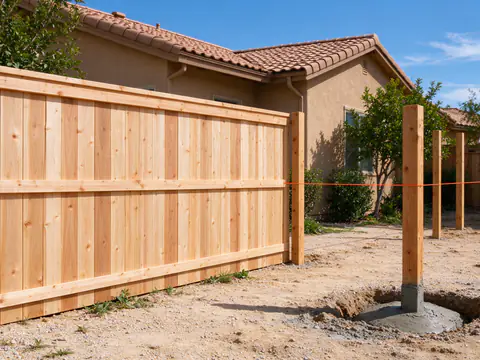
Cask Fence Temecula handles fence and gate repair for homes in Temecula, Murrieta, Menifee and the surrounding valley, with the work carried out by licensed and insured contractors. A repair job here usually starts with one of a few symptoms: a post leaning out of line, boards or a vinyl panel knocked out, a run flattened by wind, a gate that drags or won’t latch, or chain link gone slack. The useful question in every case is the same. Did one part fail, or is the fence failing as a whole? The repair or replace guide works through that decision in detail, and the fence repair assessment walks you through it with your own fence.
Component failure or a failing fence
A fence is a system: posts in the ground, rails or a frame between them, and boards, pickets, panels or fabric on the frame. Most repairs replace one of those parts. Replacement makes sense when the part that failed is failing everywhere.
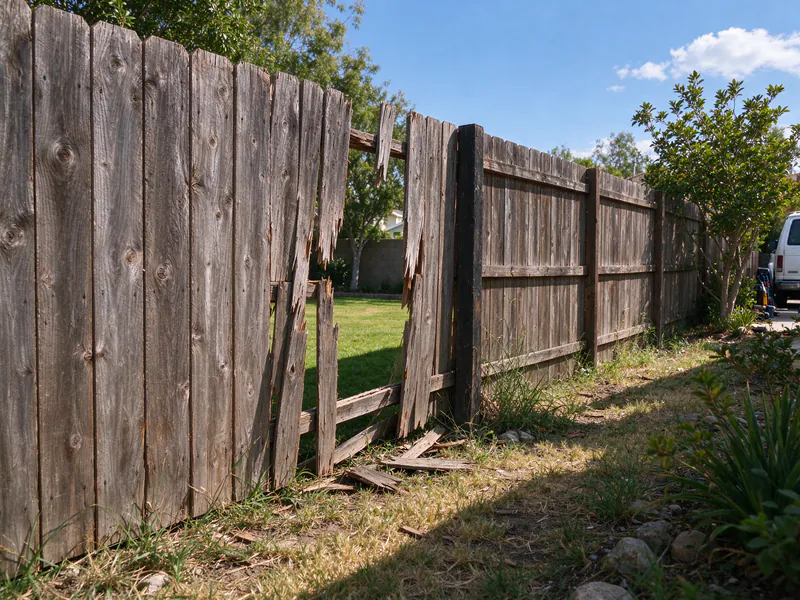
Some signs point to a repair. One post leans while the posts on either side stand straight. A car, a fallen limb or a dog did the damage in one place. A hinge wore out on a gate that still hangs square. Other signs point past repair: several posts rock when you push them, rails have pulled off along the run, boards are soft at the base in many places, or the fence leans as a whole. A symptom rarely proves a single cause, so the scope should come from looking at the whole line, not only the broken spot. When the answer is a new fence, the fence replacement page explains tear-out and what comes next.
Leaning posts and the soil under them
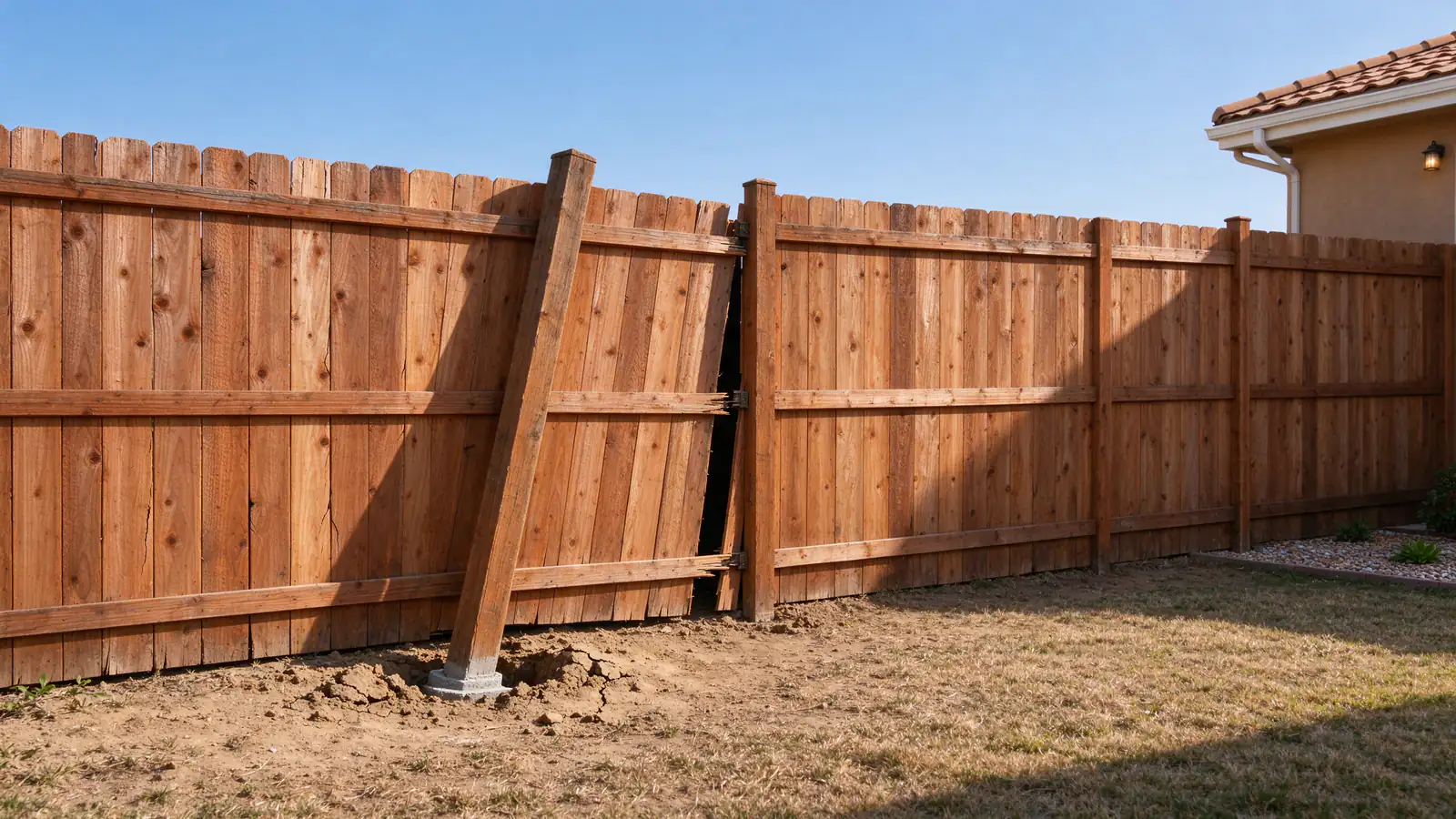
A leaning post is the most common repair call, and the lean almost always starts below grade. The usual causes are rot at the ground line, a hole that was too shallow or too narrow for the fence’s height and wind exposure, soil that has softened or washed out, and termite damage.
The soil matters more in some places than others. Federal soil survey points show mostly sandy and granitic loams around Temecula, which drain well and barely swell. Canyon Lake is the exception in the survey data: its sample point is a clay with high shrink-swell, the kind that moves as it wets and dries and pushes posts out of plumb over time. In Menifee, French Valley and parts of Temecula, a cemented hardpan layer sits roughly 2 to 3 feet down, so an original installer may have stopped short when the auger hit it. A replacement post then needs either a rock bit or a jackhammer to reach proper depth, which is a cost driver worth knowing about before the quote. The fence posts and Temecula soil guide explains why there is no single correct post depth, and the Canyon Lake page covers what the clay means locally.
Replacing a broken or rotted post
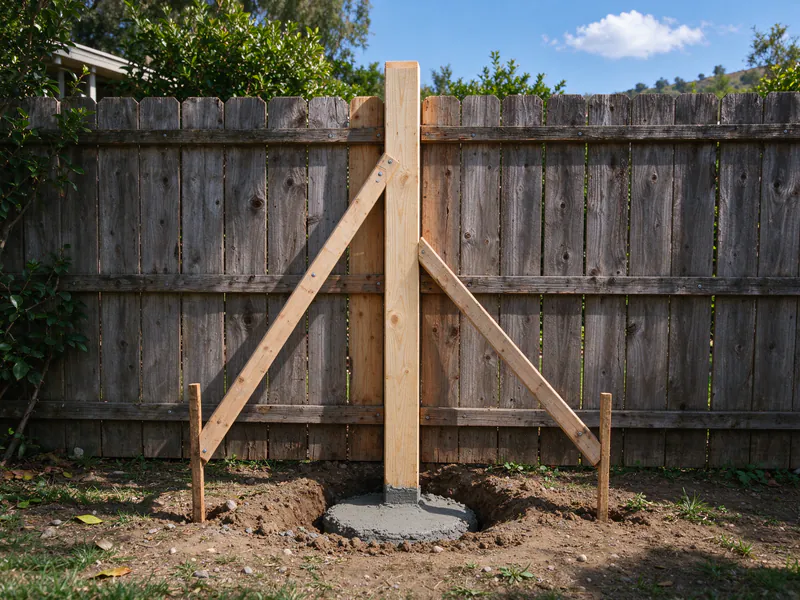
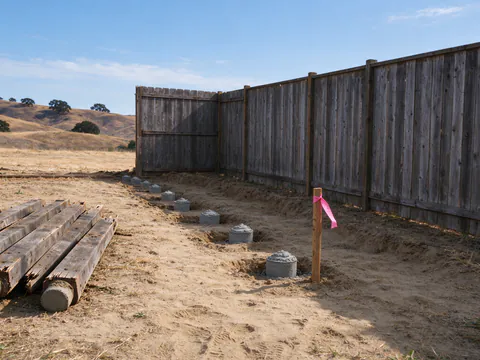
Post replacement is the core of most wood fence repairs. The rails are unscrewed from the failed post and the neighboring panels are braced so they stay in line. Then the old post comes out. If it was set in concrete, that plug either gets broken out, which is slow but keeps the post on its original spot, or the new hole is drilled beside it, which is faster but shifts the post a few inches and can change the rail span. Which one makes sense depends on the fence style and how much room there is.
Because a new hole is digging, a DigAlert ticket has to be opened at least two working days ahead under California Government Code 4216.2. Utility operators mark only their own lines, so private sprinkler, lighting and spa lines are still your responsibility to point out.
The new post is set, plumbed and given time in the concrete before the rails go back. It doesn’t have to match the old material. Swapping a rotted wood post for ground-contact rated treated lumber or galvanized steel puts something tougher where the failure happened. Homeowners do report finding untreated posts under an older fence, which is part of why one rotted post can be the first of many.
Rot, termites and the ground line
Rot and termites both work at the base. Fungal decay needs moisture, and the ground line of a post stays damp longest, especially where sprinklers hit the fence. UC IPM notes that subterranean termites, the most destructive type in California, infest dead wood in contact with soil, and that drywood termites can nest above ground in fence lumber. Its advice is to remove untreated fence posts and buried scrap wood near structures.
Telling the two apart, and judging how far either has gone, takes probing the wood rather than looking at it. Stain or sealer can’t restore wood that has already decayed, so a soft post gets replaced, not painted. The termites and rot guide has more on how each one shows up.
Broken boards, panels and rails
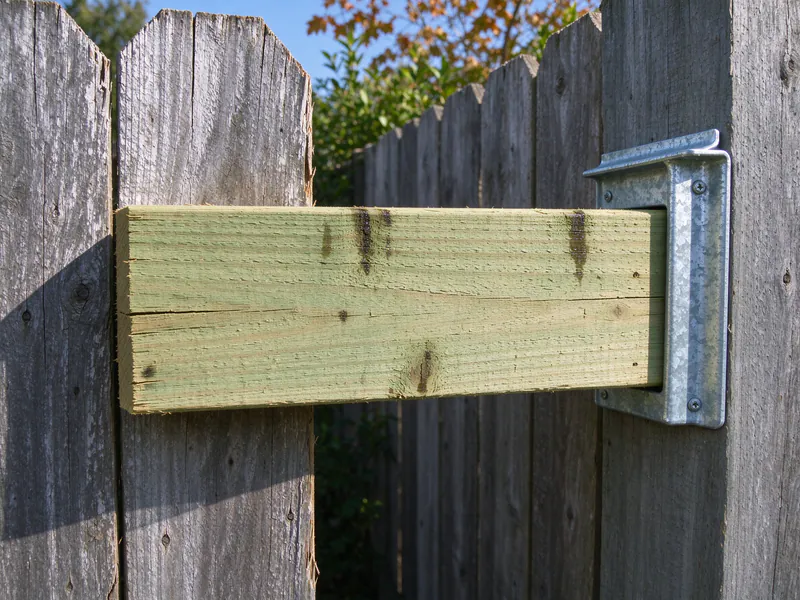
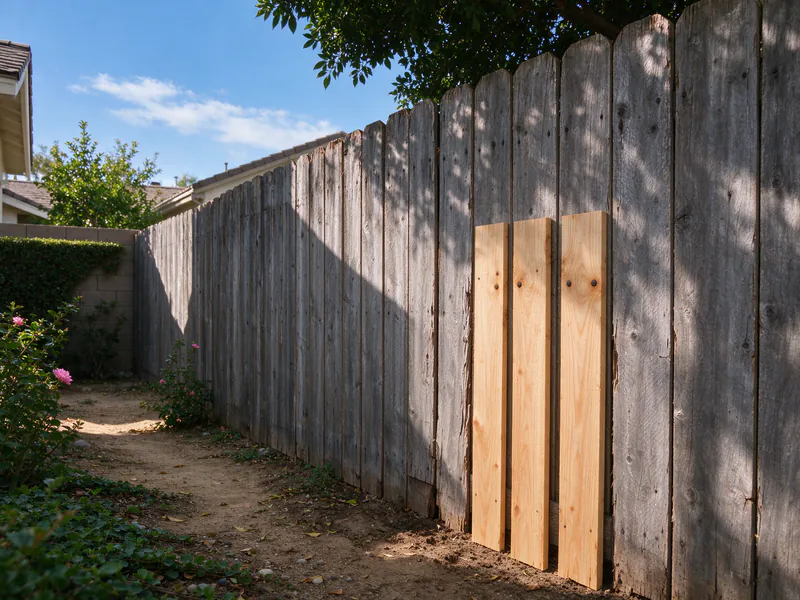
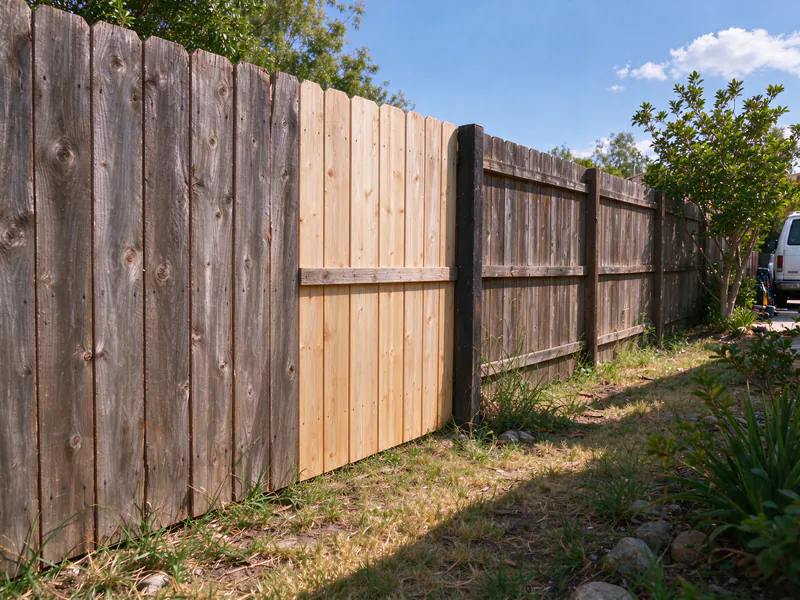
Panel repair is usually the simplest work on a wood fence. Cracked or missing boards come off and new ones of the same species and width go on, fastened with exterior-rated screws or nails. A rail that has split at the post can be replaced or, where it’s still sound, reattached with a rail bracket. New boards are brighter than weathered ones for a while; that evens out as they gray or once the run is stained.
Vinyl is different because it’s a manufactured system. Rails slot into routed posts and pickets lock into rails, so a replacement part has to match the profile, the height and the color closely enough to fit and to look right. Vinyl can crack from impact, and older vinyl can turn brittle in the sun. When the original maker’s profile is still made, a single panel or rail can usually be swapped. When it isn’t, the choices are the closest available match, moving original panels to the visible side and putting the near-match out of sight, or replacing the section. Homeowners report being left to find someone new to finish matching vinyl after an installer closed, so knowing the brand and style of your fence helps. The vinyl fence page covers how those systems go together.
Not sure if it's one post or the whole fence?
Photos from both ends of the run, plus the broken spot, usually settle it before anyone visits.
Wind damage after a Santa Ana
Temecula’s Building & Safety handout gives a design wind speed of 97 mph, Exposure C, and solid privacy fences catch that load across their full face. When offshore winds come through, homeowners report many fences going down across town at once, which also stretches wait times for repair.
Wind damage sorts into two kinds. Where a tree limb or flying debris broke one area, it’s a component repair. Where a whole stretch folded at the posts, the posts or footings along that stretch were the weak point, and reusing them invites the same failure in the next event. Rebuilding that section with stronger posts, closer spacing or deeper footings is the real repair. The wood fence page explains how wind sets the post plan on exposed lines.
Gate repair: hinges, latches, sag and stucco anchors
Gates take more abuse than any other part of a fence, and they fail in a few predictable ways.
Hinges and latches
A gate that won’t latch is often a hinge problem showing up at the latch side. Worn or loose hinges let the gate drop, and the latch no longer lines up with its keeper. Tightening screws in stripped holes buys a week. Lasting repairs use new hinges rated for the gate’s weight, through-bolted where possible, and a latch reset to the gate’s corrected position. Gate hardware is sized to the gate, so a heavier gate needs heavier hinges, not more screws.
Gates hung on stucco walls are a local pattern. Homeowners report gates mounted to stucco with light anchors that pulled loose and needed repeated callbacks until the owner remounted them into the framing. Stucco is a cement skin, not structure. The hinge side has to bolt into solid framing behind it, or the gate should hang from its own post set beside the wall.
Sag, and when to adjust or replace a gate
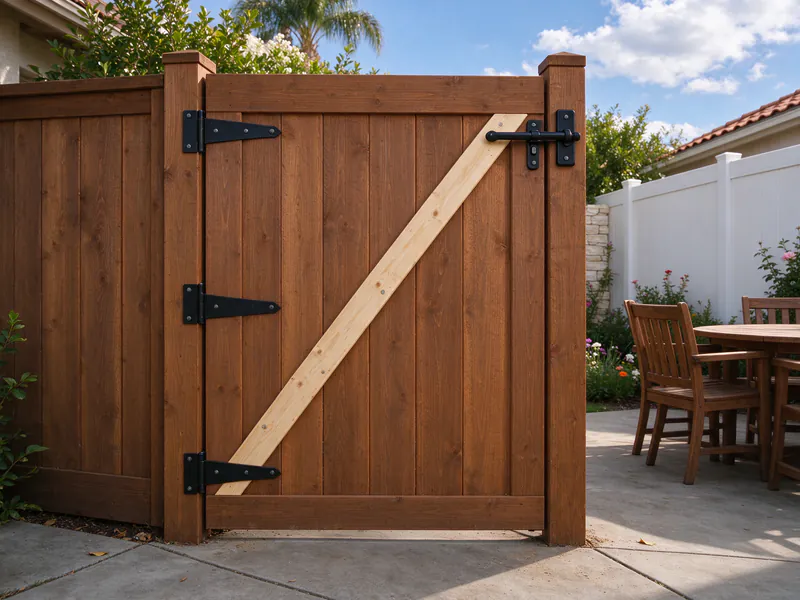
A sagging wood gate is usually a frame problem. The frame racks out of square, the latch corner drops and the bottom drags. The fix is to square the frame and add a diagonal brace that runs from the bottom corner on the hinge side up to the top corner on the latch side, or an anti-sag cable and turnbuckle running the opposite way. If the gate post itself is leaning, no amount of bracing on the gate will hold; the post needs resetting or replacing first.
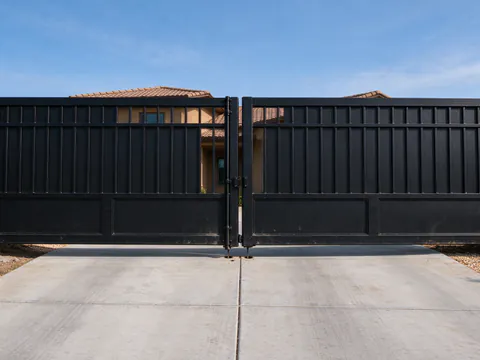
Adjustment makes sense when the frame is sound and the post is plumb. Replacement makes sense when the frame is rotted, a vinyl gate’s internal frame has cracked, or the gate was simply built too wide or heavy for its post. The sagging gate guide covers the fixes step by step, and new gates and gate posts are covered on the gate installation page. For motorized gates, operator repairs are covered on the automatic gate page.
Chain link: re-tensioning and framework
Slack chain link is rarely fixed by adding tie wires. Fabric goes loose when tension is lost at a terminal post, a top rail bends, a post leans or ties corrode. A sound repair stretches the fabric back with a stretcher bar and come-along, re-secures it at the terminal with tension bands, replaces bent rail and straightens or resets any post that moved. A damaged section can be cut out and new fabric woven in. The chain-link fence page covers the parts of the system.
Shared fences, permits and who can do the work
On a fence between two lots, California Civil Code 841 presumes both neighbors benefit equally and share reasonable costs, unless they’ve agreed otherwise in writing, and calls for 30 days’ written notice describing the problem, the fix, the cost and the split. The good neighbor fence law guide explains how that works in practice. A repair that keeps the fence at its existing height under 7 ft stays within the state code’s fence permit exemption, though an HOA may still want to approve a changed color or style.
California’s minor-work exemption lets unlicensed workers take jobs up to $1,000, but only if no permit of any kind is needed and they employ no one. Many repairs land close to that line, which is worth knowing when comparing bids.
What fence repair costs
A national budgeting range for a typical fence repair job runs about $200 to $950, and for a single fence post replacement about $120 to $400 per post. Where a job lands depends on the number of posts, whether old concrete has to be broken out, hardpan or rock in the hole, the fence material, matching parts for vinyl, gate hardware, access and haul-away. The Temecula fence cost guide explains those drivers, and when a repair starts to cost close to a new section, that’s the signal to price both. To get a written scope, send the details and photos.