Yes. UC IPM, the University of California’s pest management program, notes that subterranean termites, the most destructive kind in California, attack wood in contact with soil, and that drywood termites can nest above ground in dry wood such as fences. Rot is a separate problem, caused by wood staying wet, usually at the ground line.
Cask Fence Temecula arranges wood fence installation, repair and replacement around Temecula and the neighboring towns of southwest Riverside County, carried out by licensed and insured contractors. This guide covers the three things that wear a wood fence down here, termites, rot and sun, and what each one means for the fence. For new fences, the wood fence installation page covers species and post choices.
Two kinds of termites, two kinds of damage
Subterranean termites live in colonies in the soil and travel to wood through the ground or through mud tubes they build over surfaces. UC IPM describes them as occurring in nearly all regions of California and infesting dead wood in contact with soil. A wood fence post set in the ground is exactly that. The damage usually starts below grade or right at the soil line, inside the post, where you can’t see it. The first sign may be a post that snaps in wind or a board that crumbles when you push it. Mud tubes running up a post or along the bottom of a board are the visible clue.
Drywood termites don’t need soil. UC IPM notes they nest above ground in dry wood, including lumber, utility poles and fences. Their colonies are smaller and spread more slowly, and the common sign is small, hard pellets pushed out of the wood and collecting below it.
The practical difference: subterranean termites are a ground-contact problem, which material choices can largely solve. Drywood termites can reach any exposed wood, and a heavily infested section usually gets replaced.
UC IPM’s advice for homes is to remove untreated fence posts and buried scrap wood near structures. That points to two places on a Temecula lot: wood posts sitting in soil, and the spot where a wood fence runs into the house wall. A wood fence touching the stucco can give soil-dwelling termites a path toward the house.
Why wood rots at the ground line
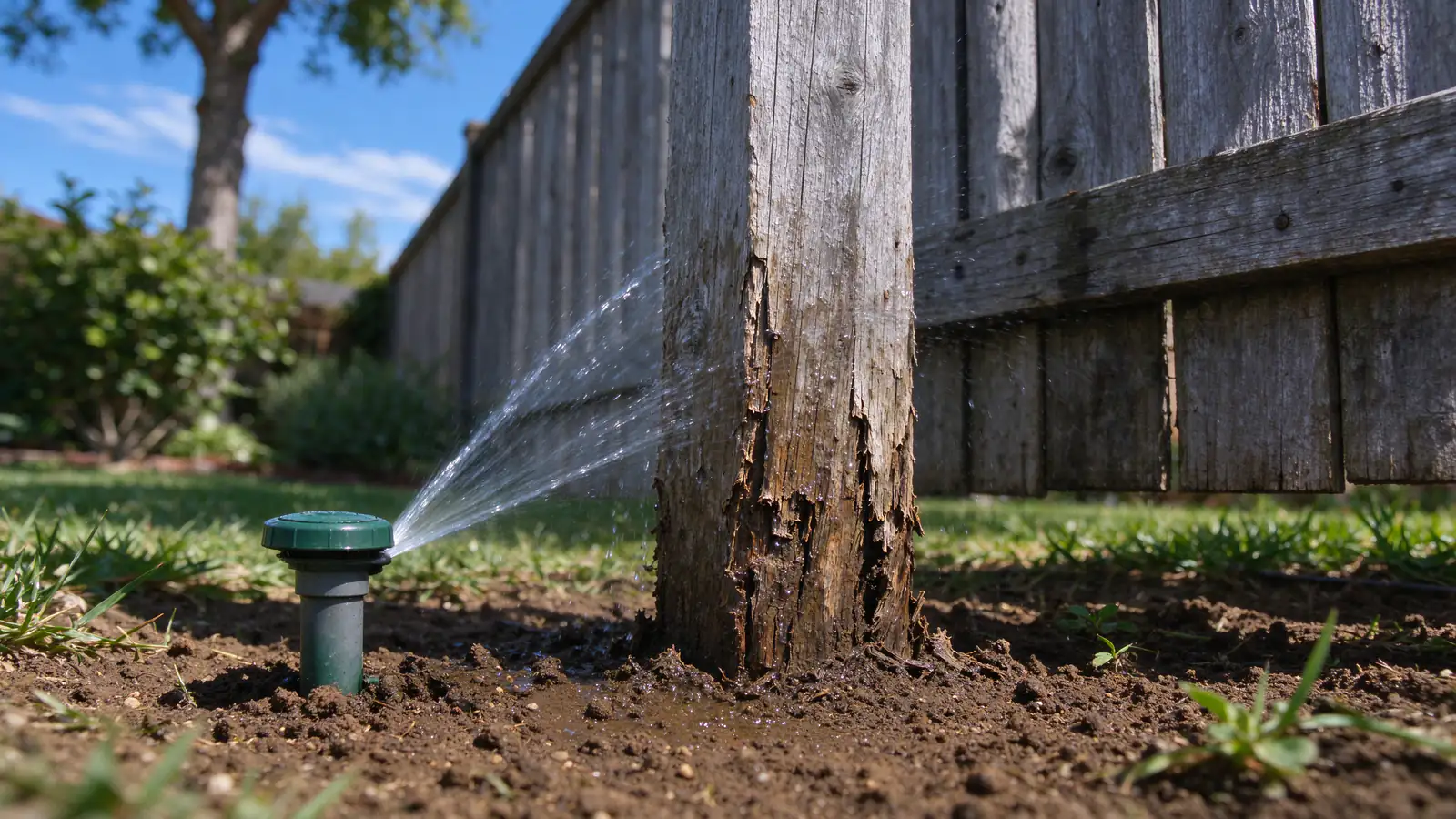
Rot is fungal decay, and the fungi need moisture to grow. Wood that dries out between wettings resists decay far longer than wood that stays damp. On a fence, the wettest spot is almost always the bottom: the post where it enters the soil or the concrete, and the bottom few inches of the boards.
Several things on a typical yard keep that zone wet:
- Sprinkler overspray. A spray head aimed across a planting strip and into the fence wets the post bases and bottom boards on every cycle. In a dry climate that may be the only water the fence ever sees, and it’s enough.
- Soil and mulch against the boards. Planting beds built up against the fence put wet soil on wood that was never meant to touch it.
- Concrete collars that hold water. A footing finished flat or below grade lets water pool around the post instead of running off.
- The wrong post material. Only lumber rated for ground contact belongs in a post hole. Homeowners report finding untreated posts after an install, and those decay quickly in damp soil.
- Slow-draining soil. Clay, such as the soil mapped at a Canyon Lake sample point, stays wet longer after rain or irrigation than sandy loam, and so does the post buried in it.
- Sapwood. Redwood’s and cedar’s decay resistance comes from the heartwood. Pale sapwood boards behave more like ordinary softwood.
This is why so many wood fences here fail at the posts while the boards above still look fine. The fence posts and soil guide covers footings and the steel-post alternative.
Posts going soft at the ground?
A few photos of the post bases and the sprinkler layout usually show whether it's a repair or a rebuild.
Sun, heat and UV
The NOAA normals for Fallbrook 5 NE, the closest long-term climate station on the valley’s south side, record about 60 days a year at 90°F or hotter. Ultraviolet light breaks down the surface fibers of unfinished wood, which is why every species fades to silver-gray. Heat and repeated wetting and drying also open small cracks, called checks, and can make boards cup or twist.
None of that is rot. A gray fence can be perfectly sound. But checks let water into the board, and a fence that bakes all afternoon and gets soaked by sprinklers every night cycles through swelling and shrinking faster than one that is left alone.
What stain and sealer actually do
Stain carries pigment that blocks much of the sunlight hitting the wood surface. It keeps the color and slows graying. Heavier pigment generally gives more UV protection than a clear finish.
Sealer or water repellent slows how fast water soaks into the wood, which reduces swelling, checking and the time the wood stays wet. Many products combine both.
What they don’t do matters as much. No stain or sealer can repair wood that has already decayed, and a finish on the boards does nothing for a post rotting below grade. Neither is a termite treatment. A finish is maintenance for sound wood, not a fix for failing wood.
On timing, new wood needs to be dry enough to absorb a finish; pressure-treated lumber often arrives wet. A simple check is sprinkling water on a board: if it soaks in, the wood is ready, and if it beads, wait. Your HOA may also specify a stain color, so check its guidelines before buying; the HOA approval guide covers how that works.
Checking your own fence
- Press a screwdriver into each post right at the soil line. Sound wood resists; decayed wood gives.
- Look for mud tubes on posts and lower boards.
- Look for small piles of pellets under boards or rails.
- Note which sections the sprinklers hit and where soil touches the boards.
- Push gently on each post to find the ones that move.
Fix soon:
- Posts soft at the ground line, especially on a tall solid fence or a gate post.
- Active termite signs on a fence that touches the house.
- A section leaning after a post broke at grade.
Can wait and be planned:
- Graying and light checking on sound boards.
- A few soft bottom boards on otherwise sound posts, which a fence repair can replace.
If several posts are soft, the repair or replace guide helps decide between new posts and a new fence, and the fence repair assessment sorts the answers for you.
Building the next fence to last
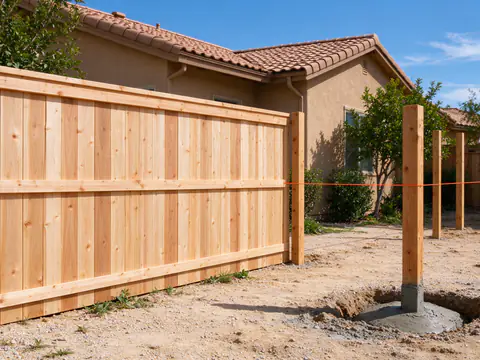
Most of what protects a wood fence is decided at the ground. Galvanized steel posts or ground-contact treated posts, footings crowned to shed water, boards held a little above the soil, and sprinklers redirected away from the fence do more than any finish. Where the fence meets the house, a metal gate or a short metal or masonry section keeps wood off the wall, and in very high fire hazard zones it matches where California’s proposed Zone 0 rules are heading, covered on the fire-resistant fence installation page. The wood vs. vinyl guide compares wood with a material termites don’t eat, and fence replacement covers tear-out of a fence past saving.
To have a wood fence looked at, call (951) 944-2778 or send the details.