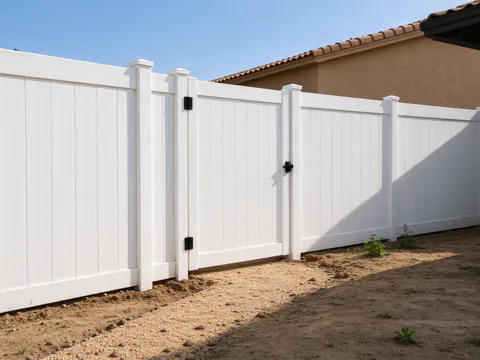
Not from Temecula sun. A vinyl fence handles ordinary summer heat by expanding and contracting. But vinyl is a plastic, PVC, and it softens and can sag or deform where heat is concentrated, next to a grill, fire pit or patio heater. In a wildfire it burns. It isn’t fireproof, and fire rules treat it as combustible.
Cask Fence Temecula arranges vinyl fence installation and repair for homes in Temecula and the nearby cities of southwest Riverside County, through licensed and insured contractors. This guide covers how vinyl handles the valley’s heat and sun, what happens when it meets real heat sources, and why the 5 feet next to your house is the place to think about something other than vinyl.
Heat versus melting
There’s a difference between a fence getting hot and a fence melting. PVC softens as it heats, well before anything you’d call melting, and a softened rail or panel can sag, bow or lose its shape and keep that shape after it cools. This guide doesn’t give a melting temperature, because the number that matters for a fence is lower and depends on the product. What matters is whether heat is spread out, like sun across a whole fence, or concentrated, like a grill blasting one section.
Sun spreads the heat. The NOAA climate normals for the Fallbrook 5 NE station, at the south edge of the Temecula Valley, show about 60 days a year at 90°F or above. A vinyl fence in full sun on those days gets hot to the touch and grows slightly longer. Vinyl systems are designed with room for that: rails sit in routed post holes with clearance, and long runs are built so parts can slide rather than buckle. Darker colors and textured profiles absorb more sunlight and run hotter than white.
Signs that heat or expansion is a problem rather than normal movement:
- Rails bowing between posts, especially on long spans.
- Panels or pickets popping out of their rail slots.
- A section that looks wavy or slumped compared to the rest.
- Discoloration or a glossy, deformed patch near a heat source.
Grills, fire pits and other heat sources
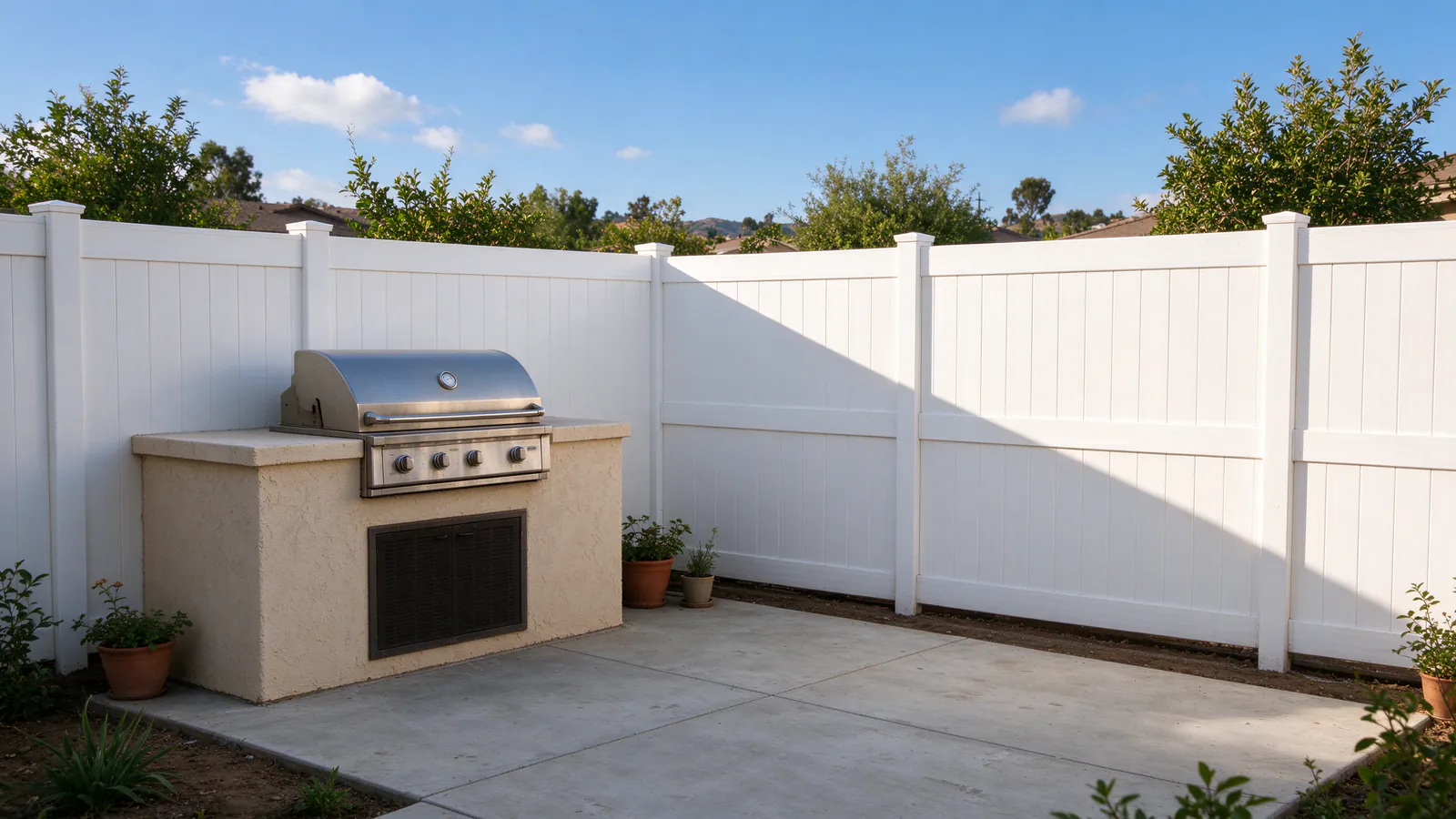
The fence damage people actually see from heat usually has a cause a few feet away. A barbecue pushed against the fence, a fire pit on a small patio, a smoker, a patio heater or an outdoor kitchen built on the property line can each throw enough radiant heat to soften the nearest panels. Hot embers can scorch them.
The fix is distance or a barrier. Every grill, fire pit and heater comes with a clearance to combustible materials in its manual; treat the vinyl fence as combustible and use that distance. Where an outdoor kitchen has to sit near the fence, a masonry wall section or a metal panel behind it protects the fence. A block wall section behind a barbecue island also gives the island something solid to back onto, and it’s built under the masonry license class, not the fence class.
Planning a patio next to the fence?
Tell us where the grill or fire pit will go. A short metal or block section in the right spot is simpler before the patio is built.
Is vinyl fence fireproof?
No. Vinyl will burn and slump in a wildfire, and a burning fence that runs up to a house can carry fire to the wall. That’s the reason wildfire guidance focuses on fences in the first 5 feet from a home.
California is moving toward Zone 0 rules for that ember-resistant zone. A Board of Forestry staff memo describes proposed rules that would apply in very high fire hazard severity zones in local responsibility areas and in the state responsibility area. In those zones, the draft would:
- bar new combustible fences within 5 feet of a structure;
- let existing combustible fences stay and be repaired with the same materials;
- leave fences more than 5 feet away unaffected;
- require a noncombustible section, such as a metal gate, where a fence or gate attaches to an occupied structure, within five years.
These rules are proposed, and their final form and start date are not confirmed. Separately, the Wildfire Prepared Home designation’s standard asks for wood or vinyl fence, posts and gates within 5 feet of the house to be replaced with noncombustible material such as metal, chain link, iron or masonry.
Whether any of this applies to you depends on your parcel’s zone. Fire hazard severity zones are mapped lot by lot, and Temecula publishes an address lookup map. Sample points in Redhawk, the wine country, De Luz, Wildomar and Lake Elsinore map as very high hazard, while much of central Temecula does not.
Sun, UV and age
Vinyl fence compounds include UV protection, but years of strong sun still take a toll. Aged vinyl can chalk on the surface and turn more brittle, and brittle vinyl cracks from impacts it would have shrugged off when new: a ball, a mower, a hard gust slamming a gate. That’s the sense in which vinyl isn’t maintenance-free. It doesn’t rot or need paint, but it isn’t unbreakable. The wood vs. vinyl guide and the vinyl vs. composite guide compare how each ages.
Repairing heat or fire damage
A panel, rail or picket softened by a grill can often be replaced on its own, if the same system can still be found. Vinyl profiles, rail sizes and colors vary between manufacturers, and some lines are discontinued; homeowners report hunting for matching vinyl after the original installer closed. Fire-damaged posts need a closer look, since heat can soften a post even where the outside looks fine. Fence repair covers section repairs, and the repair or replace guide helps when damage is widespread.
Fix soon:
- A section deformed by a heat source that’s still in use. Move the heat first.
- Panels popped out of their rails on a fence that has to contain a dog or a pool.
- Any fence damaged in a fire, before it’s leaned on or reused.
Can wait:
- Light chalking or fading with no cracks.
- Minor seasonal rail movement that settles back.
Choosing what goes where
Vinyl remains a reasonable choice for long side and rear runs well away from the house and from heat sources. For the 5 feet next to the house in a very high hazard zone, near an outdoor kitchen, or wherever you want a noncombustible fence, look at wrought iron or tubular steel, aluminum, chain link or block. Many yards combine them: vinyl along the property lines, a metal gate and section where the fence meets the house. The fire-resistant fence installation page covers those materials, and the planning guide covers the rest of the decisions.
To talk through vinyl and fire-zone options for your yard, call (951) 944-2778 or send us the details.