
This is an illustrative walkthrough, not a specific job. It follows the standard process for replacing a worn fence on a Temecula tract lot, using a common case: a six-foot wood fence along the side and rear lines, shared with two neighbors, in a neighborhood with a homeowners association.
The first call
The call covers what’s wrong and what the fence needs to do. Here, the posts lean, boards are splitting and the gate drags. The owner wants privacy and a dog-proof bottom. The call also settles the basics that shape everything after: about how many feet, which lines are shared, whether there’s an HOA, and whether the fence is part of a pool barrier. Cask Fence Temecula plans and manages the project from here, with the work carried out by licensed and insured contractors, the fence under the C-13 fencing classification.
The site visit: walking the line
The visit walks the full line, end to end. Four things get checked.
Pins and the survey. The old fence is a clue, not proof of the boundary. The visit looks for the corner pins, and if they can’t be found or the neighbors disagree, the property line survey guide explains why a surveyor comes first.
Grade. Where the yard slopes, the new fence either steps or racks with the ground. Soil piled against the old boards gets noted too: wood buried in dirt rots, and if a block wall ever enters the plan, Temecula’s standard treats a grade difference of more than six inches across it as retaining wall work.
Rock and soil. Temecula’s sandy loams dig easily in many tracts, but federal soil survey points in parts of the city map a cemented hardpan within about two to three feet, which can stop an auger. That changes tools and time, so it’s noted now.
Drainage and access. Water that runs along the fence line rots the bottom boards and posts. Access matters too: how materials get from the street to the back yard, and where the old fence gets stacked.
The paperwork
Three or four items run at once.
HOA submittal. The association reviews the material, color, height and style. Under Civil Code 4765, it has to decide in writing and explain a denial. The HOA approval guide covers what goes in.
Written neighbor notice. For the shared lines, California Civil Code 841 presumes the neighbors share the reasonable cost and calls for 30 days’ written notice describing the problem, the fix, the cost and the timeline. The good neighbor fence law guide explains it.
Permits. The 2025 California Residential Code exempts fences not over seven feet from a building permit, so a like-for-like six-foot fence usually needs none. City height limits still apply and are confirmed for the address. Block walls, retaining walls and pool barriers go to Building & Safety.
DigAlert. The ticket goes in at least two working days before digging, after the dig area is marked in white. Utilities mark their own lines only, so private lines to a pool heater or landscape lighting are found by hand.
The build
Tear-out. The old boards, rails and posts come out, and old footings are broken out or left where new posts can go beside them. A national budgeting range for tear-out and haul-away is about $3 to $7 per linear foot.
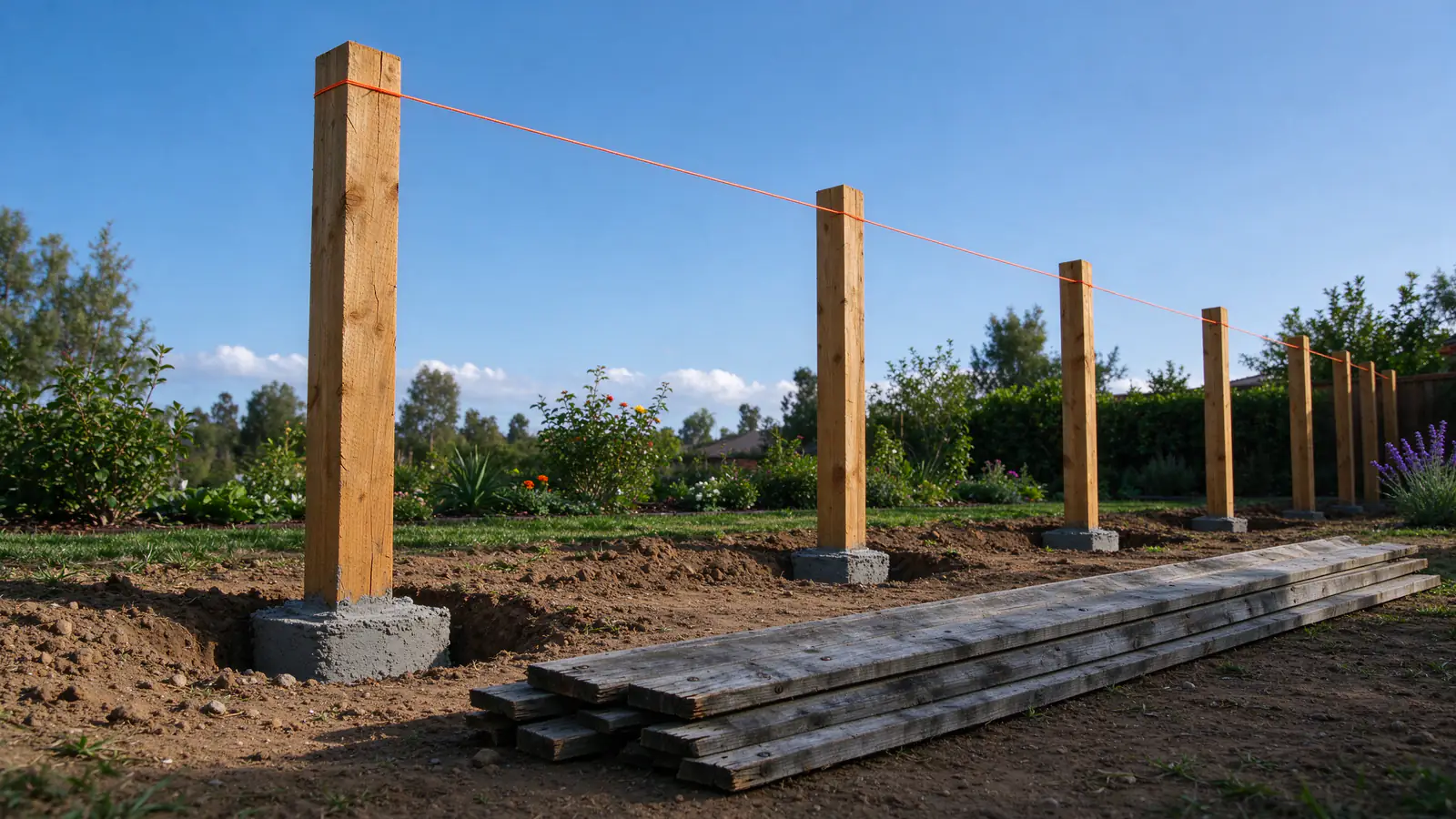
Posts set and cured. A string line sets the layout. Posts go in plumb, set to the height, wind and soil of this lot rather than a fixed depth, and the concrete cures before any load goes on. Temecula designs to a 97 mph wind in open-terrain exposure, and a solid six-foot fence has to carry that through its posts. The posts and soil guide covers the details.
Rails and boards. Rails go on, then boards, with the bottom held close to grade so the dog can’t dig out. On a slope, each section steps or follows the ground as planned.
Gates hung and adjusted. The gate post is the hardest-working post on the line. The gate is hung, the swing checked, and the latch and stop set so it closes on its own weight without dragging.
For a budget on this kind of job, a 6 ft wood privacy fence has a national budgeting range of about $10 to $50 per linear foot, and a walk gate about $200 to $1,500. The cost estimator builds a range from your own numbers.
The final walk
The owner and the contractor walk the line together. Posts are checked for plumb and the top line for straightness. Every gate is swung and latched. The bottom gap is checked along the dog run, and the yard is cleared of debris, offcuts and the old fence.
If your fence is past repair, the repair or replace guide helps confirm it, and the fence replacement page covers the service. To start, send the length, the material and a few photos, or call (951) 944-2778.